
 Search Articles


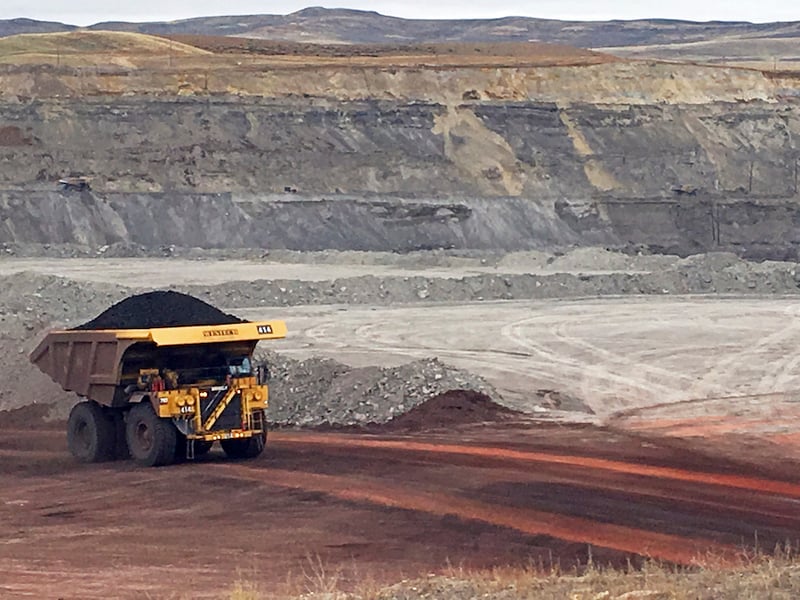
(CN) — The Biden administration drew both applause and fury on Thursday after announcing its intent to end new coal leasing in the Powder River Basin of Wyoming and Montana.
“This decision opens new doors to a future where our public lands are not sacrificed for fossil fuel profits and, instead, can prove a bulwark of ecological and community resilience in the face of a warming climate,” Erik Schlenker-Goodrich, executive director of the Western Environmental Law Center, said in a statement.
The proposed action by the Bureau of Land Management amends a Barack Obama-era management plan from 2015 that allowed the leases.
That plan drew swift legal challenges over what critics said was a lack of consideration for the long-term consequences of increased coal production. Among other things, the plan didn’t consider “emissions related to the combustion of coal, such as particulate matter, sulfur dioxide, nitrogen oxides, and toxic pollutants such as mercury and lead,” U.S. District Judge Brian Morris, an Obama appointee, found.
In 2018, Morris instructed BLM to revise the management plan and consider the downstream environmental impacts of coal mining and combustion.
Then, after environmental groups again sued the BLM over its revisions in 2020, Morris ordered the agency to revise its environmental impact statements to consider issuing no new coal leases — or at the very least, to “disclose the public health impacts, both climate and non-climate, of burning fossil fuels.”
The BLM chose the former. But while that decision will prevent new leases in the Powder River Basin — one of the most extensive sources of coal in the country — it will nonetheless allow current coal leases to continue through 2041 despite the coal industry’s decline.
“The BLM released a commonsense plan that simply reflects the reality of today’s coal markets,” Mark Fix, a Miles City, Montana-based rancher and member of Northern Plains Resource Council, said in a statement.
Coal consumption in the U.S. is at nearly half of what it was in 2000 — a trend driven largely by power plants switching to natural gas, which has become cheaper than coal. (Natural gas is also less environmentally harmful.)
“Coal companies in this region already have decades of coal locked up in leasing, and it’s hard to imagine they’ll find buyers that far into the future given the competition from more affordable energy sources,” Fix said. “This plan protects taxpayers from wasting publicly owned resources on lowball leases to subsidize an industry in decline.”
Opponents, however, had an entirely different perspective on the Biden administration’s plan for the Powder River Basin. “Every action taken by the Biden administration is driving up the cost of affordable energy and threatening the reliability of our electrical grid,” Republican Montana Governor Greg Gianforte said in a statement.
Gianforte also said the BLM decision was “nothing more than a gift to China and our adversaries and a slap in face to hardworking Montanans.”
“Instead of prioritizing the ideological agenda of the far left, President Biden should prioritize the needs of American consumers and workers,” Gianforte said.
Similar sentiments came from other Republican officials, including U.S. Senator Steve Daines and U.S. representatives Ryan Zinke and Matt Rosendale. All three represent Montana in Congress.
“America lost more energy independence today due to a stroke of a pen by the Biden administration,” Rosendale said in a statement issued jointly by the three lawmakers and Gianforte. He called it “an insult to the men, women, and children of Montana who depend on coal to power their homes, keep food on their table, and maintain our Montana way of life.”
BLM will issue a final record of decision for its “no new leasing alternative” after considering written protests over the next 30 days.
 Follow @alannamayhampdx
Subscribe to our free newsletters
Our weekly newsletter Closing Arguments offers the latest about ongoing trials, major litigation and rulings in courthouses around the U.S. and the world, while the monthly Under the Lights dishes the legal dirt from Hollywood, sports, Big Tech and the arts.