
 Search Articles


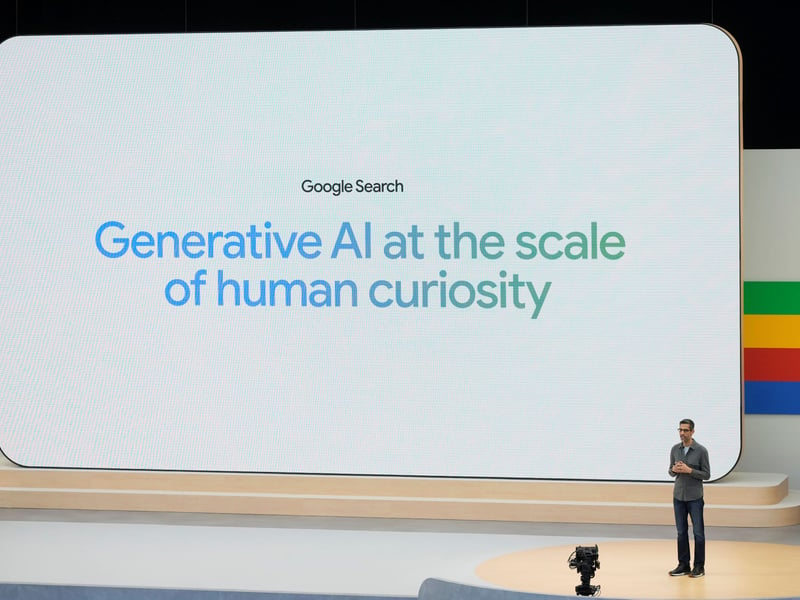
WASHINGTON (CN) — Following the witness portion of the landmark antitrust trial over Google’s internet search monopoly, the Justice Department reaffirmed its position on Wednesday that a major breakup of the tech giant is necessary to restore competition to the online search market.
In its 94-page remedy post-trial brief, the Justice Department argued that the two weeks of evidence and witness testimony U.S. District Judge Amit Mehta heard through early May showed that its proposed remedies are both necessary and feasible.
The filing — and Google’s 84-page brief — comes as the parties are preparing for closing arguments on May 29, after which the Barack Obama appointee will work over the summer to craft an appropriate remedy before ruling sometime in August.
As part of its breakup, the Justice Department has recommended the divestiture of Google’s Chrome browser, and potentially Android, a bar on multibillion-dollar default status deals to Apple, Android partners and browser partners as well as a data-sharing program for rival search engines to match Google’s quality.
Google has alternatively pushed Mehta to craft a narrow remedy by opening the deals that made Google the default search option on Apple and Android devices to yearly bids from other search engines. Under Google’s scheme, rivals would be able to compete for default status on separate devices as well.
The Justice Department warned Wednesday that Google’s proposal would merely maintain the status quo.
“The evidentiary hearing on remedies demonstrated how plaintiffs’ readied will future-proof competition from Google’s repeated anticompetitive conduct,” the Justice Department said. “Unless Google’s vast payments are eliminated, Google will likely win each search distribution opportunity, given the tremendous advantages it has accrued from over 10 years of monopoly maintenance.”
Throughout the brief, the Justice Department described Google as a modern-day “market behemoth” that was able to take advantage of an emerging product, much like The Standard Oil Company and the American Tobacco Company in the 19th century, AT&T in the 80s and Microsoft at the turn of the millennium.
Dissolution was necessary to address Standard Oil and American Tobacco’s monopolies, the Justice Department said, as was the breakup of AT&T’s control over telecommunications.
Microsoft’s case — where the D.C. Circuit’s decision to overturn a federal judge’s ruling that Microsoft should be broken up, resulting in a settlement — looms over Mehta’s ultimate ruling.
“It took years of litigation, trial, a remedial period and a Technical Committee to pry open the market that Microsoft foreclosed for so many years,” the Justice Department noted.
In its own brief, Google decried the government’s remedies as “unprecedented” and an effort to “forcibly restructure the marketplace.”
“Plaintiffs seek to paper over manifest failures of proof to support their proposals, and the vagueness of many of their provisions, by giving themselves the right to adjudicate wide-ranging and substantive details of their [final judgment] under the guise of working with a so-called ‘Technical Committee,” Google said.
The committee, with the Justice Department in charge, would violate Google’s due process right and would be starkly different to the committee created in Microsoft’s case, “that provided only for assistance in the enforcement of that decree," Google said.
Directly attacking the government’s Chrome and Android divestiture proposals, Google called them “so legally unjustified as to appear to be throwaways” to make the rest of the remedies appear more reasonable.
That should not benefit the data-sharing remedies, Google said, which would require the divestiture of substantial company assets, “resulting in the largest forcible transfer of intellectual property in the history of U.S. antitrust law.”
Google repeated its concern that the proposal carried with it serious “unresolved” privacy risks, which it said were not addressed by the Justice Department’s privacy expert. Instead, the proposal would allow Google’s rivals to reverse engineer “priceless Google technology and intellectual know-how gained over many years.”
“All parties recognize that GenAI technology could present an evolution for search competition,” the Justice Department said. “But nothing is guaranteed. The next generation of American consumers cannot afford to miss this opportunity, which they will if future competition in this emerging, dynamic and innovative product space is foreclosed by Google’s anticompetitive playbook.”
The Justice Department has expressed concern that Google will be able to meld its internet search domination with its AI products to effectively circumvent any remedies.
Google announced its AI Overview feature in Google search following the end of the liability phase in September 2024, and announced Tuesday that it would be integrating Gemini AI into Chrome, raising concerns about any Chrome divestiture remedy.
 Follow @Ryan_Knappy
Subscribe to our free newsletters
Our weekly newsletter Closing Arguments offers the latest about ongoing trials, major litigation and rulings in courthouses around the U.S. and the world, while the monthly Under the Lights dishes the legal dirt from Hollywood, sports, Big Tech and the arts.