Search Articles


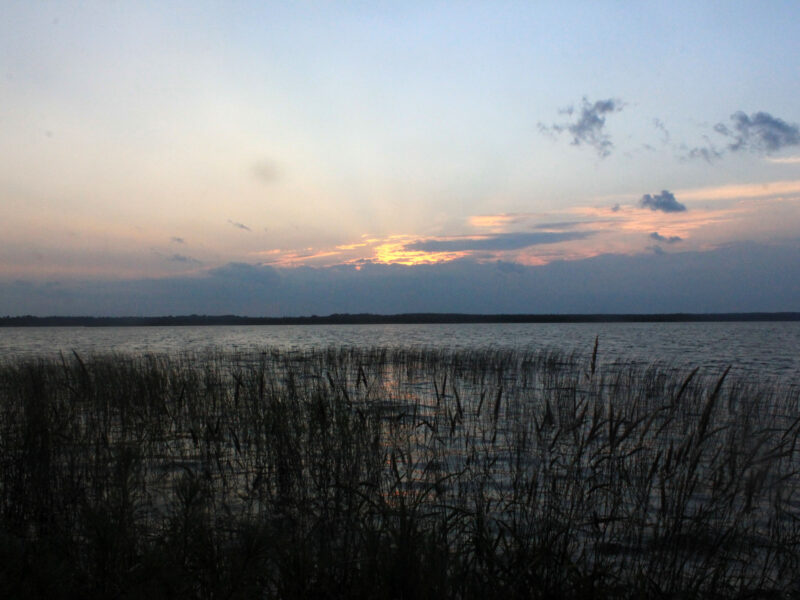
MINNEAPOLIS (CN) — The federal government said on Tuesday that a northern Minnesota resort lacks the legal standing to challenge Voyageurs National Park’s authority to enforce commercial permitting rules on park waterways.
The Justice Department urged U.S. District Judge John Tunheim to dismiss a lawsuit by Little House Resorts LLC, owner of a resort called “The Pines of Kabetogama” on the edge of Voyageurs. The business claims park officials are overstepping their jurisdiction by requesting long-standing shoreline businesses obtain Commercial Use Authorization permits to operate on Lake Kabetogama.
Little House claims these resorts — many of whom existed long before the park was established — never before had to obtain such permits.
But the federal government says sovereign immunity shields the government from the resort’s claims — adding just because Voyageurs is now operating on stricter grounds doesn’t mean they never had that authority.
“It sounds to me like Little House is upset that Voyageurs is flexing muscles it always had,” DOJ attorney Trevor Brown said. “It sounds to me like someone who always drives over the speed limit on a certain road, and when a cop finally pulls them over, that’s when they complain about the speed limit.”
Little House’s attorney, John Kolb, pushed back, claiming the situation “akin to there being no speed limit sign,” but still getting pulled over.
For the 50-year existence of Minnesota’s only national park, Voyageurs has largely allowed private, riparian landowners to exercise free and open use of the surface of Lake Kabetogama — as these private properties were not included in the state’s grant of land to the government at the time of the park’s creation, and had been considered “out of park bounds.”
Established in 1975, Voyageurs National Park covers over 200,000 acres of land, features over 30 lakes and is dotted with more than 500 islands, making it a premier destination for canoeing, fishing and other water activities.
Northern Minnesota has attracted tourists for decades, leading to the establishment of hundreds of summer homes, cabins, hunting shacks, resorts and other private properties in the area.
Little House purchased its property from the resort’s prior owner-operator in 2021, but the resort itself has operated seasonally and offered land and water-based recreational activities and tours on the lake since 1939.
In Little House’s Administrative Procedure Act complaint, the resort claims Voyagers has shifted long-held guidance and policies concerning riparian landowners, now recognizing these businesses as “in park bounds” and therefore subject to a CUA for all water-based activities utilizing Lake Kabetogama.
For Little House and other resorts, the sudden CUA mandate is a threat to a 50-year-old business model. The new policy — which little administrative record exists on — mandates private entities submit to federal oversight, including screening, hiring and “drug-free work environment" requirements.
The resort says this also requires them to turn over sensitive financial data, gross receipts and employee information to federal officials.
Because Congress generally limits the National Parks Service’s authority over land outside the official boundaries of a park, Little House claims the agency cannot legally force them to get a federal permit just to let guests access the water from their own private docks.
While the government argues the lawsuit is premature because Little House hasn’t yet applied for or been denied a permit, the resort counters the requirement itself creates an impossible choice.
“They either apply for a permit and deal with the consequences … or they go ahead and continue to operate and subject themselves to enforcement,” Kolb said. “Otherwise they don’t do what is part and parcel to having a resort on a lake, which is you rent recreational equipment and boats.”
Little House claims the CUA gives the federal government nearly unlimited audit power over private businesses using the lake, noting the government may revoke or suspend the authorization at any time without notice or compensation.
“That impacts someone who invested in a resort property, especially when it wasn’t that way for years,” Kolb said.
Tunheim, a Bill Clinton appointee, appeared hung up on the “finality” of the agency action, as nothing appears to have been signed or put into effect yet.
“We’re still in the ‘this is what we intend to do’ stage,” Tunheim said. “To use a Mondale question, where’s the beef?”
Kolb, noting the absence of what the government would call a “final agency action,” did refer to a variety of informational meetings held by Voyageurs staff, in addition to a previously-imposed deadline to sign the permits as examples of steps taken to execute a policy.
Kolb also struggled to identify the true party at fault when asked by Tunheim and Brown, quipping to the judge that if he can “unravel the bureaucracy of the National Parks Service,” that would be commendable.
“It’s a complicated structure, so in terms of the who in this case, it is the parks service, the superintendent and the park itself who is making this requirement,” Kolb said, once again falling back on the 50-year agreement as to why that requirement is unlawful.
Brushing aside historical narratives, Brown argued Minnesota’s original intentions for shoreline businesses when ceding land for the park decades ago are irrelevant. From the government’s perspective, the case hinges on a single reality — the resort failed to produce a waiver of sovereign immunity that would authorize the lawsuit in the first place.
“You heard Little House’s argument that the park is putting the cart before the horse. That is not possible under sovereign immunity,” Brown said. “You must have a waiver before you get to the horse.”
In a suit against the government, a sovereign immunity waiver acts as the legal key that allows a citizen or business to bring a case to court. A waiver means Congress has passed a specific law opening the door for legal action in certain cases, which the government claims the resort hasn’t alleged.
“Not once in their entire brief will you find the phrases sovereign immunity or waiver,” Brown said. “For me, personally, that’s all you need to hear … they’re not even trying.”
While the case currently targets specific action by Voyageurs National Park, Little House notes a ruling in favor of the government could set a dangerous precedent — opening the door for federal agencies to expand their jurisdiction over state waters and private shoreline businesses near or bordering federal lands.
Subscribe to our free newsletters
Our weekly newsletter Closing Arguments offers the latest about ongoing trials, major litigation and rulings in courthouses around the U.S. and the world, while the monthly Under the Lights dishes the legal dirt from Hollywood, sports, Big Tech and the arts.