
 Search Articles


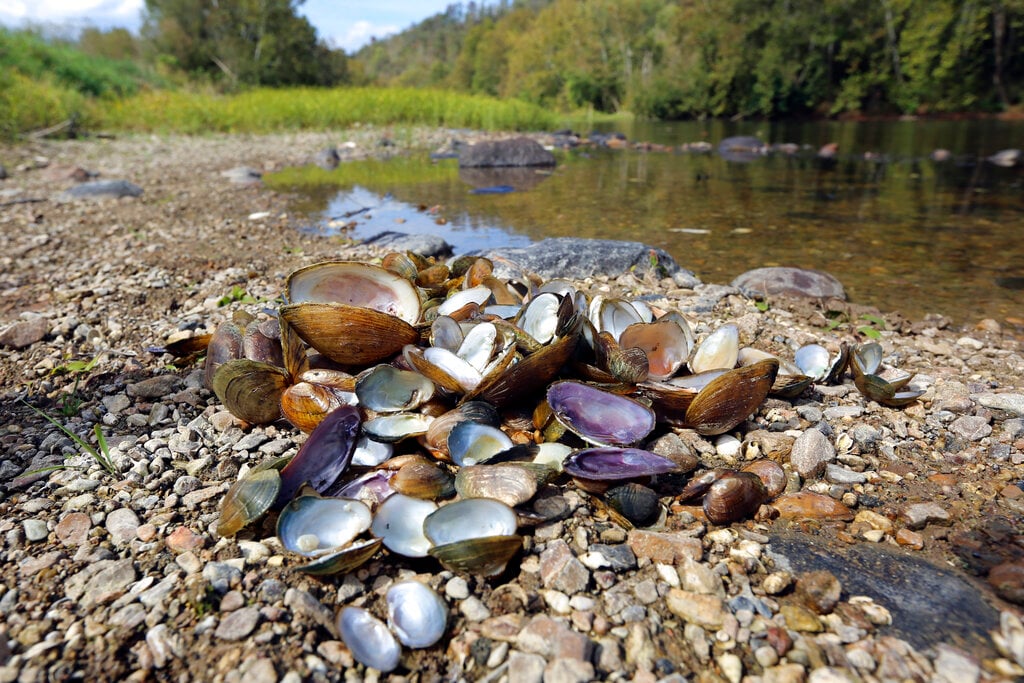
WASHINGTON (CN) — The Center for Biological Diversity sued the U.S. Fish and Wildlife Service on Thursday over its failure to follow through on a promise to provide protections for the salamander mussel as an endangered species, which the center warns increases its chance of extinction.
The environmental group filed the 13-page lawsuit in the U.S. District Court for the District of Columbia, arguing the Trump administration’s failure to issue a timely final rule on protections under the Endangered Species Act delays critical protections that would put the species on the path to recovery.
Shaped like an elliptical, salamander mussels are thin-shelled, freshwater creatures that grow up to two inches long.
“The salamander mussel was once historically widespread across all of 14 states, with a historical range spanning from the Midwest and Mid-Atlantic to the Southeast,” the group said. “Many of the mussel’s populations are now considered ‘historical,’ meaning there have been no observations or data available regarding the mussel after 1970, particularly in Iowa, Illinois and Lake Erie.”
The environmental group is requesting U.S. District Judge Randolph Moss, a Barack Obama appointee, declare the Fish and Wildlife Service violated the Endangered Species Act and order it issue a final rule on the mussel’s listing.
According to the group, recent studies indicate 40% of salamander mussels have been completely wiped out, and around 95% of the remaining population is at “high or moderate risk.”
Over 98% of remaining salamander mussels are at high risk of catastrophic events from oil, gas and coal activities, and around one-third of the remaining population lives within a segment of an occupied river, making them particularly vulnerable to a single event.
In April 2010, the environmental group petitioned the Fish and Wildlife Service to list the salamander mussel on the endangered species list, pointing to threats its habitat faces from river impoundment, channelization and industrial and residential development.
The species itself faces threats from water pollution, impacts on its host species, invasive species infiltration and population isolation and low gene flow. The salamander mussel relies on the mudpuppy salamander to disperse their eggs by depositing them into the mudpuppy’s gills. It is the only known mussel to use a nonfish host to assist its reproductive process.
The Fish and Wildlife Service published a positive 90-day finding in September 2011 that sided with the environmental group’s petition.
In August 2023, the government proposed listing the salamander mussel as an endangered species and designating 37 units of critical habitat, including approximately 2,012 river miles across 11 states. The habitat would have stretched across Minnesota, Wisconsin, Indiana, Michigan, New York, Pennsylvania, West Virginia, Kentucky and Tennessee.
That proposal included a one-year deadline for August 2024, which has come and gone without a final listing rule.
Laurel Jobe, attorney for Center for Biological Diversity, slammed the government’s lack of action in a statement.
“Salamander mussels will slide further toward extinction if the Trump administration continues to stall protections for this remarkable little animal,” Jobe said. “These mussels filter contaminants from rivers and help keep our water clean. By protection them, we’re also protecting the health of our communities.”
The environmental group argues the government violated the Endangered Species Act by failing to issue the final listing within a year and has only further violated the statute in the subsequent 20 months.
According to the group, Freshwater mussels are the most imperiled group of animals in the United States. Of the nearly 300 species in North America, more than 70% are listed as imperiled and at least 35 species are already presumed extinct.
The Fish and Wildlife Service did not respond to a request for comment.
 Follow @Ryan_Knappy
Subscribe to our free newsletters
Our weekly newsletter Closing Arguments offers the latest about ongoing trials, major litigation and rulings in courthouses around the U.S. and the world, while the monthly Under the Lights dishes the legal dirt from Hollywood, sports, Big Tech and the arts.
Additional Reads
 California delta tunnels project gets partial green light April 23, 2026

 Lawmakers rip Republican plan to make DC ‘square again’ April 23, 2026