
 Search Articles


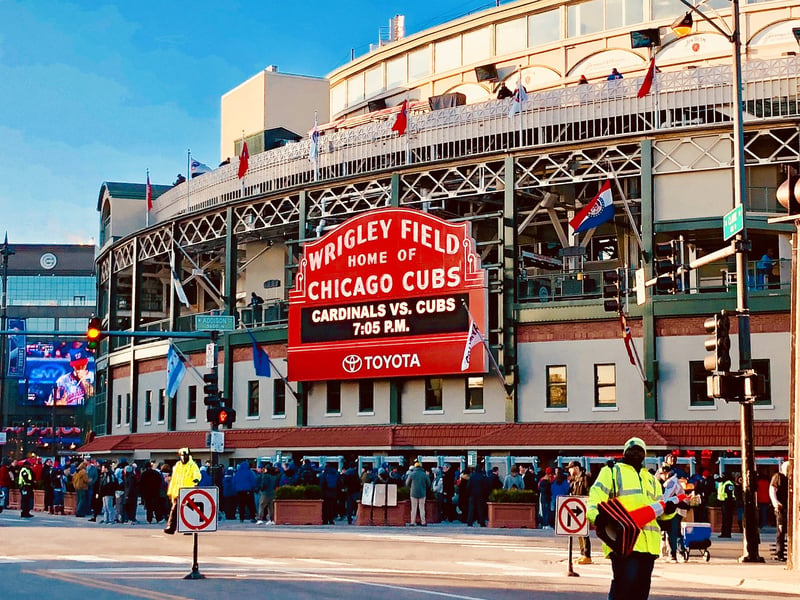
(CN) — The Chicago Cubs will be getting more wheelchair spaces for fans at their home games in Wrigley Field, according to a consent decree with the federal government filed this week in the United States District Court’s Northern District of Illinois Eastern Division.
The team will install dozens of additional wheelchair spaces and companion seats in the stadium’s lower and upper decks, bleachers and bleacher suits, while eliminating obstructions like additional standard seating in front of those spaces.
In addition, the Cubs will ensure wheelchair seats in the grandstand remain available to people with disabilities until at least the third inning by placing barriers by the seats to keep the general public away from them. While those barriers may be removed, Cub staff will continue to ensure wheelchair users and their companions can still use them.
An additional 187 designated aisle seats in the stadium’s grandstand will also comply with ADA requirements.
The decree is the product of a lawsuit brought by the U.S. Attorney’s Office for the Northern District of Illinois against the Chicago Cubs and the owners of Wrigley Field.
The government argued that $1 billion in renovations to the 108-year-old baseball stadium failed to provide — and in fact eliminated — proper accessibility features for baseball fans with disabilities.
The renovations collectively were deemed The 1060 Project, after Wrigley Field’s address at 1060 W. Addison Street on Chicago’s North Side. Construction began after the end of the 2014 season and largely concluded in 2019. Billed as a “long-awaited restoration and expansion of Wrigley Field,” the update added numerous luxury amenities to the stadium, including new premium seating areas, indoor restaurants and bars.
“The United States and the Cubs agree that entry of this Consent Decree without further litigation is in the public interest,” Assistant U.S. Attorney Abraham Souza said in the decree submitted to the court on Thursday.
This is not the only time the 2016 World Series champs have faced criticism regarding ADA compliance at Wrigley Field.
In failed lawsuit brought by minor wheelchair-bound Cubs fan David Felimon Cerda in December 2017, via his father and attorney David Alberto Cerda, the plaintiff claimed that those renovations to the century-old Wrigley Field had removed favorable disability seating areas in order to make way for a slew of new luxury amenities, shunting David Felimon Cerda and other fans in wheelchairs to “the worst seats in the house.”
But U.S. District Judge Jorge Alonso, a Barack Obama appointee who often sides with businesses in civil rights disputes, instead found that Wrigley Field had at least one more accessible seat than required under the Americans with Disabilities Act. His decision came two months after a weeklong bench trial in April 2023, during which he personally visited the stadium.
While the team was ultimately found not to have violated the ADA in that lawsuit, the Cubs consented to the decree in the face of the federal lawsuit “to demonstrate their commitment to accessibility for people with disabilities and to ensure resolution,” Souza said.
In return for the Cubs agreeing to the decree, the federal government agreed to stop any further investigations into whether the stadium is ADA-compliant regarding issues brought up in their lawsuit.
Fans should also see advertising starting in October 2024 regarding these changes and how to obtain access to these seats.
The changes should be completed during the 2024-2025 off-season and will be in place for opening day in 2025.
Any future changes made to Wrigley Field that would change wheelchair spaces and companion seats will require approval by the federal government.
To ensure compliance with the decree, the Cubs are required to send in yearly written reports until 2028 with photographic evidence to the federal government that the team has followed the agreement.
Subscribe to our free newsletters
Our weekly newsletter Closing Arguments offers the latest about ongoing trials, major litigation and rulings in courthouses around the U.S. and the world, while the monthly Under the Lights dishes the legal dirt from Hollywood, sports, Big Tech and the arts.