
 Search Articles


MINNEAPOLIS (CN) — The Justice Department and human rights advocates squared off in federal court Wednesday over whether a federal statute can be used to justify the detention of lawfully admitted refugees.
Department of Justice attorney Brantley Mayers, who appeared over Zoom, urged the court to dissolve a temporary restraining order issued by U.S. District Judge John R. Tunheim, arguing that federal law leaves the government the option to take refugees into custody.
Mayers said the federal operation is an extension of a congressional mandate allowing for the arrests and detention of refugees — further noting that the restraining order prevents the government from doing its job.
While the government claims the sweep is a mandatory enforcement of federal law, The Advocates for Human Rights attorney E. Michelle Drake argued the policy has turned an administrative milestone into prolonged detention for lawfully admitted refugees.
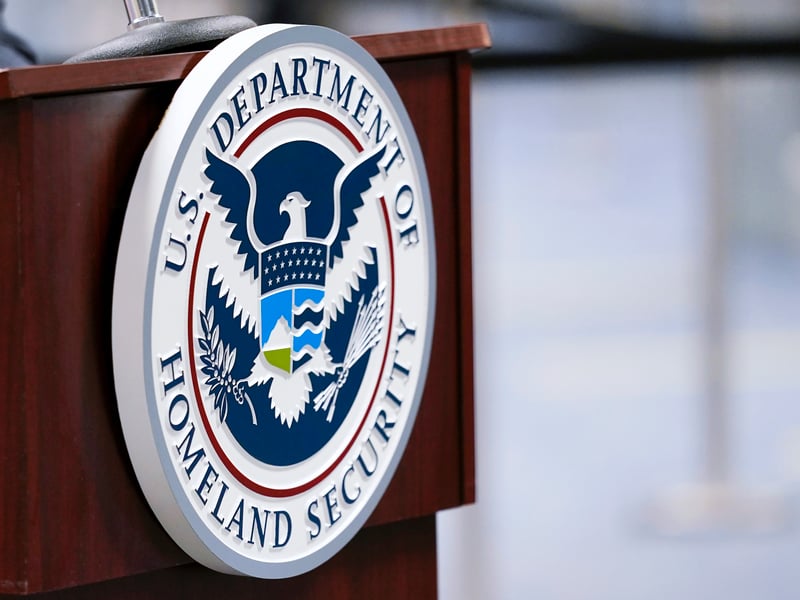
The initiative in question is “Operation PARRIS” — launched by the U.S. Department of Homeland Security and U.S. Citizenship and Immigration Services in early January — designed to target and “reexamine” the legal status of 5,600 refugees in Minnesota who have not yet transitioned to permanent residency.
Mayers and Tunheim, a Bill Clinton appointee, wrestled over the government’s interpretation of a federal statute stating that refugees who have not yet acquired resident status after one year in the country shall “return or be returned to the custody of the Department of Homeland Security for inspection.”
Mayers argued the only reasonable reading of that language is an arrest, but Tunheim disagreed, questioning why the government would choose detention to accomplish their goal when other, less harmful ways, exist.
“Are you saying that every administration has been in violation of the law for 45 years,” Tunheim asked — referring to the Refugee Act of 1980, which established the modern framework for how the U.S. admits and treats refugees, including “inspection” to be a routine administrative step toward a green card, not necessarily prolonged detention.
Drake**** pointed out that, under federal law, a refugee cannot have their status adjusted to “Lawful Permanent Resident” until they have been in the U.S. for at least one year — making the government’s decision to use that milestone as a trigger for arrest fundamentally absurd.
“Their interpretation authorizes the warrantless arrests of refugees who have failed to have their status adjusted,” Drake said, further stating that she can’t find a reason why “shackling people” and sending them to “far flung locations” is necessary to complete the inspection process.
“We know it’s not necessary because it hasn’t been done for the past 45 years,” she said. “The fact that the government wants to detain people does not give it the authority to do so.”
Tunheim agreed in his initial order — finding the government’s logic “nonsensical,” and writing that it would force refugees to “celebrate their one-year anniversaries in a jail cell.”
Drake further argued that refugees who are showing up to Homeland Security to adhere with the policy, and obtain resident status, are being immediately detained, put in handcuffs, and held for as long as the government deems necessary for inspection.
Tunheim appeared frustrated that Mayers could not determine how long the statute permits detention, and questioned if the government could choose to hold someone indefinitely.
Mayers said that a person will be detained as long as necessary to go through the vetting process — adding that, if a specific case takes too long, that should be handled through separate litigation.
In the original class action, The Advocates For Human Rights and several refugees claimed DHS agents have arrested and detained — without notice or warrant — individuals previously screened and admitted into the country.
Refugees who skip their inspections already face the loss of a green card and a path to citizenship, Drake said, arguing that adding warrantless detention to those existing penalties constitutes an unjust punishment for that population.
Mayers conceded that, in individual circumstances, there may be reasons to bring a lawsuit for unlawful detention of a refugee, but that those instances should again be adjudicated in a separate lawsuit, not a class action that halts the operation in its entirety.
The federal government’s push to dissolve the current restrictions comes exactly one week after U.S. District Judge John R. Tunheim issued a 32-page rebuke of the administration’s tactics.
In granting the initial restraining order, Tunheim ruled that lawfully admitted refugees have a right to live without the “terror” of warrantless arrests, noting that the targets of Operation PARRIS had already undergone rigorous federal vetting.
The restraining order mandated the immediate release and return of any refugees caught in the sweep. Days after the initial order, Tunheim issued a demand for federal agencies to comply, as reports signaled they had yet to release certain members of the class.
As Wednesday’s hearing concluded, Tunheim said a written order regarding the continuation or dissolution of the restraining order would be issued by Thursday.
Subscribe to our free newsletters
Our weekly newsletter Closing Arguments offers the latest about ongoing trials, major litigation and rulings in courthouses around the U.S. and the world, while the monthly Under the Lights dishes the legal dirt from Hollywood, sports, Big Tech and the arts.