Search Articles


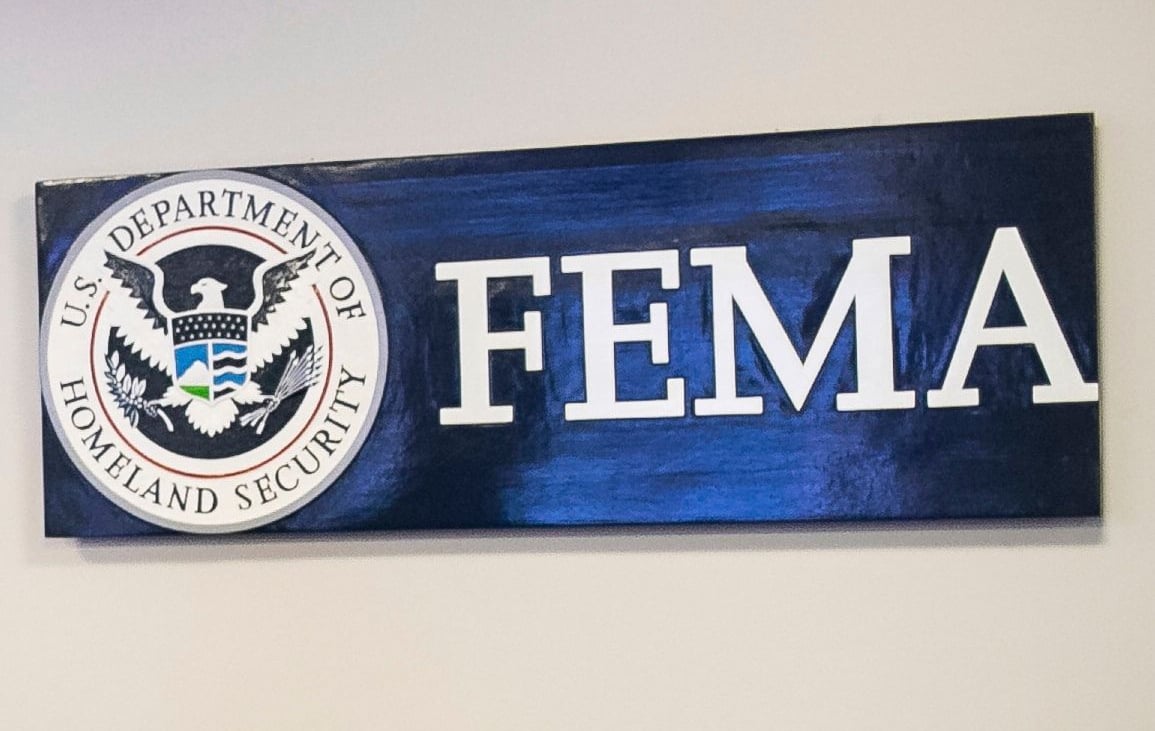
SAN FRANCISCO (CN) — A federal judge in California on Tuesday said she was likely to advance a case brought by a coalition of labor unions, nonprofits and cities challenging the Trump administration’s efforts to reduce the federal employee workforce.
Senior U.S. District Judge Susan Illston said in a tentative ruling from the bench she would deny the government’s motion to dismiss a supplemental complaint.
The Bill Clinton appointee also said she was likely to deny the plaintiffs’ motion for preliminary injunction, but move immediately to summary judgment on the questions surrounding the Department of Homeland Security’s plans to eliminate temporary employee positions of the Federal Emergency Management Agency, known as the Cadre of On-Call Response/Recovery (CORE).
“With respect to the preliminary injunction, it appears to me that with the offer that the January COREs may be rehired, the most exigent piece of the request has largely grown stale; it would be prudent to move into the summary judgment phase,” she said.
At Tuesday’s hearing, Department of Justice attorney Robert Bombard said the supplemental complaint should be dismissed, because the plaintiffs have not claimed a concrete injury to have standing.
The supplemental complaint challenges the president’s Executive Order 14356, “Ensuring Continued Accountability in Federal Hiring,” which instructed federal agencies to create annual staffing plans, as well as implementing directives from the Office of Management and Budget and Office of Personnel Management.
Bombard told the judge the plans the plaintiffs are challenging were “predecisional, deliberative workforce planning documents,” and “prospective looking,” rather than final agency action. He said if the plaintiffs did suffer an injury stemming from the plans in the future, they would be able to raise that with the court then.
“Plans are plans, just like in the real world; it’s the same with federal agencies. Plans are subject to change. They reflect internal thought processes and deliberations,” Bombard said.
“These executive agencies should be able to take a look at their workforce and assess their needs. We don’t believe that anything contemplated in the memorandum is problematic," he said.
However, plaintiff’s attorney Danielle Leonard with the Democracy Forward Foundation argued the executive order makes the staffing plans final, whether or not the public knew about them.
“The president said they were final and that they needed to be implemented,” she said.
Leonard said the best example of the plans being finalized was the administration’s previously unknown plans to cut FEMA staff by 50%, which were leaked in December.
“The annual staffing plan cut FEMA in half. They implemented that plan. They started to, and this litigation stopped it. The argument that claims that these plans are not ripe simply because they withheld them from the public is not something this court should endorse,” she said.
Turning to the plaintiffs’ request for a preliminary injunction, Bombard argued the issue had been resolved, as FEMA has offered new appointments to affected employees.
He told Illston the “entire landscape has fundamentally shifted” and former DHS officials who were involved in earlier decision-making regarding FEMA have been replaced, including former DHS Secretary Kristi Noem.
“There is a new chapter at FEMA, there is new leadership, they are moving in a different direction,” he said. “Surely the DHS secretary may refer to restructuring or reforming; these are kinds of everyday, aspirational policy phrases that leaders use in organizations, they are looking to improve things. We don’t believe there is any irreparable harm to enjoin.”
However, Leonard argued the issue was not moot, telling Illston there would be nothing stopping the government from moving forward with its plans to reform and restructure FEMA absent a court order.
Leonard added the government’s statements they will not restructure the agency could not be trusted, claiming that despite the replacement of certain top officials, the president and the administration’s policy priorities have not changed.
“The audacity to ask the court to take on faith that there is a new regime is pretty stunning in light of what we have seen in the course of this case in terms of representation from defense and their counsel,” she said, noting other courts have found the administration has lost the presumption of regularity.
“We don’t get to take on faith counsel’s representations that they are not going to take further unlawful actions given the amount of unlawful activity they were planning to do that was only stopped by this litigation,” she said.
Illston did not indicate when she would release a ruling, but set a date of Aug. 28 to hear arguments on summary judgment.
Representatives for either party did not respond to a request for comment.
Under a broad case concerning federal employee cuts, the American Federation of Government Employees (AFL-CIO) and several municipalities sued the president and dozens of government agencies in April 2025 in response to President Donald Trump’s executive orders reducing the federal employee workforce.
Illston granted a temporary restraining order blocking the mass firings of federal workers that May, followed by issuing a preliminary injunction just a few weeks later.
“Agencies may not conduct large-scale reorganizations and reductions in force in blatant disregard of Congress’ mandates, and a president may not initiate large-scale executive branch reorganization without partnering with Congress,” she said in the injunction order.
However, the Supreme Court cleared Trump to move forward with mass firings just a few months later, finding the president would likely prove the executive order was lawful. In a statement, the justices said they were not expressing any views on the legality of any agency cuts or reorganization plans produced pursuant to the executive order.
 Follow @mhattridge_
Subscribe to our free newsletters
Our weekly newsletter Closing Arguments offers the latest about ongoing trials, major litigation and rulings in courthouses around the U.S. and the world, while the monthly Under the Lights dishes the legal dirt from Hollywood, sports, Big Tech and the arts.