
 Search Articles


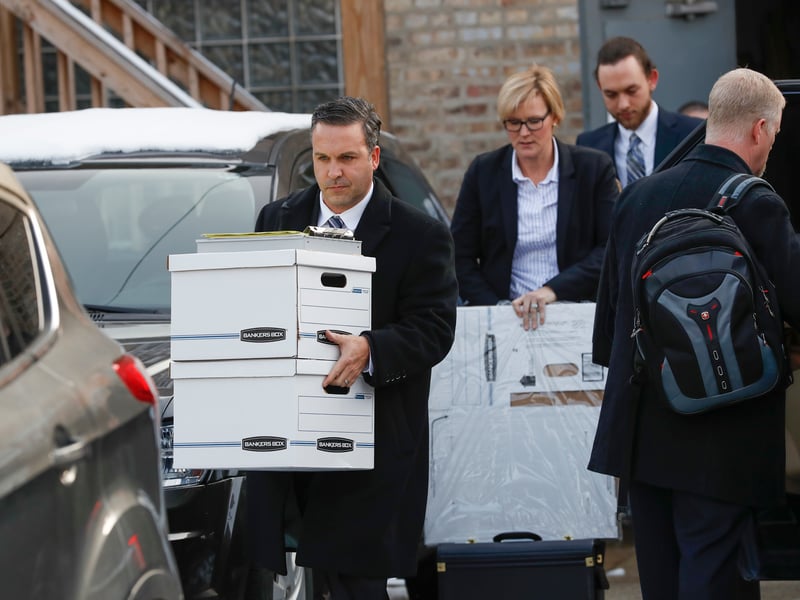
CHICAGO (CN) — Former officials for one of Chicago’s most popular museums took the stand Monday in the federal corruption trial of ex-city councilor Ed Burke, testifying to the museum’s efforts to placate the then-powerful alderman in 2017 as they sought his approval for a visitor fee increase.
Federal prosecutors have accused Burke of extorting the Field Museum of Natural History over the proposed increase by threatening to derail the fare hike unless the museum offered a job to a family friend.
The testimony of Deborah Bekken, the Field Museum’s former director of government affairs and sponsored programs, and Richard Lariviere, former museum president and CEO, seemed to support this accusation. Bekken told jurors that any fee increase at the museum needed the approval of the Chicago Park District, but that in summer 2017 she and Lariviere also feared Burke would publicly oppose the increase.
While he had no direct control of the approval process, Burke was head of the city’s powerful committee on finance at the time. He also opposed a fare hike at the Art Institute of Chicago in 2009 by threatening to cut public subsidies for museums that charge local residents too much.
“I think that Chicago tax payers who already subsidize the operations of museums ought to get a break,” ABC7 News quoted Burke saying that year.
Lariviere, recounting that incident Monday, said he thought it best to “stay on alderman Burke’s good side.” Resistance from such an influential Chicago figure, he said, might have created adverse “complications” for the Field Museum.
“You always want to have your ducks in a row when talking with such people,” Lariviere said.
To that end, Bekken told jurors that she attempted in September 2017 to set up a meeting with Burke to assure his “blessing.” But when she called Burke at his office, Bekken got chewed out instead.
In that Sept. 8, 2017 phone call, which the FBI clandestinely recorded and which prosecutors played for the jury Monday, Burke berated Bekken over the fact that the museum had not accepted an internship application from a young woman named Molly Gabinski — Burke’s goddaughter and the daughter of one his close friends and political allies, former Chicago alderman Terry Gabinski.
For failing to process her application, Burke insinuated to Bekken that he would kill the fare hike proposal.
“So now you’re going to make a request of me?” Burke asked Bekken during the call. Before a flustered Bekken could respond, Burke cut her off.
“I’m sure I know what you want to do, because if the chairman of the Committee on Finance calls the president of the Park Board, your proposal is going to go nowhere,” he said.
“We’ll work on fixing it. We’ll definitely fix it,” Bekken finally responded.
“Well somebody better fix it,” Burke said.
Though Bekken agreed to “fix” the issue, she told the jurors she didn’t really know what she was agreeing to fix or whose application Burke was referring to.
“It was obvious… I had an upset public official, and I had no idea why,” she said.
It was only after the call, Bekken said, that she and Lariviere discovered Molly’s resume had gotten lost in the shuffle during that position’s application process months earlier, in July. Lariviere called Burke later that day to offer contrition, apologizing and saying he was “really feeling shitty” about the situation. The pair also scrambled to find a “mea culpa prize” for the alderman, ultimately offering Molly Gabinski a full-time coordinator position.
She turned down the offer to accept another job elsewhere, but in a separate call on Sept. 12, 2017, which prosecutors also played for jurors, Burke still bragged to his goddaughter’s mother Celeste Gabinski about leaning into the Field Museum staff.
“Now they’re calling me, asking me for help in another matter, and I read them the riot act because of how they treated Molly’s application,” Burke told Celeste, who has also served as office manager for Democratic Illinois Senator and Senate Majority Whip Dick Durbin.
“How lucky can this kid be, you guys are so wonderful with her,” Celeste Gabinski said on the same call.
The calls over Molly Gabinski’s internship were not the only ones Burke made on behalf of the Gabinski children; in a separate conversation from November 2017, which jurors heard late Friday afternoon, Burke also spoke with a representative of the Chicago Police Department to advocate for Terry Gabinski’s son, who had failed to complete his application to the department.
The phone calls, along with Bekken and Lariviere’s testimony, bolstered prosecutors’ depiction of Burke as a corrupt “extortionist” in their opening arguments last week.
Burke’s defense attorney Joseph Duffy offered a different narrative: He used the record to suggest that the former city councilor— far from holding the fare increase hostage contingent upon Molly’s job offer — was was just passionate about ensuring Chicagoans could access their museums and parks.
“His concern was for the three million people that reside in the city of Chicago,” Duffy said.
During Bekken’s cross-examination, Duffy also played up how Field Museum staff wanted Burke to stay quiet on the fare increase because they were worried about public backlash.
“That’s what the museum wanted from alderman Burke, was his silence?” Duffy asked Bekken. “Yes,” she responded.
Prosecutors concluded Lariviere’s direct testimony and cross-examination began late in the day Monday, but not before trial was briefly disrupted during his questioning when one of presiding U.S. District Judge Virginia Kendall’s service dogs peed on the courtroom carpet.
The Field Museum controversy is only one of the four “buckets” over which prosecutors brought 14 racketeering, bribery and extortion charges against Burke. The remaining three “buckets” involve Burke allegedly attempting to extort a Burger King franchise owner and solicit quid-pro-quo bribes from both individual and corporate property owners in the city. With so many issues to tackle, trial is expected to last into December.
 Follow @djbyrnes1
Subscribe to our free newsletters
Our weekly newsletter Closing Arguments offers the latest about ongoing trials, major litigation and rulings in courthouses around the U.S. and the world, while the monthly Under the Lights dishes the legal dirt from Hollywood, sports, Big Tech and the arts.