
 Search Articles


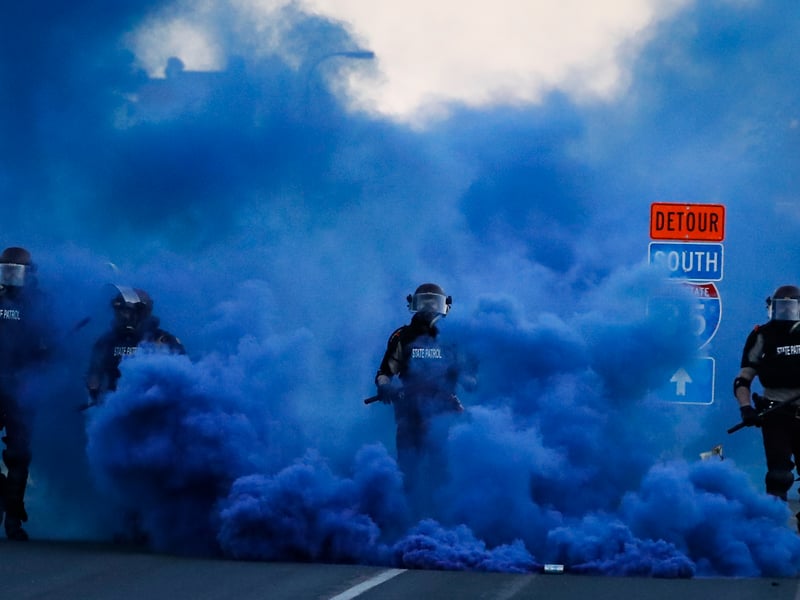
MINNEAPOLIS (CN) — The Department of Justice announced the findings of a two-year civil rights investigation into the Minneapolis Police Department on Friday morning, including determinations that the department engages in systemic discrimination against Black, Native American and disabled people and has a pattern of violating residents’ constitutional rights.
Attorney General Merrick Garland spoke at a press conference in Minneapolis to announce the investigation’s findings, along with the city’s agreement to negotiate toward a court-administrated consent decree.
“We will continue to work with the city and the MPD toward ensuring that MPD officers have the support and resources they need to do their jobs effectively and lawfully,” Garland said, “as we work together toward meaningful and durable reform.”
Looming large behind the announcement was the 2020 murder of George Floyd by MPD veteran Derek Chauvin, which sparked protests around Minnesota and the world when a graphic video of Floyd’s death went viral.
“The patterns and practices we observed made what happened to George Floyd possible,” Garland said.
Those patterns included the use of excessive force, including when no force at all is necessary, and discriminatory treatment of Black and Native American people, including through disproportionately high rates of traffic stops, searches and seizures and uses of force.
Associate Attorney General Vanita Gupta paid particular note to a pattern of officers telling people who complained of difficulty breathing that “you can breathe, you’re talking right now” – a sentiment that Chauvin and his colleagues echoed on the scene of Floyd’s death.
Gupta and Assistant Attorney General Kristen Clarke also noted that the police department rarely disciplined officers for overtly racist statements and conduct unless and until the public pushed back against it. In one particularly egregious incident, Clarke said, an officer faced no discipline after he told a group of Somali-American youth who called him a racist that he was “proud of it,” and that the U.S. should have “finished the job” during Blackhawk Down, the infamous 1993 U.S. raid on Mogadishu. The officer was eventually fired after cellphone footage of the incident went viral weeks later and the MPD opened an investigation – one of several similar incidents listed in the Justice Department’s findings.
Clarke also noted that in 2020, officers stopped reporting race and gender information about people they interacted with – a practice at odds with department policy which made investigation more difficult.
Also among the Justice Department’s findings were violations of the First Amendment rights of protesters and journalists. At 22 protests reviewed between 2016 and 2022, the report found that officers made a habit of retaliating against protesters, particularly protesters of police misconduct, and unlawfully restricting and attacking journalists covering protests.
The city has agreed to negotiate toward a consent decree with the Justice Department to address the issues raised in the investigation. Details on what exactly the consent decree might contain were sparse Friday morning, with DOJ officials confirming only that the city had signed on to an “agreement in principle” to negotiate a consent decree and that negotiations could take months or even over a year.
Details of the investigation’s findings are expected to be discussed Friday afternoon at a DOJ-hosted presentation. The department released the findings on its website shortly after its Friday morning press conference.
Minneapolis Mayor Jacob Frey and Police Chief Brian O’Hara emphasized that the police force is working toward turning a corner.
“Our city enterprise is committed to this work,” Frey said. “Change is, in fact, happening.”
O’Hara, meanwhile, acknowledged that his department has a long road ahead but said he was seeing promise, even among staffing shortages. The officers who remained with the department after 2020, he said, were committed to change, and new applicants were “excited about what’s happening in Minneapolis.”
The Minnesota Department of Human Rights announced the findings of its own investigation into MPD last year and reached a settlement with the city in March which also provides for the appointment of a third-party monitor. Frey said Friday that the city hoped the federal and state investigators could agree upon a single monitor to avoid conflicting standards and determinations of compliance.
Subscribe to our free newsletters
Our weekly newsletter Closing Arguments offers the latest about ongoing trials, major litigation and rulings in courthouses around the U.S. and the world, while the monthly Under the Lights dishes the legal dirt from Hollywood, sports, Big Tech and the arts.