
 Search Articles


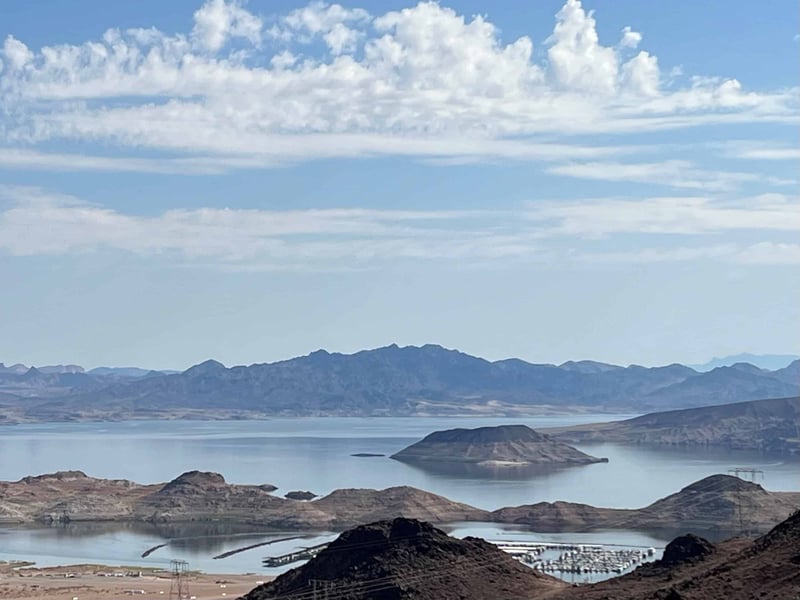
LAS VEGAS (CN) — A federal jury took less than half a day Wednesday to convict two men of damaging ancient rock formations in Nevada’s Lake Mead Recreation Area.
A federal jury convicted Wyatt Clifford Fain and Payden David Guy Cosper, cousins from Henderson, Nevada, on charges of injury and depredation of U.S. property. They found the cousins in April 2024 pushed large parts of a rock formation over a cliff in the Lake Mead National Recreation Area.
Sentencing will take place July 8 before U.S. District Judge Jennifer Dorsey. The men could face up to 10 years in federal prison.
Prosecutors in their closing arguments Wednesday told the jury the men acted with malicious intent, pointing to an Instagram post.
“Video, a couple of pictures, 45 minutes of testimony and we’re done,” Assistant U.S. Attorney Robert Knief said. “What did the government prove with all this? They proved a lot.”
A video depicted the men pushing rock formations, with Fain’s daughter yelling for them to stop.
The two men opted against testifying at trial.
Attorneys for the men argued that prosecutors failed to prove their clients pushed the rocks knowing that it was against the law.
“The burden falls on the government to present proof,” attorney Ross Goodman, representing Cosper, told the jury. “They must prove there was willfulness with knowledge of the law that they pushed the rocks down.
“The government never said you couldn’t push rocks without knowledge,” he added. “They’re trying to shoehorn the video into that law. What fact will they show that they had knowledge? There’s no direct evidence. There’s no circumstantial evidence.”
“The burden falls on the government to present proof,” Goodman added outside of the courtroom. “They must prove there was willfulness with knowledge of the law that they pushed the rocks down.”
Attorney Joy Chen, representing Fain, echoed those arguments, saying prosecutors didn’t show enough evidence pointing to the men’s culpability.
“The only piece of evidence the government has for the jury is the video,” Chen said. “That doesn’t tell the jury what they should know.”
The defense moved for a judgment of acquittal, which Dorsey denied due to the testimony of Park Ranger Somer Zarate.
Zarate testified the men knew their acts were unlawful because of passes and brochures.
Knief in his closing argument said the defense attorneys missed the point about the case.
“It’s not just the video, but the testimony that’s substantial,” he said. “They’re arguing, ‘What’s knowledge?’ Everyone knows you can never murder someone. You can’t steal. You can’t break things that don’t belong to you. You can’t destroy things that don’t belong to you.”
Before trial, the men in court filings argued the government’s case hinged on the rocks’ value. A felony conviction requires that the damages exceed $1,000.
However, the government didn’t preserve the evidence, which violated the men’s due process rights, they argued in a motion to dismiss.
The judge ruled that the men failed to show how evidence from the rocks would have helped their case. A defense expert already determined that there likely were no fossil tracks in the area. The defendants didn’t explain how preserving those fragments would have helped the expert.
Also, the government’s decision against collecting any fragments wasn’t done in bad faith, the judge ruled.
Subscribe to our free newsletters
Our weekly newsletter Closing Arguments offers the latest about ongoing trials, major litigation and rulings in courthouses around the U.S. and the world, while the monthly Under the Lights dishes the legal dirt from Hollywood, sports, Big Tech and the arts.