
 Search Articles


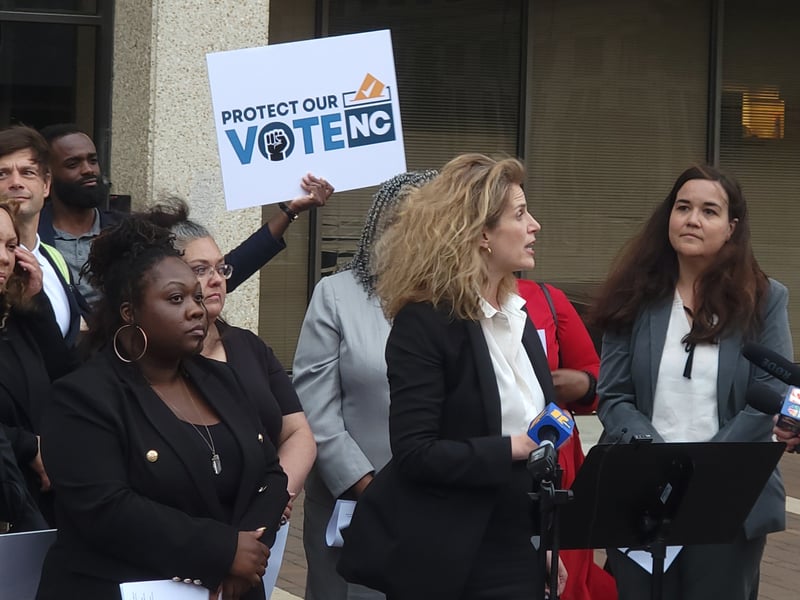
WINSTON-SALEM, N.C. (CN) — A federal judge shot down a seven-year case Thursday that claimed that North Carolina’s voter ID requirements target Black and Hispanic voters and are burdensome.
The North Carolina State Conference of the NAACP and several of its chapters first claimed in 2018 that a law requiring photo ID to vote disproportionately impacts minority voters, arguing it violates section two of the Voting Rights Act and the 14th and 15th Amendments, imposing burdens on the right to vote that the state can’t justify.
The defendants, including Senate President Pro Tempore Phil Berger and former state Speaker of the House Tim Moore, contended that the law was carefully shaped after the voters passed a constitutional amendment requiring voter ID and isn’t discriminatory. The requirement is one of the most permissive in the nation, they argued, and the legislature chose to provide exemptions to the rule, allowing voters without ID to fill out an affidavit for their ballot to be counted.
U.S. District Judge Loretta Biggs, a Barack Obama appointee who had previously issued a preliminary injunction halting the photo ID requirement from being used in the 2020 election, found in favor of the Republican defendants in her 134-page trial findings. Trial in the case wrapped up in 2024.
“This case is not about whether North Carolina law will require that voters show photo identification when they go to the polls,” Biggs said, pointing to a 2018 constitutional amendment passed by the voters to institute a voter identification requirement.
The central focus of the case is if state lawmakers violated the 14th and 15th Amendments and the Voting Rights Act in passing the legislation, which they did not, she said.
“This case law requires this court to assign less weight to the historical background," Biggs wrote, referring to North Carolina’s long record of racial discrimination in voting and voter suppression. “It further requires almost impenetrable deference to the presumption of legislative good faith. And finally, even in the shadow of significant evidence of disparate impact, the law of the case doctrine compels the conclusion that the record before this court does not establish discriminatory intent.”
The passage of the law had irregularities, Biggs said, including limited debate and public comment and a shortened timeline. But there was bipartisan support for the bill, and the court has to presume lawmakers acted in good faith. The plaintiffs didn’t present direct evidence that discrimination was at play, she said.
“Finally,” Berger said in a statement Thursday. “After seven years, we can put to rest any doubt that our state’s voter ID law is constitutional. This is a monumental win for the citizens of North Carolina and election integrity efforts.”
North Carolina’s NAACP President Deborah Dicks Maxwell said the ruling was discouraging.
“This decision is deeply disappointing and ignores the real and documented barriers that voter ID laws create for Black, Latino, elderly, and low‑income voters,” she said. “The NAACP North Carolina State Conference remains committed to protecting the fundamental right to vote and will continue pursuing every legal and civic avenue to ensure fair access to the ballot.”
Biggs added that she finds North Carolina’s voting regulations to be among the most severe in the nation, but that the requirements don’t surpass the “usual burdens of voting.”
Despite the state providing free photo IDs during early voting and offering one-stop early voting, evidence from trial demonstrates there is a burden on Black and Hispanic voters, who are less likely to have qualifying forms of photo ID, Biggs noted. The state also amended the law after it was passed, expanding early voting and the number of qualifying IDs.
“The fact of the matter is that on Election Day thousands of voters — and a disparate number of them being racial minorities — will not possess the required ID to vote despite being validly registered North Carolina voters, and for many their vote will not count when the election is certified,” Biggs said.
North Carolina State Board of Elections Executive Director Sam Hayes called the decision a vindication of the law.
“This ruling confirms that the law, as enacted and implemented, meets legal standards and includes important protections to ensure voters can participate in our elections,” he said. “Election security and voter accessibility are not competing priorities — they are two sides of the same coin, and North Carolina’s voter ID law reflects that balance.”
The order comes as the Safeguard American Voter Eligibility, or SAVE America, Act pends in the U.S. Senate. If passed into the law, the legislation would require voters to provide proof of citizenship at the polls.
In a judgment filed in a separate North Carolina voting case Thursday, a federal judge found in favor of Republican legislative defendants in a case over ballots cast by same-day registrants. The plaintiffs argued that changes to state law requiring election boards to cancel a voter’s registration and discard their ballot if a voter registration notice is undeliverable violate the 26th Amendment and is discriminatory against young voters.
The new process does not disproportionately impact young voters, the judge found, nor did the plaintiffs prove young voters are worse off.
 Follow @SKHaulenbeek
 Follow @shaulenbeek.bsky.social
Subscribe to our free newsletters
Our weekly newsletter Closing Arguments offers the latest about ongoing trials, major litigation and rulings in courthouses around the U.S. and the world, while the monthly Under the Lights dishes the legal dirt from Hollywood, sports, Big Tech and the arts.