
 Search Articles


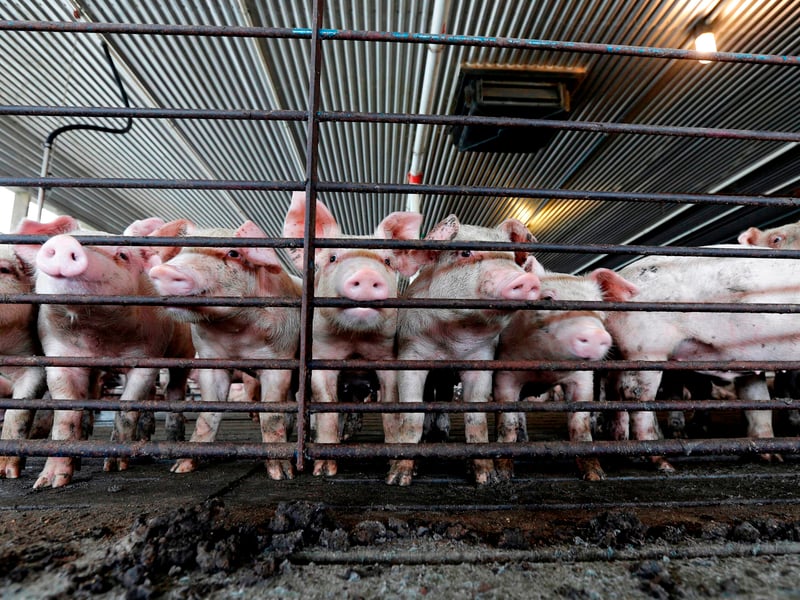
DES MOINES, Iowa (CN) — A federal district judge on Wednesday upheld the constitutionality of Iowa’s ban on a trespasser’s “use” of a camera or recording device to investigate animal abuse in livestock facilities.
The U.S. District Court for the Southern District of Iowa granted the state’s motion to dismiss the suit by People for the Ethical Treatment of Animals and an Iowa citizens’ group and held that Iowa’s law withstands constitutional scrutiny as applied to the plaintiffs.
Chief U.S. District Judge Stephanie Rose, a Barack Obama appointee, wrote in a 22-page ruling that the targeted approach of Iowa’s law “directly advances Iowa’s substantial interests in protecting property rights and privacy while leaving open ample alternative channels for plaintiffs to disseminate their message through lawful means.”
Rose wrote that while the plaintiffs’ recordings at livestock facilities address matters of public controversy, which the First Amendment “most vigorously protects,” the state has an interest in protecting the property rights of those livestock facility owners against illegal trespassers who make a record of their unlawful presence.
“Property owners retain the right to exclude even in spaces conditionally open to the public,” Rose wrote. “This right extends beyond controlling physical presence; it includes the authority to regulate surveillance activities conducted on the property.”
The provision of Iowa’s law at issue in this case “directly addresses the specific harm caused by recording while trespassing,” she wrote. “The evidence in the legislative record, including references to incidents of trespass and subsequent recording at agricultural facilities, provides sufficient support for the tailoring of the act to the state’s interests.”
David Samuel Muraskin, an attorney with the Washington, D.C.-based FarmSTAND representing the plaintiffs, told Courthouse News the ruling enables the state to “hide businesses’ misconduct and suppress civil disobedience if the government simply asserts it is seeking to protect private property.”
“Until the legislature has the courage to repeal laws like this that were passed at the behest of factory farms to hide animal abuse and squelch debate about their practices, the courts are the only hope we have to preserve rights and honest discourse.”
Thus, he said, the plaintiffs are evaluating whether to appeal.
Iowa Attorney General Brenna Bird said in a statement released after the ruling, “Farmers should be able to farm without fear of trespassers. That is why Iowa passed important laws to prevent trespassers from lying to get onto a property and hurt it, planting secret recording devices, or filming on the property they trespassed onto. I fought to defend those laws that strengthen security for farmers and property owners. We won and protected farmers. Farmers, we have your back.”
Wednesday’s decision by the federal district court in Des Moines came in response to a question remanded by the U.S. Court of Appeals for the Eighth Circuit.
Earlier, the Eighth Circuit had otherwise mostly upheld the constitutionality of Iowa’s statute that makes it a crime to “place” a camera or electronic surveillance device while trespassing on the property of a livestock facility. But a three-judge panel of the appeals court said the plaintiffs — People for the Ethical Treatment of Animals and other animal rights advocates who seek to expose animal abuse in livestock facilities — had standing to challenge the constitutionality of the statute’s provision barring a trespasser’s “use” of a camera or recording device.
Iowa’s statute protecting livestock facilities from such investigations made it a crime to lie on an employment application to gain access to such facilities and to trespass with the intent of documenting animal abuse. The Eighth Circuit in January 2024 handed down two rulings: one ruling upheld the constitutionality of Iowa’s fraudulent employment application provision, while the second ruling upheld the constitutionality of the trespass provision with the exception of the question on remand.
In the first 2024 decision, U.S. Circuit Judge L. Steven Grasz, a Donald Trump appointee, wrote that the plaintiffs’ argument that the statute is unconstitutional on its face “fails because the act has a plainly legitimate sweep and it is narrowly tailored to achieve the state’s significant government interests.”
In the second decision, U.S. Circuit Judge Steven Colloton, a George W. Bush appointee, said the fraudulent employment provision in Iowa’s statute is consistent with the First Amendment.
“If a person uses deception to gain employment with intent to harm a facility, the offender would be liable for deceptively praising the facility (“I love the work you do, and I want to support it!”) or deceptively criticizing the facility (“This facility is poorly managed, and I will help increase profits.”),” Colloton wrote. “The statute does not prefer laudatory lies over critical falsehoods.”
The third member of the two panels that issued the January rulings was U.S. Circuit Judge Jonathan Kobes, also a Trump appointee.
 Follow @roxalaird16
Subscribe to our free newsletters
Our weekly newsletter Closing Arguments offers the latest about ongoing trials, major litigation and rulings in courthouses around the U.S. and the world, while the monthly Under the Lights dishes the legal dirt from Hollywood, sports, Big Tech and the arts.