Search Articles


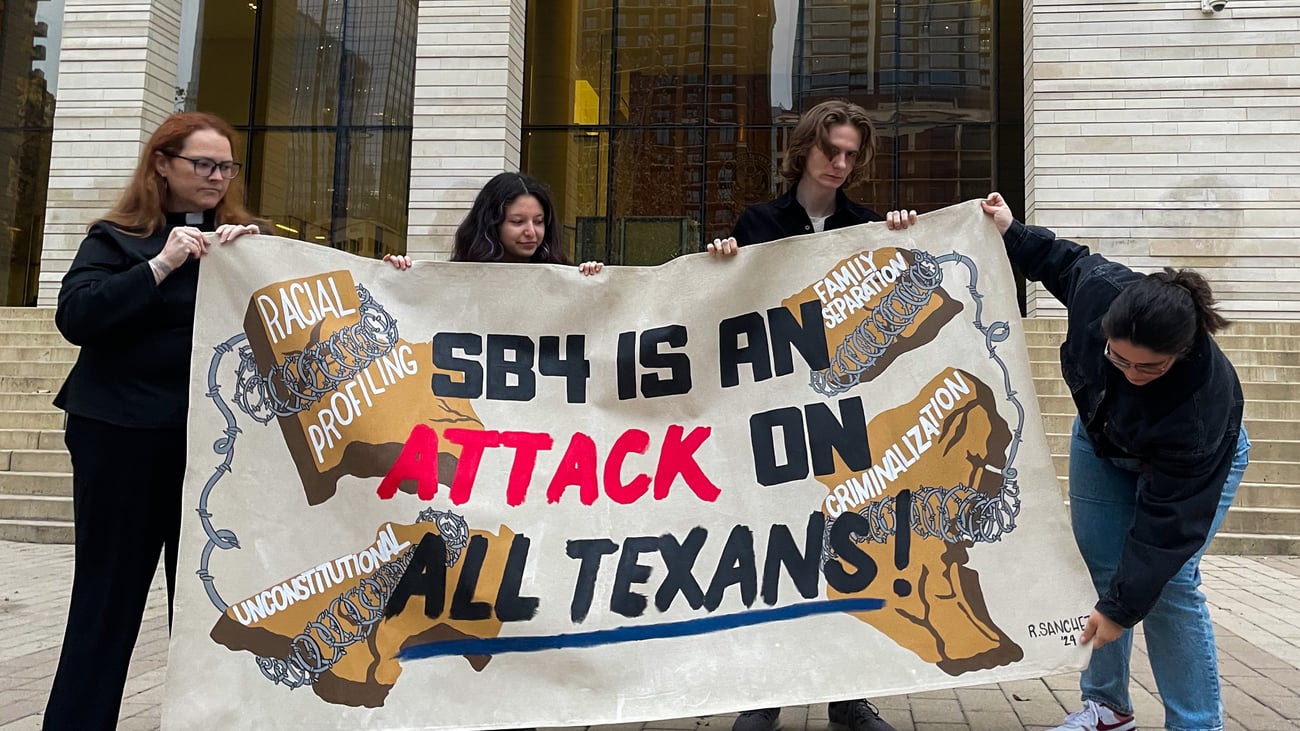
AUSTIN, Texas (CN) — Two anonymous Honduran immigrants at the center of a class action against Texas say they’re at immediate risk of being arrested and removed from the country if a controversial Texas law isn’t stopped from taking effect in two days.
In a Wednesday hearing, civil rights groups representing the immigrants say several provisions of Senate Bill 4 — which makes it a state crime to enter the country without permission — violate the U.S. Constitution’s supremacy clause. They’ve asked to stop Freeman Martin, director of the Texas Department of Public Safety, from enforcing those provisions.
“What do I do with the provisions that, in my view, are just not constitutional?” U.S. District Court David Alan Ezra asked during the preliminary injunction hearing. Ezra was transparent about his opinion that SB 4 contained many “problematic provisions.”
However, at the conclusion of the hearing, Ezra said he doesn’t intend to rush his opinion and it is possible that the law, in its entirety, will take effect Friday.
The plaintiffs — represented by the American Civil Liberties Union, ACLU of Texas and the Texas Civil Rights Project — challenge provisions criminalizing unlawful re-entry into the United States, allowing magistrates to issue removal orders, criminalizing individuals who do not comply with a removal order and requiring magistrates to continue removal proceedings regardless if a person has a pending immigration case in federal court. They say immigration enforcement should be a issue exclusively handled by the federal government.
Cody Wofsy, deputy director of the ACLU Immigrants’ Rights Project, told Ezra that unless the state blocked from enforcing those provisions, his clients will be in imminent danger of being arrested.
One of the plaintiffs is a 59-year-old father who is a green card holder. Because he reentered the U.S. without authorization after being previously deported, he faces removal under SB 4. As a permanent resident, he has some protections from deportation under federal law, but those protections are not recognized under SB 4.
“Texas has a new tool it could deploy against him by charging him with a state crime,” Wofsy said.
But Martin and the Texas Department of Public Safety say the plaintiffs lack of standing.
State attorney Monroe David Bryant, told Ezra there is no showing of irreparable harm to the plaintiffs.
Ezra questioned Bryant on how the Department of Public Safety intends to enforce SB 4, with the number of unlawful border crossings down from 2023 and the state of Texas actively partnering with federal immigration agents.
“Does the state still intend to submit persons to district attorneys and have them be prosecuted in state court to be ordered removed?” Ezra asked. “Because I do not know. The state has been ambivalent about its position.”
Bryant, paraphrasing Martin, told the court, “We have not made any decisions on how SB 4 will be enforced, in part or full.” “But, right now, there is no imminent enforcement action against the plaintiffs.”
Bryant said nothing in the U.S. Constitution or from Congress has said states are preempted from enforcing immigration law.
Ezra interjected, saying his concern with the law was not that it purported to help federal agents enforce federal law, but that it created its own immigration law that, under a different presidential administration, could run counter to the federal government’s objectives.
“Nothing in SB 4 claims to be subservient to the federal government,” Ezra explained. “It seeks to create a sovereign right for Texas to arrest, charge and deport people.”
Ezra previously presided over an earlier case brought by the Biden administration, El Paso County and several immigrant advocacy organizations, who similarly argued the law violated the supremacy clause.
The judge granted their request for a preliminary injunction and a Fifth Circuit panel upheld the injunction. However, in April, the full appeals court found the plaintiffs lacked standing and lifted the injunction.
 Follow @KirkMcDanie1
Subscribe to our free newsletters
Our weekly newsletter Closing Arguments offers the latest about ongoing trials, major litigation and rulings in courthouses around the U.S. and the world, while the monthly Under the Lights dishes the legal dirt from Hollywood, sports, Big Tech and the arts.