
 Search Articles


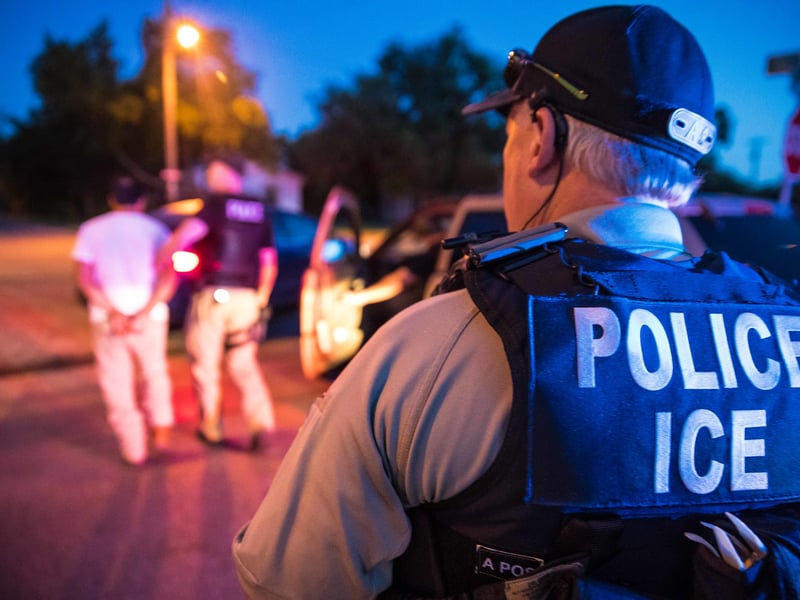
WASHINGTON (CN) — A federal judge on Wednesday appeared doubtful Immigration and Customs Enforcement officers were properly following a court order blocking a campaign of arresting immigrants without warrants or probable cause of a flight risk.
Senior U.S. District Judge Beryl Howell previously found in December federal agents were summarily rounding immigrants off the streets of Washington without any assessments regarding their “likelihood of escape,” including their immigration status or ties to the community, resulting in several unlawful arrests.
On Dec. 2, the Barack Obama appointee ruled while federal agents may have the authority to make warrantless immigration arrests, the way that authority has been used on the immigrant community in Washington was likely unlawful.
She further certified a class, which she referred to as the “Unassisted Escape Risk Class,” which includes all individuals who, since President Donald Trump’s Aug. 11 “crime emergency,” have been or will be arrested without a warrant and without a pre-arrest, individualized assessment of probable cause.
On Feb. 19, the American Civil Liberties Union informed the court the government was actively ignoring her order and was continuing to conduct warrantless immigration arrests without the probable cause determinations, and asked Howell to enforce the injunction.
At the time of the filing, the government produced 43 “Record of Deportable/Inadmissible Alien” documents, or Form I-213, that describe an immigration agent’s encounter with an arrested individual.
The ACLU returned to court arguing ICE officers had continued the unlawful practices under a Jan. 28 memo issued by acting ICE Director Todd Lyons and urged Howell issue an order to enforce the injunction.
The ACLU argued the memo set too low a standard to establish probable cause for arrest, including whether an individual was driving a car or appeared nervous, which it said “seemingly encompasses virtually anyone detained through a traffic stop or on the street.”
ACLU attorney Aditi Shah said the standard, specifically whether an individual is “likely to remain at the scene of the encounter,” meant that any individual detained while en route to work or to drop their children at school would be subject to detention.
“Simply existing in public and being in a car does not mean you are likely to escape,” Shah said, adding that individuals approached at a bus stop would similarly be deemed a flight risk.
Shah added, since Howell’s December order, 26 of a total 33 warrantless immigration arrests provided no basis for an agents’ escape risk determination, instead leaving the section on the relevant form blank.
The Justice Department confirmed the low arrests were due, in part, to the severe snowstorms in Washington in January and February.
Howell seemed doubtful she should issue an order based on the limited record before her, instead instructing the parties to provide more briefing on the Lyons memo so she could review the standards.
Nonetheless, Howell repeatedly noted her shock regarding the monthslong detentions several individuals have experienced before getting a hearing before an immigration judge, when legal precedent requires criminal defendants to be arraigned before a magistrate within 48 hours.
“I found that very troubling,” Howell said. “To me, that’s a huge statutory violation.”
Assistant U.S. Attorney John Bardo said the delay was dependent on immigration judges’ availability — Howell noted the Trump administration fired nearly 100 such judges in 2025 — and added the Department of Homeland Security was working on hiring more judges.
Bardo maintained ICE agents were considering individuals’ escape risk along with the “totality of the circumstances” and were trying to comply with Howell’s order.
He said the “scene of the encounter” language in the Lyons memo applied to individuals whom agents could not guarantee would remain until a warrant could be obtained, or who did not have an identifiable “next likely location,” such as their home or place of business.
Howell seemed skeptical agents were truly in compliance. She pointed to an incident described in a declaration by “Adolfo Doe,” an individual who had lived in Washington for 25 years before his arrest at a bus stop.
That fact was left out of his arrest form, instead they said he “threatened to kill” the officers. Adolfo maintains that was a misinterpretation by the non-Spanish-speaking agent, and that he made an an innocuous statement inviting a Spanish-speaking agent to eat “carne asada” if he were deported to Mexico.
Bardo argued Adolfo threatened to “turn the agent into carne asada,” which did not appear convincing to Howell.
Howell ordered the parties to submit further briefing regarding the Lyons memo and how the Justice Department’s ongoing appeal of her Dec. 2 order affected her jurisdiction in the case. The parties are required to confer on a briefing schedule by Friday, indicating any ruling was weeks away.
 Follow @Ryan_Knappy
Subscribe to our free newsletters
Our weekly newsletter Closing Arguments offers the latest about ongoing trials, major litigation and rulings in courthouses around the U.S. and the world, while the monthly Under the Lights dishes the legal dirt from Hollywood, sports, Big Tech and the arts.