
 Search Articles


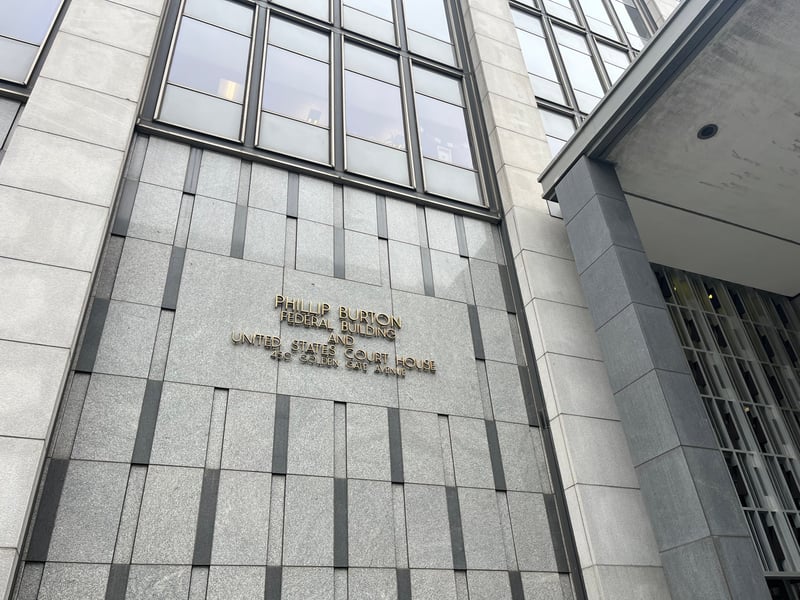
SAN FRANCISCO (CN) — A federal judge on Thursday postponed the termination of Temporary Protected Status for thousands of immigrants from Nepal, Nicaragua and Honduras.
U.S. District Judge Trina L. Thompson, a Joe Biden appointee, granted a request from the National TPS Alliance, an immigrant advocacy group, to postpone the termination of the Temporary Protected Status program for Nepal, Nicaragua and Honduras while litigation challenging Secretary of Homeland Security Kristi Noem’s recent orders ending the program plays out.
Thompson’s order postpones the terminations until at least Nov. 18, when a preliminary injunction hearing is scheduled.
The judge began her ruling by reprimanding the Trump administration’s handling of immigration issues.
“The freedom to live fearlessly, the opportunity of liberty, and the American dream. That is all Plaintiffs seek,” she said. “Instead, they are told to atone for their race, leave because of their names, and purify their blood. The court disagrees.”
National TPS Alliance and individual Temporary Protected Status holders from Nepal, Nicaragua and Honduras sued the Trump administration on July 7, claiming that Noem’s actions were unlawful and motivated by racial animus.
Temporary Protected Status protects from deportation nationals from certain countries due to violence or economic duress. While individuals with TPS status can’t be deported and can work legally in the U.S., they do not have a path to U.S. citizenship.
Nicaragua and Honduras were originally designated for TPS in 1999 in response to the destruction caused by Hurricane Mitch, while Nepal was added to the program in 2015 after an earthquake.
After Noem’s June and July orders regarding the status for those three countries, however, TPS was set to expire on Aug. 5 for Nepal, and on Sept. 6 for Nicaragua and Honduras — affecting more than 60,000 individuals currently in the U.S.
Sandhya Lama, a TPS holder from Nepal, said that the decision affirms the humanity of such status holders.
“Today’s victory is a reminder of our strength, unity and the power of our voices,” she said. “We are not here by accident. We are here because this country believes in liberty and justice. We will continue this fight until a permanent solution, because our lives, our families and our futures are worth it.”
Ahilan T. Arulanantham, an attorney for the plaintiffs, said that the decision allows for due process for Temporary Protected Status holders.
“These individuals have been working and contributing to their communities in the United States for decades," Arulanantham said. “Under the court’s order, these long-time lawful residents will have an opportunity to show that the federal government’s rush to strip their protections violates the rules Congress set in place.”
Attorneys for the government could not immediately be reached for comment.
Thompson found that the plaintiffs are likely to succeed on the merits of their claims that Noem violated the Administrative Procedure Act by not conducting an objective review of country conditions or providing an explanation for breaking past practices by giving TPS holders only 60 days’ notice of the loss of their status, when they are usually given at least a six-month transition period.
“The Secretary has a history of systematically attempting to limit TPS,” she wrote.
The judge also ruled that the plaintiffs are likely to prove Noem’s termination of TPS for Nepal, Honduras, and Nicaragua was motivated by racial animus.
“By stereotyping the TPS program and immigrants as invaders that are criminal, and by highlighting the need for migration management, Secretary Noem’s statements perpetuate the discriminatory belief that certain immigrant populations will replace the white population,” the judge said in her order.
When questioned about the pretextual nature of Temporary Protected Statues terminations on Tuesday, attorney William Weiland, representing the government, said that “taking a hard look at immigration policies” was “part and parcel with the new administration coming into the office.”
“The Secretary of Homeland Security has never hidden the fact that this is a policy reviewing immigration policies in the U.S.,” he said.
 Follow @mhattridge_
Subscribe to our free newsletters
Our weekly newsletter Closing Arguments offers the latest about ongoing trials, major litigation and rulings in courthouses around the U.S. and the world, while the monthly Under the Lights dishes the legal dirt from Hollywood, sports, Big Tech and the arts.