
 Search Articles


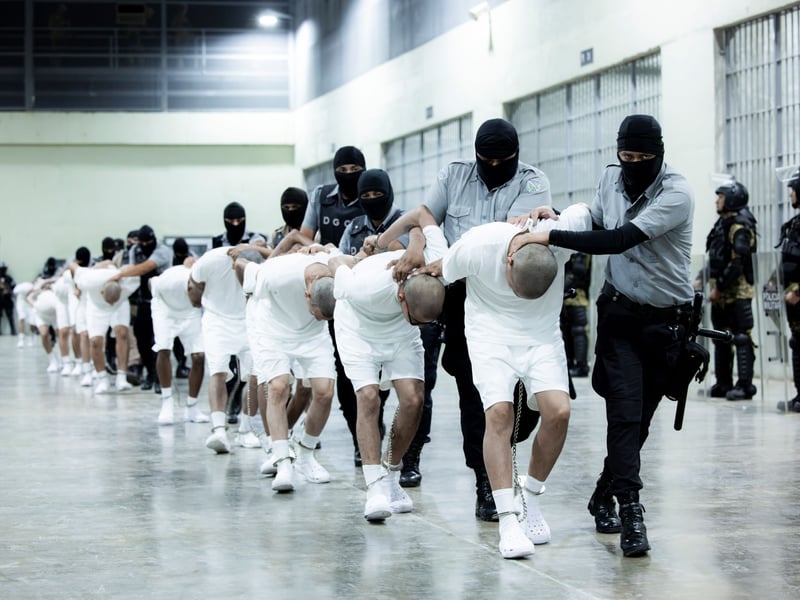
WASHINGTON (CN) — A federal judge on Thursday ordered the Trump administration to facilitate the return of more than 100 Venezuelan immigrants who were wrongfully deported to El Salvador last March, allowing them to travel independently or be flown to a port of entry where they would reenter immigration detention.
Chief U.S. District Judge James Boasberg’s ruling makes clear that the immigrant class, who was released from the CECOT mega-prison to Venezuela last summer in a prisoner swap, must be allowed to challenge their designations as Tren de Aragua gang members via supplemental habeas corpus petitions.
The Barack Obama appointee wrote in a seven-page opinion that the closest analogous case was that of Kilmar Ábrego García, a Maryland man who was also summarily deported to El Salvador on March 15, 2025, then returned to the United States nearly three months later under order by the Supreme Court.
Boasberg explained that, because the government violated the immigrants due process rights, the government is obligated to begin the remedial process by returning them to the U.S. and providing them the full due process of law.
“Against this backdrop, and mindful of the flagrancy of the government’s violations of the deportees’ due-process rights that landed plaintiffs in this situation, the court refuses to let them languish in the solution-less mire defendants propose,” Boasberg said.
That process begins with providing the immigrants who choose to return via plane a boarding letter paid for by the government.
“It is unclear why plaintiffs should bear the financial cost of their return in such an instance,” Boasberg wrote. “It is worth emphasizing that this situation would never have arisen had the government simply afforded plaintiffs their constitutional rights before initially deporting them.”
He slammed the Justice Department for its apparent unwillingness to provide actionable solutions — at a hearing Monday Justice Department attorney Tiberius Davis argued that allowing the migrants to revive their habeas claims carried significant factual and procedural issues — which he described as “essentially [telling] the court to pound sand.”
“Plaintiffs’ prudent approach has not been replicated by their government counterparts,” Boasberg wrote. “Although the Supreme Court in Ábrego García upheld Judge Paula Xinis’s order directing the government ‘to facilitate and effectuate the return of’ that deportee, defendants at every turn have objected to plaintiffs’ legitimate proposals without offering a single option for remedying the injury that they inflicted upon the deportees or fulfilling their duty as articulated by the Supreme Court.”
Only after extensive questioning during a Monday hearing did the government say it preferred the immigrants be returned rather than approve remote hearings for their habeas claims.
On Monday, American Civil Liberties Union attorney Lee Gelernt noted that the hearing marked 331 days since his clients were first deported to El Salvador.
Gelernt first brought up Ábrego García’s case to suggest that, if his clients were provided the opportunity to challenge their designations as Tren de Aragua gang members, many would be successful.
He noted the Maryland man was removed based on a false MS-13 designation, and the government’s only proof were hand tattoos and a Chicago Bulls hat, neither of which indicate MS-13 membership.
If any immigrants were Tren de Aragua members, they were unlikely to plead their case via habeas petitions, Gelernt added.
Boasberg indicated he too thought the government’s designations were flimsy, saying he would be surprised if none of the 137 immigrants were part of the gang and that it would be “quite something.”
Boasberg wrote that his decision was tailored specifically to avoid Secretary of State Marco Rubio’s stated concerns that the ACLU’s request could “risk material damage to U.S. foreign policy interests at this delicate juncture.”
“Understanding that the situation in Venezuela remains in flux — given the United States’s recent ‘law enforcement action’ there — and crediting the government’s assertion that these matters implicate foreign affairs, plaintiffs have commendably sought measured steps from the court,” Boasberg said.
Gelernt claimed Monday that some immigrants were in hiding in Venezuela while others escaped to nearby third countries.
Boasberg ordered the ACLU tell him, via a sealed filing, how many immigrants were in third countries by Feb. 20, then file a notice by Feb. 27 stating how many wish to travel independently or be flown to a port of entry.
He added a March 9 deadline to indicate the number of immigrants either in Venezuela or third countries who wish to file supplemental habeas briefs.
The government must file a status report by March 13 explaining how and when it will transport any immigrant seeking who wished to return.
The Justice Department has vowed to appeal the chief judge’s decision to the D.C. Circuit, which has already weighed in on the case multiple times throughout the litigation.
 Follow @Ryan_Knappy
Subscribe to our free newsletters
Our weekly newsletter Closing Arguments offers the latest about ongoing trials, major litigation and rulings in courthouses around the U.S. and the world, while the monthly Under the Lights dishes the legal dirt from Hollywood, sports, Big Tech and the arts.