
 Search Articles


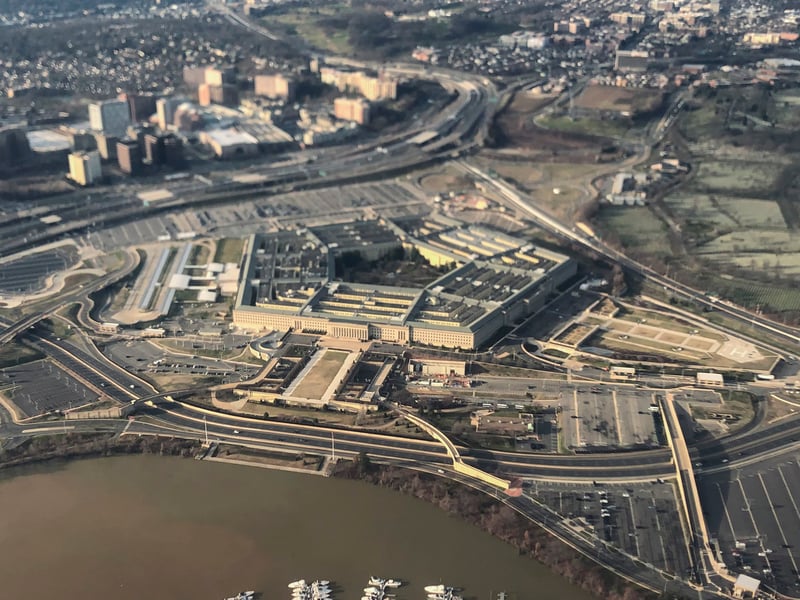
WASHINGTON (CN) — A federal judge on Friday blocked the Pentagon’s press policy to bar journalists from obtaining any information not explicitly approved for release by defense officials as a clear violation of the First Amendment meant to “weed out disfavored journalists.”
U.S. District Judge Paul Friedman rejected the Justice Department’s argument that the policy was necessary for national security, noting the military’s recent actions across the globe raise the need for transparency within the Pentagon.
“The court recognized that national security must be protected, the security of our troops must be protected and war plans must be protected,” the Bill Clinton appointee wrote in the 40-page opinion.
“But especially in light of the country’s recent incursion into Venezuela and its ongoing war with Iran, it is more important than ever that the public have access to information from a variety of perspectives about what its government is doing — so that the public can support government policies, if it wants to support them; protest, if it wants to protest; and decide based on full, complete and open information who they are going to vote for in the next election,” Friedman continued. “As Justice [Louis] Brandeis correctly observed, ‘sunlight is the most powerful of all disinfectants.’”
Under the Pentagon’s Oct. 6 press policy, journalists could be deemed a “security risk” for disclosing classified or even unclassified information without the Pentagon’s authorization. Dozens of media outlets rejected the rules rather than sign on by the Oct. 17 deadline.
Since the legacy media exodus, veteran journalists have been replaced by individuals and media outlets who closely align with the Trump administration and espouse viewpoints the department favors, The New York Times said in its Dec. 4 lawsuit.
They include Mike Lindell, Laura Loomer, Matt Gaetz and Raheem Kassam, among others.
Friedman determined the policy was clear viewpoint discrimination and rejected the Justice Department’s defense that highlighted how news outlets from across the political spectrum declined to sign.
The evidence, Freidman said, showed the policy discriminates not on political viewpoint but editorial viewpoint, whether “the individual or organization is willing to publish soirees that are favorable to or spoon-fed by department leadership.”
“In sum, the undisputed evidence reflects the policy’s true purpose and practical effect: to weed out disfavored journalists — those who were not, in the department’s view, ‘on board and willing to serve,’” Friedman wrote. “That is viewpoint discrimination, full stop.”
Friedman rejected the Justice Department’s argument that soliciting nonpublic information from certain Defense Department officials not authorized to share such information amounts to “criminal solicitation” and is thus not protected speech, calling it “plain wrong.”
The Justice Department’s reading of *United States v. Hansen —*a 2023 Supreme Court decision upholding a criminal statute forbidding the “purposeful solicitation” of acts that violate federal law — clearly misinterprets the meaning of “solicitation.”
“A lawyer can solicit clients. The role of journalist is to solicit information,” Friedman wrote. “All of these acts fall within the everyday meaning of the word ‘solicitation.’ A charity requesting donations, a community organizer calling on volunteers or a journalist asking questions is not a crime!”
Even if asking a question could be criminal, the Pentagon’s policy does not clearly distinguish between such impermissible solicitation and normal journalistic practices, Friedman found.
A journalist would have no way of knowing what information has been authorized for release and what has not, and asking the wrong question could result in them being deemed a “security or safety risk.”
Further, the policy also prevents the release of “controlled unclassified information,” which includes information protected by the Privacy Act, law enforcement-sensitive information and certain operational security information. Those categories are just three of 113 recognized by the Pentagon.
“A journalist cannot possibly know every piece of information that falls into one of those 113 categories,” Friedman wrote. “But again, if a journalist asks a question that leads to the disclosure of the [controlled unclassified information] by a department employee, the journalist’s [Pentagon Facilities Alternate Credentials] could be revoked under the terms of the policy.”
At oral arguments on March 6, Justice Department attorney Michael Bruns seemed unable to explain whether the “offending” journalist had engaged in a criminal act, walking back a suggestion immediately after making it.
“This ostensible limiting interpretation by the government does not clarify or limit the policy’s criteria because that interpretation itself encompasses within its prohibition more than criminal solicitation,” Friedman wrote. “The fact that the defendant felt compelled to make such a representation underscores just how impenetrable the policy is. If the defendants themselves equivocate on the policy’s meaning, how can journalists possibly know what they can and cannot do under its terms?”
The Pentagon did not respond to a request for comment.
 Follow @Ryan_Knappy
Subscribe to our free newsletters
Our weekly newsletter Closing Arguments offers the latest about ongoing trials, major litigation and rulings in courthouses around the U.S. and the world, while the monthly Under the Lights dishes the legal dirt from Hollywood, sports, Big Tech and the arts.