
 Search Articles


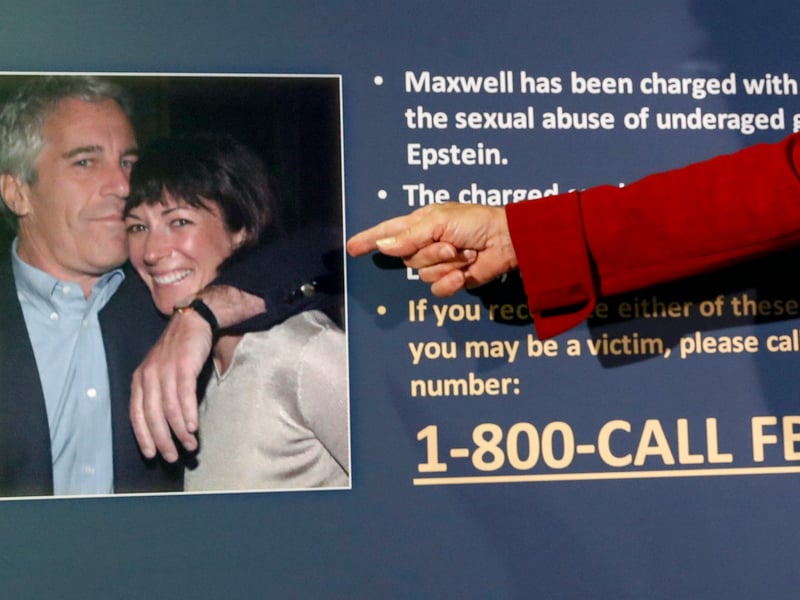
MANHATTAN (CN) — A federal judge on Wednesday denied the Trump administration’s bid to release grand jury materials related to the prosecution of Jeffrey Epstein, branding its attempt to do so a “diversion.”
U.S. District Judge Richard Berman, a Bill Clinton appointee in the Southern District of New York, squashed the government’s motion after considering a variety of factors, including the potential impact to victims and the motivations of the Justice Department.
In a 14-page order, Berman scrutinized the government’s emphasis on the grand jury materials when it is in possession of a much more voluminous and substantive collection of documents it refuses to release.
“The government’s 100,000 pages of Epstein files and materials dwarf the 70-odd pages of Epstein grand jury materials,” Berman wrote, adding that “the grand jury testimony is merely a hearsay snippet of Jeffrey Epstein’s alleged conduct.”
The Justice Department moved to release grand jury materials from multiple prosecutions orbiting the notorious pedophile earlier this summer, after the Trump administration took intense criticism for refusing to release their own files related to Epstein’s probes.
Berman suggested these requests may have been an effort by the Trump administration to distract from this criticism, and said that the Justice Department should be the one to release information about Epstein to the public, not the court.
“The government is the logical party to make comprehensive disclosure to the public of the Epstein files,” Berman wrote. “By comparison, the instant grand jury motion appears to be a ‘diversion’ from the breadth and scope of the Epstein files in the government’s possession.”
Berman found the grand jury materials the administration sought to unseal contained 70 pages of transcript from a single FBI agent who “had no direct knowledge of the facts of the case and whose testimony was mostly hearsay.” The agent appeared in front of the grand jury twice — once on June 18, 2019, and once on July 2, 2019.
The materials also contained a PowerPoint presentation and a call log exhibit shown to the grand jury on those two dates, respectively.
Berman also raised concerns with possible threats to victims’ safety and privacy if the transcripts were released. He cited a “very compelling” Aug. 5 letter to the court from three attorneys of Epstein survivors who said that the disclosure of grand jury material affects the safety and privacy guarantees afforded to victims under the Crime Victims’ Rights Act of 2004.
He ultimately concluded that the government made its motion without proper regard for the victims’ rights.
“Victims did not have sufficient notice before the government filed the instant motions to unseal,” Berman wrote.
A spokesperson for the Department of Justice didn’t immediately respond to a request for comment.
The Trump administration has now struck out in its three attempts to release grand jury transcripts from the prosecutions of Epstein and his associates.
Last month, a federal judge in Florida shot down the government’s request to unseal materials in a different Epstein probe. And this month, another federal judge in Manhattan declined to release grand jury materials of Ghislaine Maxwell, who was convicted in 2021 for helping Epstein sexually abuse and traffic young girls.
In that case, the judge ruled the government failed to argue the necessity for the court to take the “extraordinary step” of defying age-old precedent to unseal grand jury proceedings, which are generally kept secret.
Maxwell spurred headlines this summer after meeting with Deputy Attorney General Todd Blanche, once President Donald Trump’s personal criminal attorney, for an interview about her conviction. She was transferred to a minimum security prison camp in Texas shortly after.
The renewed interest in Epstein and Maxwell places Trump in a particularly tight situation: his former friendship with Epstein is fueling speculation that he is engaging in a cover-up to protect himself and those close to him.
Epstein died by suicide in federal custody in 2019 — another episode that sparked widespread debate and doubt among the American public.
The narrative still has a stranglehold on Washington, as federal lawmakers on the House Oversight Committee issued congressional subpoenas this month to former President Bill Clinton, Hillary Clinton and eight other former White House officials as it ramps up a probe into Epstein and Maxwell.
 Follow @Uebey
 Follow @uebey.bsky.social
Subscribe to our free newsletters
Our weekly newsletter Closing Arguments offers the latest about ongoing trials, major litigation and rulings in courthouses around the U.S. and the world, while the monthly Under the Lights dishes the legal dirt from Hollywood, sports, Big Tech and the arts.