
 Search Articles


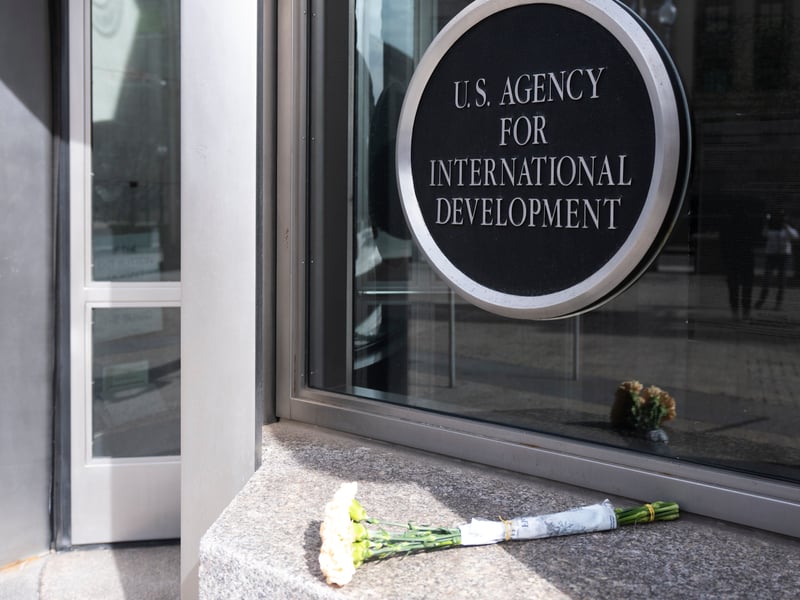
WASHINGTON (CN) — A federal judge on Thursday pushed back the expiration date of a temporary restraining order preventing the Trump administration from placing thousands of U.S. Agency for International Development employees on administrative leave.
The order is now in place until Feb. 21, by which time U.S. District Judge Carl Nichols will decide whether he can block wider dismantling of the agency.
However, the Donald-Trump appointed judge expressed doubt that he had jurisdiction to grant the preliminary injunction requested by a union coalition representing USAID employees, because any injury from the agency’s closure could be deemed an employment injury for which the plaintiffs could seek damages only after the fact.
Last Friday Nichols blocked the government from putting 2,014 workers on paid leave, issuing a stay that was set to expire Friday, Feb. 14. The judge cited risks to USAID employees working in dangerous locations, such as the Democratic Republic of the Congo.
On his first day in office, Trump via executive order placed an immediate, 90-day pause on foreign aid, planning to review and realign the funds according to his foreign policy goals. Secretary of State Marco Rubio issued stop-work orders on USAID foreign assistance awards “without any notice or process,” the unions say. Trump then named Rubio the acting director of USAID and said he would consult with Congress on a “potential reorganization” of the agency.
More than 1,000 USAID institutional support contractors, and thousands more employees of USAID contractors or grantees, were laid off or furloughed, the unions say.
Nichols on Thursday heard the unions’ preliminary injunction motion; the workers seek to prevent the dismantling of the agency and unfreeze millions of dollars in foreign aid.
Karla Gillbride, an attorney of Public Justice representing the unions, argued that Trump was overstepping the executive branch’s authority by attempting to shutter an agency created by Congress and doing so without any consultation.
Justice Department attorney Eric Hamilton argued that both the funding freeze and any potential reorganization of the agency was well within the executive’s authority.
“President Trump campaigned on reshaping the country’s foreign policy,” Hamilton said, adding that Rubio sent a letter to Congress regarding USAID on Feb. 3, which satisfied the need for consultation.
Hamilton also argued that the unions don’t have standing: Any employment claim should go through an administrative agency, such as the Merit Service Protection Board, and seek damages from USAID.
Gillbride pushed back. Without a preliminary injunction, she argued, USAID may not exist long enough for the employees to retrieve such damages.
She pointed to Trump’s Truth Social posts explicitly calling for the agency to be shut down.
Gillbride said Trump’s moves would irreparably harm 4,765 employees, approximately 1,400 of whom are stationed overseas, by suddenly upending their lives.
She also criticized the Trump administration’s offer for employees abroad to leave their posts within 30 days and receive free transportation back to the United States or otherwise remain in their posts. Under those terms, she said, employees run the risk of being put on leave after the 30-day period and suddenly having to fund their own return, unless the administration approved a nebulous exemption request.
One USAID employee stationed in the Democratic Republic of the Congo, identified as Marcus Doe in his declaration, described learning of the sudden removal of USAID leadership the morning of Jan. 28. The same day, protests that began the day before escalated in the capital Kinshasa, near the U.S. Embassy; protesters breached some embassy workers’ homes, forcing them to evacuate.
While communicating with USAID staff in Washington, it was unclear how funding for Marcus and other USAID employees’ evacuation would be handled under the freeze, causing concern they would have to fund it themselves, he said.
Workers ultimately had to request a waiver to get funding to evacuate. The request was approved Jan. 29 — after the evacuation began.
The American Foreign Service Association and the American Federation of Government Employees filed the suit in the U.S. District Court for the District of Columbia. It follows a wave of litigation against the administration, billionaire Elon Musk and his so-called Department of Government Efficiency.
“These actions have generated a global humanitarian crisis by abruptly halting the crucial work of USAID employees, grantees and contractors,” the unions said. “They have cost thousands of American jobs. And they have imperiled U.S. national security interests.”
 Follow @Ryan_Knappy
Subscribe to our free newsletters
Our weekly newsletter Closing Arguments offers the latest about ongoing trials, major litigation and rulings in courthouses around the U.S. and the world, while the monthly Under the Lights dishes the legal dirt from Hollywood, sports, Big Tech and the arts.