
 Search Articles


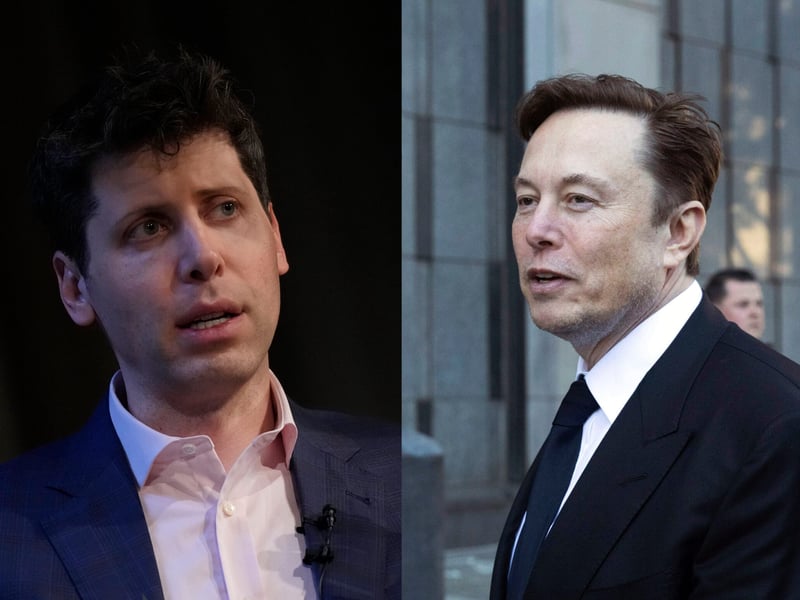
OAKLAND, Calif. (CN) — Attorneys for Elon Musk and OpenAI CEO Sam Altman traded salvos in court Tuesday as the two largest names in artificial intelligence argue over an injunction that could stop OpenAI’s transition to a for-profit company.
Although U.S. District Judge Yvonne Gonzales Rogers said an order stopping OpenAI’s conversion was unlikely, she forecasted a trial in the lawsuit’s future at the hearing.
“Everyone should understand that these motions are rarely granted. It is extraordinary relief,” the Barack Obama appointee said, adding that the last time she issued a preliminary injunction was for Epic v. Apple in 2020. “So, let’s talk about when you’ll be ready for trial.”
Rogers also told attorneys that a future motion to dismiss the lawsuit by OpenAI would likely be granted in part and denied in part.
Musk, an early investor and cofounder of OpenAI, is suing Altman and his company, seeking a court order to prevent it from going through with the for-profit restructuring, claiming the move violates OpenAI’s nonprofit mission and breaches the terms of his previous donations to the company, approximately $45 million in total.
Musk also accuses OpenAI of violating multiple antitrust laws through its close partnership with Microsoft and other noncompetitive behaviors, including exclusivity agreements with investors to not fund other competitors in the AI market. The billionaire argued that to deprive companies of investors — like his own xAI — was “obviously harmful” in the still-emerging AI market.Attorney Marc Toberoff of Toberoff & Associates, who represented Musk, said OpenAI’s “fund no competitors” mandate in conjunction with Microsoft is a move to “strangle their competitors in the crib.”
“This is a serious violation of the Sherman Act,” Toberoff said.
If granted, the preliminary injunction would halt OpenAI’s current efforts to restructure its company and prevent it from engaging in any further claimed noncompetitive activity.
However, the judge was skeptical that Musk would suffer “irreparable harm” without an injunction, calling the argument a stretch in a case of “billionaires versus billionaires.” She also said that the bar for granting an injunction was “very high.”
Toberoff said his team would be ready for trial by June 2026. He also expects to file a motion for summary judgment as well as the involvement of three to four experts, although there are currently none planned.
Musk’s lawsuit also questions the close strategic partnership between OpenAI and Microsoft, claiming Microsoft has gained “effective control” over the ChatGPT creators and the companies maintain an illegal monopoly over “70%” of the generative AI market.
Altman contests Musk’s standing for the lawsuit and argues that the billionaire offers no evidence that OpenAI restricted trade via exclusive funding agreements. Musk claims the agreement was confirmed by “reputable media outlets,” including the Wall Street Journal, Financial Times and Reuters.
“Where is the declaration by Sam Altman saying this wasn’t an agreement?” questioned Toberoff.
“That’s fair. Where is it?” Rogers asked OpenAI’s lawyers.
Attorney Sarah Eddy of Wachtell, Lipton, Rosen & Katz, who represented OpenAI, said no declaration by Sam Altman existed because “it wasn’t needed” and that Altman had already denied the accusations during an interview at The New York Times’ DealBook Summit.
Rogers instructed OpenAI to file a declaration saying as much by the end of the week.
Musk argues that he has standing to sue under California nonprofit law because OpenAI accepted his donation under specific terms, giving him cause to sue for a breach of contract.
Altman responded in court documents that the “sweeping relief” Musk seeks would debilitate OpenAI’s business to the advantage of Musk and his own AI company.
Musk filed the lawsuit in San Francisco federal court in August 2024, claiming that Altman and OpenAI President Greg Brockman tricked Musk into cofounding OpenAI by promising the then-nonprofit would focus on safety and bettering humanity over shareholder profits. Musk now claims that the company has reneged on its promise.
Musk is seeking a jury trial for fraud and breach of contract and wants OpenAI to be held accountable for “intentional misrepresentations” to Musk and the public by forcing a disgorgement of their monetary gains.
“They have transformed OpenAI into everything Altman promised Musk it would never be — a closed-source, for-profit monopoly that rushes unsafe AI products to market for private commercial gain,” Musk wrote in his motion.
Musk moved for a preliminary injunction to prevent OpenAI’s for-profit plans in November 2024.
Neither Musk nor Altman were present in court for the preliminary injunction hearing, but their attorneys gave in-depth arguments before Rogers. The judge did not indicate when she would issue a ruling.
OpenAI executives said in a memo last year that Musk’s lawsuit arose from regrets that he’s no longer part of the company, CNBC reported.
A hearing on a motion to dismiss the lawsuit is scheduled for late May.
This injunction hearing took place in the Northern District of California at the Ronald V. Dellums Federal Courthouse in Oakland, California.
Subscribe to our free newsletters
Our weekly newsletter Closing Arguments offers the latest about ongoing trials, major litigation and rulings in courthouses around the U.S. and the world, while the monthly Under the Lights dishes the legal dirt from Hollywood, sports, Big Tech and the arts.