
 Search Articles


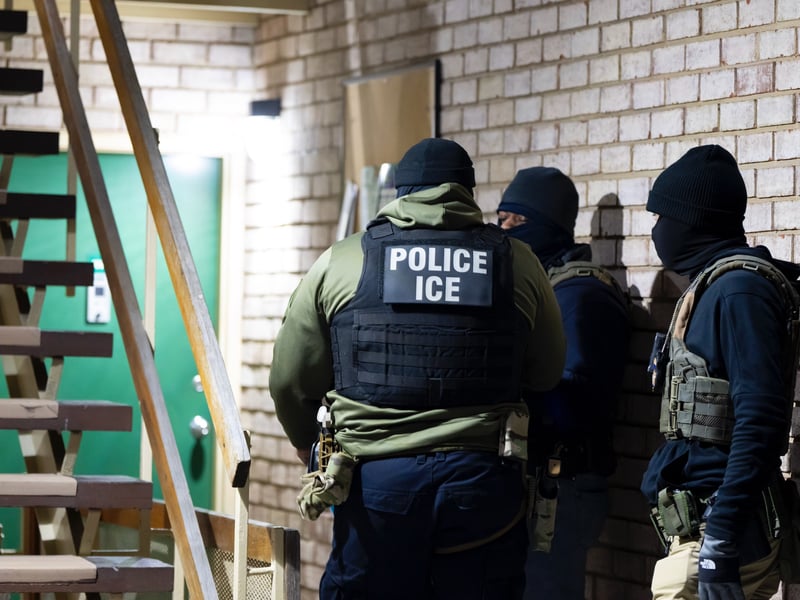
WASHINGTON (CN) — A federal judge denied a request Thursday to halt the implementation of a universal national registry for people living in the United States without permission, finding that a coalition of immigrant rights groups lacked standing to challenge the policy.
U.S. District Judge Trevor McFadden, a Donald Trump appointee, denied the coalition’s request to freeze the policy before it goes into effect on Friday. He found that, as advocacy organizations, the plaintiffs’ harms were too speculative and they could not show the new rule would “erode their core missions.”
Without standing to consider the advocacy groups’ challenge, McFadden said that he could not reach the merits of their case.
The plaintiffs, led by the Coalition for Humane Immigrant Rights and joined by the United Farm Workers of America, Casa Inc. and Make the Road New York, sued in the U.S. District Court for the District of Columbia on March 31.
The groups challenged the new rule, issued on March 12, that would require millions of immigrants in the U.S. illegally to submit fingerprints and other biometric information to the government and always carry proof of registration or face arrest and federal prosecution.
The rule, referred to as the “Alien Registration Requirement,” would apply to all migrants 14 years or older, which the Department of Homeland Security estimated includes between 2.2 and 3.2 million individuals. Children younger than 14 would need to be registered by their parents or legal guardians, then re-register when they turn 14.
“Absent intervention by this court, all noncitizens — as well as U.S. citizens wrongly suspected of being noncitizens — will be exposed to a new criminal enforcement regime and a ‘show me your papers’ country,” the groups say in the suit.
During a hearing on Tuesday, Justice Department attorney Kartik Venguswamy argued the Trump administration proposed the policy to bring the nation’s immigration laws back in line with requirements under the Immigration and Nationality Act.
He said the registration forms would patch holes left open since Congress first created the Alien Registration Act in 1940.
The INA supplanted the statute and incorporated the registration mandates, adding the requirement that such identification always be carried and making failure to register punishable by a fine or six months imprisonment.
McFadden noted that since the INA’s passage in 1952, Congress had not moved to implement that requirement and only created forms that worked as proxies.
“This means that the only aliens who are registered are those with legal immigration status; the regulations do not include a nondiscretionary registration form for an alien who entered illegally,” McFadden wrote.
That changed with the Trump administration’s new rule, which created an online general registration form known as G-325R.
Emma Winger, of the American Immigration Council and attorney for the rights groups, argued Tuesday that the form would wrongly open migrants to criminal prosecution for what has historically been treated as a civil offense.
She pointed to the questionnaire on the all-English registration form, which asks when and where they entered the country, what “activities” they have been or intend to engage in, how long they will remain in the country and if they have a criminal record.
McFadden expressed concern about the questionnaire during the hearing, noting that it seemed to ask whether they’d “done anything wrong” that would potentially warrant their deportation, calling it “striking.”
Winger suggested that the activities question could also put migrants at risk for their political advocacy. The administration has moved to deport several high-profile advocates who have protested on behalf of Palestine and farmworkers’ rights, such as Mahmoud Khalil and Alfredo “Lelo” Juarez Zeferino.
The new rule has sparked sharp criticism from immigrant rights groups such as the National Immigration Law Center, which warned that the rule policy would increase racial profiling.
“The Trump administration’s explicit goal with this rule’s publication is to create a hostile environment for immigrant community members,” the advocacy group wrote in an FAQ regarding the new rule. “While their stated targets are undocumented immigrants, the very mechanics of enforcing registration expand the target to anyone who looks or sounds foreign to law enforcement.”
The plaintiffs and their attorneys did not respond to a request for comment on McFadden’s ruling.
 Follow @Ryan_Knappy
Subscribe to our free newsletters
Our weekly newsletter Closing Arguments offers the latest about ongoing trials, major litigation and rulings in courthouses around the U.S. and the world, while the monthly Under the Lights dishes the legal dirt from Hollywood, sports, Big Tech and the arts.