
 Search Articles


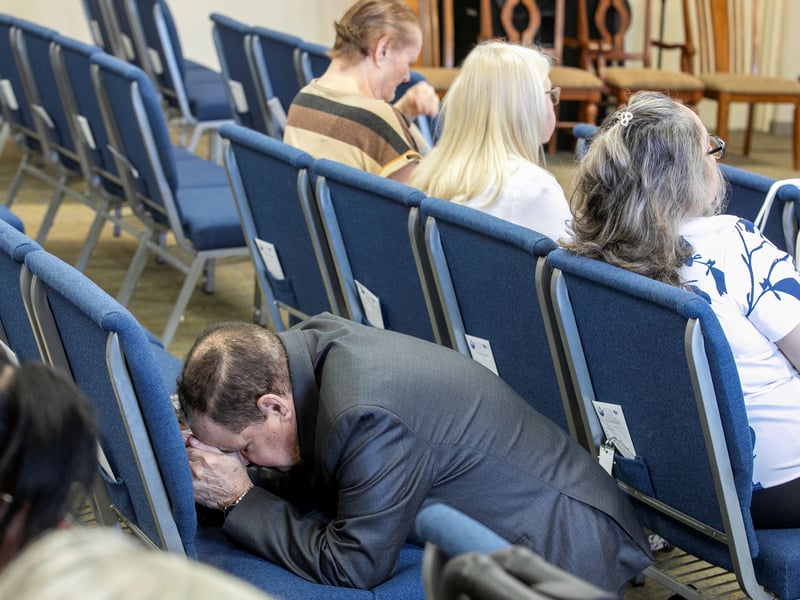
WASHINGTON (CN) — A federal judge on Friday denied a multifaith coalition’s request to block a Trump administration policy reversal that allows Immigration and Customs Enforcement agents to freely enter places of worship to arrest migrants.
U.S. District Judge Dabney Friedrich, a Donald Trump appointee, wrote in her opinion that the coalition of 27 Christian and Jewish groups failed to show they had standing to challenge the rule reversal, which lifted the high bar needed to justify raids on churches, schools, medical facilities or day care centers.
The former rule, part of a long-standing “sensitive locations” policy, prevented ICE and Customs and Border Protection agents from going into places of worship unless under “exigent circumstances” or without high-level approval.
On Jan. 20, the department rescinded the sensitive locations policy and wrote in a memo that any “bright-line rules” about where rules could be enforced were unnecessary. The department directed ICE and CBP officers to “use discretion along with a healthy dose of common sense."
“Absent evidence of specific directives to immigration officers to target plaintiffs’ places of worship, or a pattern of enforcement actions, the court finds no credible threat of imminent enforcement,” Friedrich wrote, characterizing the suit as a “pre-enforcement challenge.”
The faith organizations argued they were clearly harmed by the marked decrease in attendance they’ve suffered since the new policy was announced.
One largely Hispanic congregation reported a decrease in attendance to weekly worship services from approximately 140 to 90 people, while another Spanish-speaking congregation reported drops by 25-40% since January.
Friedrich did not contest that the drops amounted to an injury, but doubted the plaintiffs could prove a direct tie to the policy reversal.
“At least on the existing record, the plaintiffs have not presented ‘substantial evidence’ that the policy recission — as opposed to the administration’s broader immigration crackdown — has caused widespread congregant absences from religious services,” Friedrich said. “The evidence suggests that congregants are staying home to avoid encountering ICE in their own neighborhoods, not because churches or synagogues are locations of elevated risk.”
In their suit, the coalition highlighted the Jan. 31 arrest of a Honduran immigrant named Wilson Velásquez during a church service in Georgia.
He traveled to the U.S. with his wife and three children in 2022; they turned themselves in to request asylum immediately after crossing the border. They were given a court date and released after immigration officers attached an ankle monitor to Velásquez.
The family settled near Atlanta and attended services at a Pentecostal church several times a week, helping with music. When the agents arrived, Velásquez had attended all his required check-ins at an Atlanta ICE office and had a court date to present his asylum case to a judge.
Despite that, the ICE agents arrested him, saying they were “looking for people with ankle bracelets.”
The coalition argued that the policy reversal forced their congregations to make a “Hobson’s choice” between ending their practice of welcoming anyone into their doors or making them an easy target for immigration officers, either of which would violate their religious freedom.
Friedrich again found that the record did not support any assumption that the places of worship would be targets for raids and is thus too speculative to grant them standing in the case.
Friedrich suggested during a hearing last week that she doubted there was enough evidence in the case that would allow her to grant the coalition’s requested preliminary injunction.
Kelsi Corkran of the Georgetown Institute for Constitutional Advocacy and Protection argued on April 4 that the record was so limited because of the pending litigation challenging the rule reversal both in Washington and in Maryland, brought by a Quaker coalition on Jan. 27.
U.S. District Judge Theodore Chuang in Maryland granted a preliminary injunction for the Quaker’s specific plaintiffs on Feb. 24.
“The Department of Homeland Security is currently under this mass deportation mandate, so I think CBP are getting as many people as possible, but they’re focusing on the low-hanging fruit, people with ankle monitors, people who are coming in for their asylum check-ins,” Corkran said.
Justice Department attorney Kristina Wolfe argued on April 4 that the Trump administration had a compelling interest to “uniformly” enforce the nation’s immigration laws, as directed by Congress. She added that the plaintiff’s speculation made a denial the easy choice.
“They have pointed to nothing in the record that demonstrates the conduct they seem to be concerned about, with ICE agents or CBP agents rolling up to a place of worship during services and storming into the sanctuary, yanking people out to question them about their immigration status,” Wolfe said.
 Follow @Ryan_Knappy
Subscribe to our free newsletters
Our weekly newsletter Closing Arguments offers the latest about ongoing trials, major litigation and rulings in courthouses around the U.S. and the world, while the monthly Under the Lights dishes the legal dirt from Hollywood, sports, Big Tech and the arts.