
 Search Articles


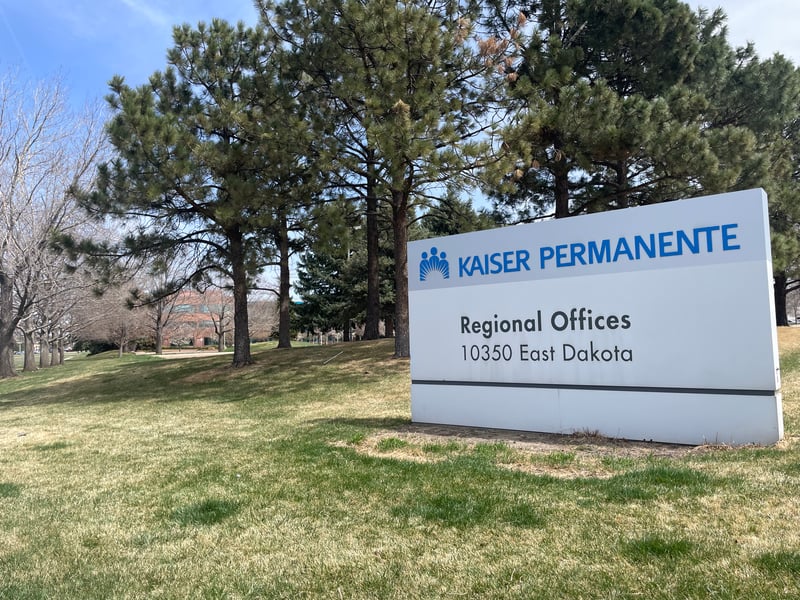
DENVER (CN) — Four months after a six-day bench trial, a federal judge ruled Tuesday that a contract dispute between a nursing union and a health care company belongs in arbitration, not in federal court.
“The court dismisses this matter because the disputes arising herein are fully subject to arbitration,” wrote U.S. Judge William Martinez in a 100-page order.
In October 2021, United Food and Commercial Workers International Union Local No. 7 sued insurer Kaiser Foundation Plan of Colorado and provider Colorado Permanente Medical Group, claiming the health care companies failed to maintain adequate levels of staff as required by the patient care article in the union’s collective bargaining agreement.
The union represents 22,000 workers in Colorado and Wyoming, including 2,000 of Kaiser Permanente’s nurses and health care professionals. A large portion of the union’s workers also obtain health care through the company.
Since 2000, the agreement has tasked Kaiser with providing “sufficient staffing to address quality of standards of patient care and provider workload, including safe coverage."
The union claimed Kaiser cut staff to save money, leaving critical gaps in urgent care, pharmacy and behavioral health services.
From 2018 to 2019, Kaiser restructured its Colorado operations and reduced its workforce by 20%, a move the company argued was vital following a decline in health insurance members.
Kaiser countersued the union in 2022, arguing UFCW breached its own contractual obligation to help resolve staffing issues. Citing the grievance procedure and staffing articles, Kaiser also claimed the union’s complaints belong in arbitration rather than a federal courthouse.
Martinez declined to enter summary judgment on behalf of either party last summer, paving the way for a six-day trial held in January to determine which party violated its contract with the other — an issue Martinez said he could not determine from legal briefs alone.
In his summary judgment order, however, Martinez advised the union that it faced “a steep hill to climb at trial to differentiate actionable events under the patient care article from those that must be arbitrated under the staffing article.”
Looking to the 10th Circuit’s 2024 opinion in Brent Electric Company v. International Brotherhood of Electrical Workers , Martinez said the scale tipped in favor of arbitration “when the party opposing arbitration fails to present the most forceful evidence that issues covered by an arbitration clause are not subject to arbitration.”
While the union pointed to a case in which a staffing suit under the patient care article reached federal court before being settled, Kaiser cited several similar disputes that were resolved through arbitration.
“A dispute is subject to arbitration, even if a [collective bargaining agreement] article implicated by the dispute appears, by its terms, to be exempt from arbitration, if the actual dispute is ‘better understood’ to implicate other articles that are subject to arbitration,” Martinez wrote.
Referring to other parts of the collective bargaining agreement, the Obama-appointed judge found that the union’s claims are not only subject to arbitration under the staffing article, but that the article also supports the union’s requested remedy: requiring the health care company to maintain adequate staffing levels.
“The union asks the court to increase staffing levels in particular departments and thus effectively order that the parties proceed through the grievance/resolution process outlined in the staffing article as to other staffing issues,” Martinez wrote.
Because the claims fall under the arbitration provisions of the contract, Martinez concluded he could not reach the merits of the case.
Neither representatives from UFCW nor Kaiser immediately responded to a request for comment.
 Follow @bright_lamp
Subscribe to our free newsletters
Our weekly newsletter Closing Arguments offers the latest about ongoing trials, major litigation and rulings in courthouses around the U.S. and the world, while the monthly Under the Lights dishes the legal dirt from Hollywood, sports, Big Tech and the arts.