
 Search Articles


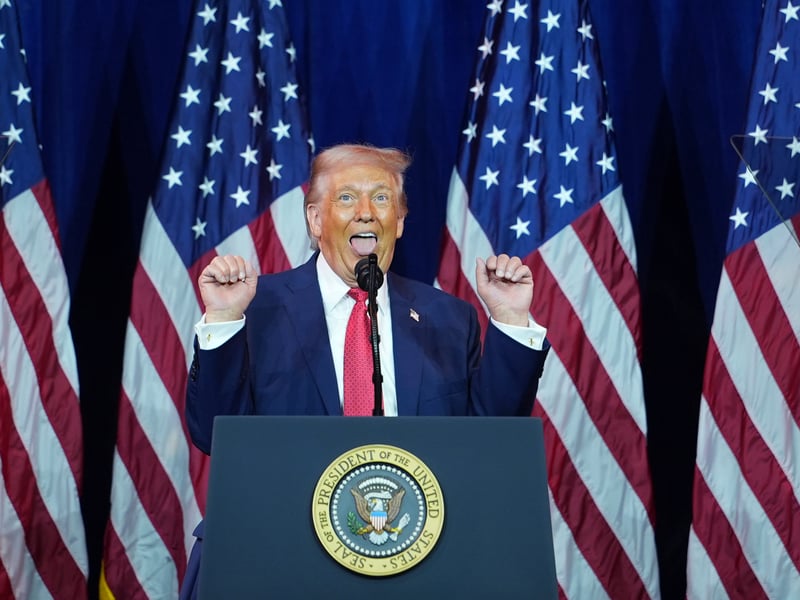
WASHINGTON (CN) — A federal judge on Friday blocked the Trump administration from unilaterally imposing a series of new requirements for citizens registering to vote or applying for an absentee ballot, slamming President Donald Trump for clearly overstepping his constitutional authority.
U.S. District Judge Colleen Kollar-Kotelly declared that two provisions of Trump’s March 25 executive order — seeking to impose new requirements for verifying the citizenship of people registering to vote or applying to receive absentee ballots — “are inconsistent with the constitutional separation of powers and cannot lawfully be implemented.”
The Bill Clinton appointee granted partial summary judgment in a set of consolidated cases brought by the Democratic National Committee, the Democratic Governors Association, the Senate and House campaign committees, top Democratic leadership in Congress and several advocacy groups like the League of Women Voters and National Association for the Advancement of Colored People.
Her order specifically blocks the Trump administration from enforcing Section 2(d) of the order, which directed agency heads to “assess citizenship” before providing voter registration forms to “enrollees of public assistance programs.”
She also blocked Section 3(d), which directed Secretary of Defense Pete Hegseth to update a federal absentee voter registration and ballot request form to require documentary proof of citizenship.
“These consolidated cases are about the limits of the president’s power to dictate the rules of federal elections,” Kollar-Kotelly wrote in the 110-page opinion. “The Framers of our Constitution recognized that power over elections could be abused, either to destroy the national government or to disempower the people from acting as a check on their elected representatives.”
“Accordingly, they entrusted this power to the parts of our government that they believed would be most responsive to the will of the people: first to the states, and then, in some instances, to Congress,” Kollar-Kotelly continued. “They assigned no role at all to the president. Put simply, our Constitution does not allow the president to impose unilateral changes to federal election procedures.”
Kollar-Kotelly explained that Congress made clear in the National Voter Registration Act that an individual registering to vote only needs to show they are a citizen by indicating as such on a registration form filed under penalty of perjury. Requiring another form to prove one’s citizenship amounts to “pre-screening,” which would be contrary to the will of Congress expressed in the 1993 statute.
The Democrats — including Senate Minority Leader Chuck Schumer and House Minority Leader Hakeem Jeffries — and voter rights groups challenged Trump’s March 25 executive order, “Preserving and Protecting the Integrity of American Elections,” on March 31, in the U.S. District Court for the District of Columbia.
They challenged it as an effort by the president to impose his own “design preferences” on congressionally mandated voter registration forms and wrongfully “wields federal dollars as a cudgel” to force compliance among the states.
While signing the order, Trump maintained his position that there was widespread fraud during the 2020 presidential election that he lost to former President Joe Biden.
“This country is so sick because of the election, the fake elections and the bad elections,” Trump said while signing the order, promising additional actions. “And we’re going to straighten it out one way or the other.”
Kollar-Kotelly granted partial summary judgment to the Trump administration regarding Sections 4(a), 7(a) and 7(b), as the Democrats and rights groups had not established their challenges against those sections were ripe for the court’s review.
Section 4(a) requires the Election Assistance Commission to add proof of citizenship as a requirement to its national mail voter registration form, a requirement normally left up to the states.
Section 7(a) of the order instructs Attorney General Pam Bondi to coordinate with state attorneys general to prosecute noncitizens “unlawfully registered to vote or casting votes.” Section 7(b) orders the election commission to condition funding to states to prevent them from counting absentee or mail-in ballots received after Election Day.
Those conditions would upend the processes of several states, such as Alabama, Idaho, Illinois, Mississippi, New Hampshire, and North Dakota, among others, who only begin counting such ballots after polls close on Election Day.
Marc Elias, firm chair of the Elias Law Group and attorney for the plaintiffs, lauded Kollar-Kotelly’s ruling in a statement on X, calling it a “big win for the Democratic Party and fair elections.”
Friday’s decision comes as the Trump administration has pursued other avenues to strong-arm states into adopting its concerns surrounding the 2020 election, including 24 lawsuits against states and D.C. to obtain their voter rolls, as well as an FBI raid on Georgia’s Fulton County Election and Operations Hub.
During Wednesday’s raid,the FBI seized the county’s 2020 voting records while serving a search warrant that FBI Director Kash Patel said was approved by a federal judge who determined there was probable cause to conduct the search.
 Follow @Ryan_Knappy
Subscribe to our free newsletters
Our weekly newsletter Closing Arguments offers the latest about ongoing trials, major litigation and rulings in courthouses around the U.S. and the world, while the monthly Under the Lights dishes the legal dirt from Hollywood, sports, Big Tech and the arts.