
 Search Articles


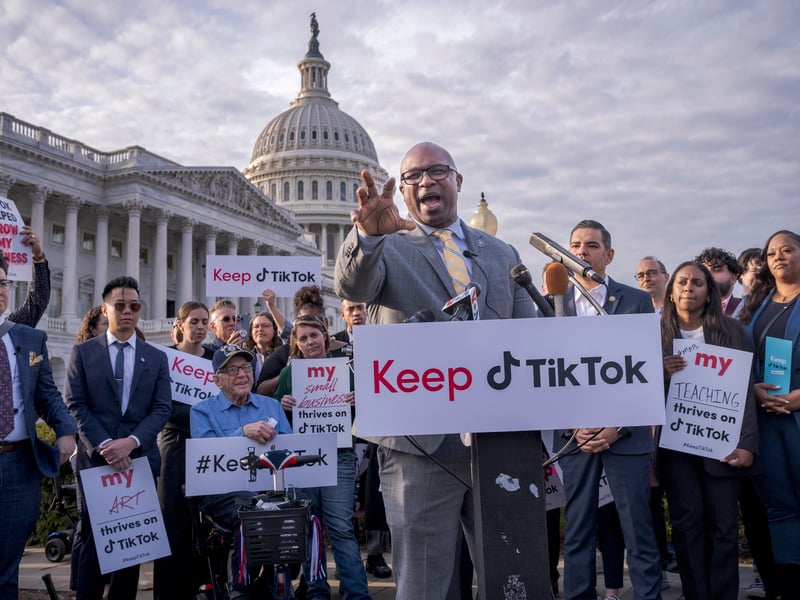
(CN) — A federal judge has temporarily blocked Montana from implementing the country’s first ban on TikTok, the Chinese-owned short video platform, finding the ban “likely violates the First Amendment.”
In his 48-page ruling, U.S. District Judge Donald Molloy further reasoned that “the actual purpose of the bill is to stop a perceived national security threat, which cannot serve as an important state interest” since “federal government alone has the authority to regulate regarding national security issues.” Montana, in other words, had no business messing about with foreign policy.
Montana Governor Greg Gianforte signed Senate Bill 419 in May, which imposed a $10,000 fine on either TikTok or a mobile application store “each time that a user accesses TikTok, is offered the ability to access TikTok, or is offered the ability to download TikTok." The ban was set to go into effect on Jan. 1, 2024.
Legislators cited two reasons for the ban. The first was national security concerns. Because TikTok is owned by the Chinese tech company ByteDance, and because of the app’s immense popularity — an estimated 150 million people access the app every month — many worry that TikTok is some sort of backdoor way for China to mine users’ data or perhaps even spy on us. As the preamble of SB 419 read, “TikTok gathers significant information from its users, accessing data against their will to share with the People’s Republic of China” in an effort to “conduct corporate and international espionage in Montana.”
The second concern of lawmakers involves the content on TikTok. According to the bill’s preamble, “TikTok fails to remove, and may even promote, dangerous content that directs minors to engage in dangerous activities.” The preamble goes on to list examples of dangerous content: “throwing objects at moving automobiles, taking excessive amounts of medication, lighting a mirror on fire and then attempting to extinguish it using only one’s body parts, inducing unconsciousness through oxygen deprivation, cooking chicken in NyQuil, pouring hot wax on a user’s face, attempting to break an unsuspecting passerby’s skull by tripping him or her into landing face first into a hard surface, placing metal objects in electrical outlets, swerving cars at high rates of speed, smearing human feces on toddlers, licking doorknobs and toilet seats to place oneself at risk of contracting coronavirus, attempting to climb stacks of milk crates, shooting passersby with air rifles, loosening lug nuts on vehicles, and stealing utilities from public places.”
Other concerns about TikTok content, not mentioned by the Legislature, include Covid misinformation, Holocaust denial, racism, antisemitism and even Islamic State group propaganda. In 2019, TikTok removed two dozen accounts the company said were responsible for posting IS propaganda, including beheading videos.
More recently — weeks ago, in fact — TikTok removed the hashtag #lettertoamerica from its search function after a series of videos of people reading Osama bin Laden’s “Letter to America,” and speaking of it in a favorable light, went viral.
Critics of Montana’s bill argued TikTok was being unfairly singled out, and that many social media platforms, including Facebook and X — formerly Twitter — had content moderation problems. Judge Molloy clearly bought this argument, writing, “It is not hard to imagine how a minor may access dangerous content on the internet, or on other social media platforms, even if TikTok is banned.”
As for protecting Montanans from Chinese spying or data mining, Molloy found that’s the federal government’s job, not the Montana Legislature’s. SB 419, he wrote, “is, at its heart, intended to send a political message on an issue of foreign affairs.”
He added: “Montana’s foray into foreign affairs interprets the United States’ current foreign policy interests and intrudes on them,” and is therefore likely preempted by federal law.
The preliminary injunction, barring Montana from implementing the law as planned. The case can still continue, and may eventually make it to a bench trial.
 Follow @hillelaron
Subscribe to our free newsletters
Our weekly newsletter Closing Arguments offers the latest about ongoing trials, major litigation and rulings in courthouses around the U.S. and the world, while the monthly Under the Lights dishes the legal dirt from Hollywood, sports, Big Tech and the arts.