
 Search Articles


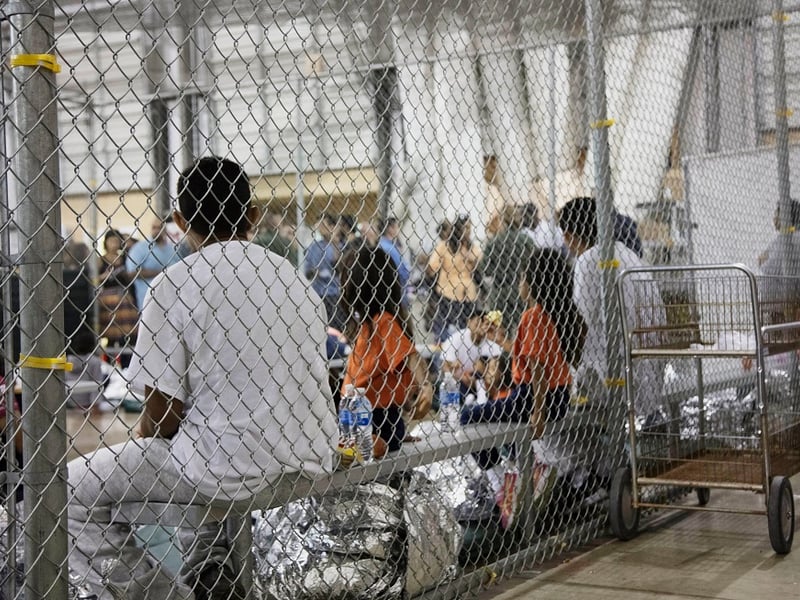
WASHINGTON (CN) — A federal judge on Monday ordered the Department of Homeland Security to halt its renewed effort to bar members of Congress from conducting surprise oversight visits to Immigration and Customs Enforcement facilities.
U.S. District Judge Jia Cobb granted an temporary restraining order requested by 12 Democratic lawmakers, led by Colorado Representative Joe Neguse, freezing a DHS policy mandating at least seven days’ notice before they can view an immigration facilities’ conditions and treatment of detained migrants.
Cobb, a Joe Biden appointee, ruled in December that an initial version of the policy violated a reoccurring provision in each congressional appropriations bill since 2020 that bars the department from using its appropriated funds to prevent lawmakers from conducting oversight visits or make any modifications that would hide conditions from lawmakers.
DHS then enacted a nearly identical policy on Jan. 8, which the government defended during a Jan. 14 hearing as drawing funds exclusively from the One Big Beautiful Bill Act, not the department’s annual appropriations. The Big Beautiful Bill appropriated $191 billion to DHS, as well as Congress’ short-term continuing resolution, which maintains 2025 appropriation levels through Jan. 30, 2026.
Cobb rejected that representation, finding significant evidence that the Jan. 8 policy was also “promulgated, implemented and is presently being enforced with the use of Section 527 funds.”
The section, last included in the 2024 appropriations bill, specifically prohibits DHS from making any temporary modification at an immigration facility that would alter what is observed by a visiting member of Congress.
“Defendants argue that funds used in the process of promulgating the policy, separate from its enforcement, cannot be considered funds ‘used to prevent’ members of Congress from entering covered facilities as contemplated by the rider,” Cobb wrote in a nine-page order. “The court disagrees. Funds used to develop the very policy which the court has found prevents members’ entry to covered facilities are properly considered funds ‘used to prevent’ entry as contemplated by Section 527.”
She pointed to a declaration provided by David Easterwood, a former DHS and ICE legal and budgeting official, who said it would be logistically difficult, if not impossible, for DHS to single out expenditures to as directly made with funds from the Big Beautiful Bill.
Cobb noted that DHS could not disprove Easterwood’s assertion, instead slamming it as “entirely speculative” and pointing back to a previous declaration filed by Holly Mehringer, who oversees the DHS budget, stating that it was possible to track the costs incurred to issue and enforce the Jan. 8 policy.
“Defendants have not seriously attempted to argue that DHS and ICE ensured that only [Big Beautiful Bill]-funded resources were used before promulgating and first implementing the Jan. 8 policy,” Cobb wrote. “Indeed, the language of the [DHS Secretary Kristi] Noem memorandum anticipates that steps to ensure compliance with Section 527 will occur in the future.”
Neguse lauded Cobb’s ruling in an emailed statement.
“The court’s decision today to grant a temporary restraining order against ICE’s unlawful effort to obstruct congressional oversight is a victory for the American people,” Neguse said. “We will keep fighting to ensure the rule of law prevails.”
Prior to the Jan. 14 hearing, Neguse informed Cobb that DHS had blocked three members of Congress from conducting an oversight visit at an ICE facility in Minneapolis on Jan. 9, in spite of Cobb’s ruling.
The attempted visit came two days after an ICE officer shot and killed Renee Good in Minneapolis on Jan. 7, and less than two weeks before two Customs and Border Patrol agents shot and killed Alex Pretti on Jan. 24, which has raised significant outrage surrounding Trump’s mass deportation campaign.
Congress’ oversight power is a longstanding and central part of the legislative body’s purpose and has repeatedly been upheld by the Supreme Court as necessary for effective lawmaking. The representatives noted in their July lawsuit that the power is as “penetrating and far-reaching” as Congress’ appropriations powers, citing the 1959 case Barenblatt v. United States.
That power was extended to impromptu investigations at immigration facilities under the first Trump administration as lawmakers attempted to assess conditions at detention facilities where migrant children were being held.
After lawmakers were rebuffed by immigration officials at the detention centers, Congress included a provision in the fiscal year 2019 appropriations bill codifying members’ right to exercise oversight duties through impromptu in-person visits.
President Donald Trump, the lawmakers noted, signed that provision into law, which prohibited DHS and ICE officials from preventing any member of Congress from entering a DHS facility holding migrant children to conduct oversight.
DHS did not immediately respond to a request for comment.
 Follow @Ryan_Knappy
Subscribe to our free newsletters
Our weekly newsletter Closing Arguments offers the latest about ongoing trials, major litigation and rulings in courthouses around the U.S. and the world, while the monthly Under the Lights dishes the legal dirt from Hollywood, sports, Big Tech and the arts.