
 Search Articles


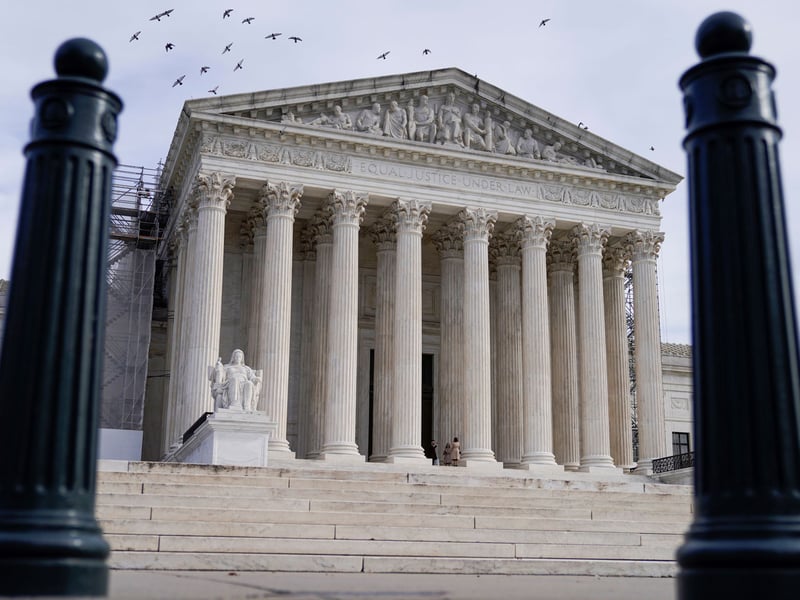
WASHINGTON (CN) — The Supreme Court on Thursday rejected the federal government’s attempt to avoid a lawsuit stemming from incorrect debt reporting that left a Pennsylvania man with damaged credit.
The U.S. Department of Agriculture’s Rural Housing Service reported Reginald Kirtz’s loans as delinquent even though he had paid off the balance. Kirtz sued the government under the Fair Credit Reporting Act, which allows consumers to sue any “person” who fails to comply with the law.
Moving to dismiss the case, the government claimed it was immune from Kirtz’s lawsuit. A federal judge agreed, but the Third Circuit reversed that ruling.
At the Supreme Court in November 2023, Benjamin Snyder, assistant to the solicitor general at the Justice Department, said not recognizing the government’s sovereign immunity would be inconsistent with the doctrine itself.
Nandan Joshi, an attorney with Public Citizen Litigation Group representing Kirtz, said Congress intended the government to be included in the group of people that could face liability for false reporting.
The justices ruled unanimously in Kirtz’s favor, holding that a consumer can sue a federal agency for defying the terms of the Fair Credit Reporting Act.
Justice Neil Gorsuch, a Donald Trump appointee, wrote the opinion for the court, largely affirming the Third Circuit’s decision that the doctrine explicitly opens the door for lawsuits against the federal government.
“We think the Third Circuit reached the right decision in this case: The FCRA effects a clear waiver of sovereign immunity,” Gorsuch wrote in Thursday’s opinion.
When the act was enacted in 1970, the law focused on two groups: consumer reporting agencies — like TransUnion, the company the USDA alerted about Kirtz’s supposed delinquency — and “persons” who request credit information from reporting agencies.
The statute defined “person” broadly to include partnerships, corporations, cooperatives, associations, governments or governmental subdivisions or agencies.
The act’s reach was further expanded in 1996 with the Consumer Credit Reporting Reform Act, when Congress added provisions focusing on those who provide information to consumer reporting agencies.
The additions required that, if a consumer challenges the accuracy of their credit reports, the “person” who made the report must investigate and correct any mistake. Kirtz argued that the USDA failed to investigate his repeated complaints, leading him to seek damages under the act.
According to a 2021 Consumer Reports study cited by Gorsuch in his opinion over 34% of consumers surveyed found at least one error in their credit reports, 29% reported errors in personal information and 11% found account information errors.
“Mistakes like these can lead lenders to insist on higher interest rates or other terms that make it ‘difficult or impossible’ for consumers ‘to obtain a mortgage, auto loan, student loan, or other credit,’” Gorsuch noted. “These days, too, federal agencies are among ‘the largest furnishers of credit information’ to consumer reporting agencies.”
In the federal agency’s attempt to dismiss the case, it argued that the federal government holds sovereign immunity from suits for money damages unless Congress explicitly waives that immunity. Further, the agency argued, the Fair Credit Reporting Act says nothing about the federal government being open to lawsuits.
Gorsuch wrote that the high court agreed to hear the case in order to clarify a split between several appellate courts on the question of immunity. The Seventh and D.C. Circuits have held, like the Third Circuit, that the government was not immune, while the Fourth and Ninth Circuits have supported immunity.
In his close reading of the statute, Gorsuch found the act specifically authorizes consumer suits against anyone who willfully or negligently fails to investigate consumer complaints.
“Dismissing suits like Mr. Kirtz’s would effectively ‘negate’ suits Congress has clearly authorized,” Gorsuch wrote. “We need look no further to resolve this case.”
He acknowledged the government’s argument and its right to “question the wisdom of holding federal agencies accountable for their violations” of the act, but emphasized the fact that Congress has clearly spoken on this issue.
“Congress’s judgment commands our respect and the law it has adopted speaks clearly: A consumer may sue ‘any’ federal agency for defying the laws terms,” Gorsuch said.
 Follow @Ryan_Knappy
Subscribe to our free newsletters
Our weekly newsletter Closing Arguments offers the latest about ongoing trials, major litigation and rulings in courthouses around the U.S. and the world, while the monthly Under the Lights dishes the legal dirt from Hollywood, sports, Big Tech and the arts.