
 Search Articles


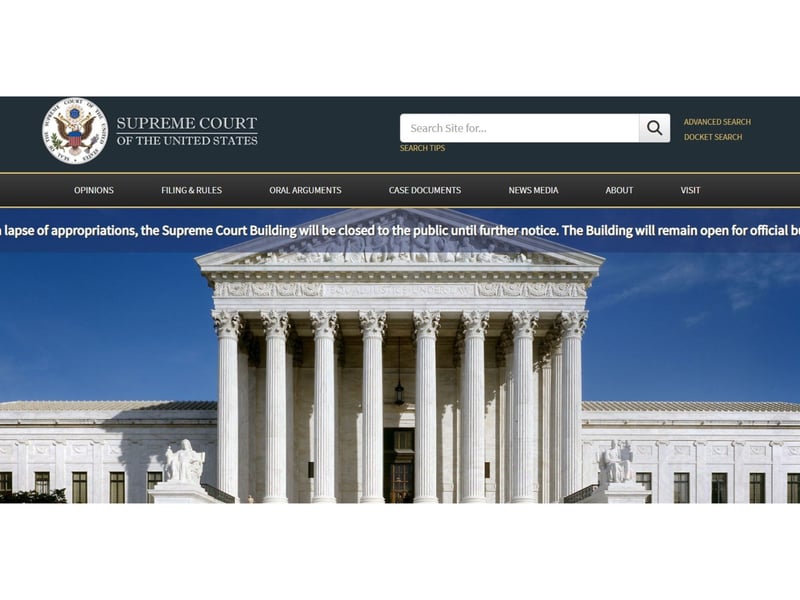
WASHINGTON (CN) — The federal judiciary on Monday joined the growing list of government agencies and institutions affected by the government shutdown, which threatens to stretch through the end of the month as lawmakers remain far from a deal to end it.
And though federal judges will stay on the bench despite bottlenecked judicial operations, staffing cutbacks may force delays in court cases nationwide and overload the public defender system — impacts lawmakers warn will restrict Americans’ access to justice.
Since last month’s partisan breakdown in Congress triggered the government shutdown, judicial operations have been spared from the largest impacts of the appropriations lapse thanks to funding from court fees and other sources separate from the judiciary’s congressionally appropriated budget. But that stopgap cash dried up on Friday, and court work slowed to a halt through the weekend.
Until lawmakers reach an agreement to fund the government, the judiciary will only operate in a limited capacity to fulfill its “constitutional functions,” the Administrative Office of the U.S. Courts said in a statement Friday.
During the shutdown, court staff will only be able to perform certain duties permitted under federal law, including constitutionally mandated judicial activity and “activities necessary for the safety of human life and protection of property.” Staff who remain on the job for those responsibilities will do so without pay, the judiciary said — others will be furloughed.
The day-to-day priorities of federal courts nationwide will be up to the courts themselves, the Administrative Office said. Appellate, district and bankruptcy courts must make “operational decisions” on how they approach caseloads, probation and pretrial supervision. Individual courts will determine which cases will continue and which will be delayed.
Courts and federal public defenders’ offices must also make individual decisions about staffing needs, the judiciary said.
Even the Supreme Court is facing shutdown-related drawbacks. The high court is closed to the public “until further notice” after its emergency funding lapsed on Saturday. A spokesperson for the court, however, said that the justices will continue to hear oral arguments and issue orders and opinions. Supreme Court staff will also process case filings during the shutdown, and police will remain on site to provide security.
A Supreme Court spokesperson did not respond to a request for comment on whether essential court staff will work without pay during the funding lapse, or if some high court staff have been placed on furlough.
On Capitol Hill, lawmakers expressed alarm about the impact of the shutdown on court operations. Senate Minority Whip Dick Durbin, the top Democrat on the Senate Judiciary Committee, said in a statement that the lapse in appropriations would force courts to make “hard choices” about caseloads.
“Lapses in funding for our federal courts could soon mean justice delayed — or even justice denied,” said Durbin. “Public defenders may see even larger caseloads. Challenges to the president’s lawless orders could be delayed. Access to a fair trial could be hindered. The list goes on.”
And the top Senate Democrat laid the blame for the bottlenecked justice system at the feet of Republicans, who Democrats have for weeks argued are responsible for the shutdown because they refuse to negotiate on extensions to expiring health care subsidies.
“It’s past time for Republicans to get serious about making a deal to lower health care costs and reopen the government,” Durbin said.
Republican leaders, for their part, were also concerned about the judiciary falling victim to shutdown staffing cuts — though at least one key GOP lawmaker appeared to be initially unaware that was a possibility.
Iowa Senator Chuck Grassley, the chairman of the Judiciary Committee, told Law360 last week that the lapse in appropriations was a “sad commentary” for prosecutors, judges and people waiting for rulings but that he hadn’t “thought about” the impact of a government shutdown on federal court funding. Grassley later said he would advocate for legislation that would automatically guarantee full funding for the federal judiciary in the event of a future appropriations lapse.
Monday marks day 20 of the government shutdown, which began last month when Democrats refused to sign onto a short-term budget bill rammed through the House by the Republican majority.
Democrats have complained that the GOP moved the stopgap without bipartisan negotiation and have refused to support any measure to reopen the government without approving an extension on health care tax credits made law under the Affordable Care Act. Those subsidies are slated to expire at the end of the year.
Republicans, meanwhile, have accused Democrats of playing politics with government funding and pointed out that the resolution they proposed last month was “clean,” without any additional policy riders. The GOP and President Donald Trump have so far refused to come to the table and negotiate.
The budget stalemate has resulted in complete paralysis on Capitol Hill. House Speaker Mike Johnson has kept his chamber out of Washington for several weeks, forcing the Senate to take vote after vote on the moribund House-passed stopgap bill.
Barring any breakthrough on Capitol Hill, the shutdown will pass the one-month mark next week. The longest government shutdown in U.S. history clocked in at 35 days and took place during the first Trump administration.
 Follow @BenjaminSWeiss
Subscribe to our free newsletters
Our weekly newsletter Closing Arguments offers the latest about ongoing trials, major litigation and rulings in courthouses around the U.S. and the world, while the monthly Under the Lights dishes the legal dirt from Hollywood, sports, Big Tech and the arts.