
 Search Articles


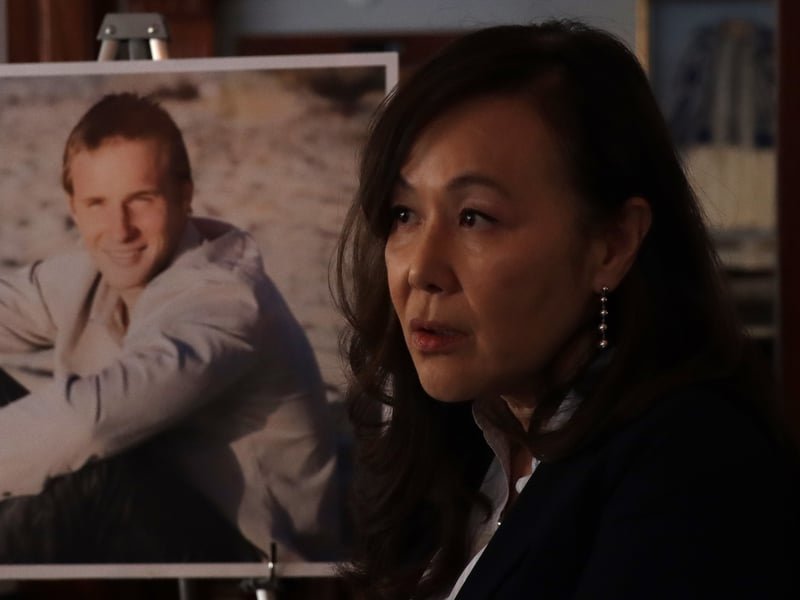
SAN DIEGO (CN) — After pressing a panic button multiple times to try to summon deputies to his cell, a man was tortured and murdered by a fellow inmate in a San Diego County jail last year, according to a lawsuit filed in federal court Monday.
The family of Brandon Yates claim the county, the county’s sheriff, Kelly Martinez, and individual deputies and jailhouse staff are liable for their son’s wrongful death because of their indifference, negligence, lack of training, supervision, discipline and lack of proper policies to keep inmates safe.
“They failed to protect our son, like so many others whose deaths were preventable. The San Diego County jail system doesn’t seem to value human life. The sheriff’s department is aware of the existing problems but consistently ignores them,” said Dan Yates, Brandon’s father, at a press conference announcing the filling of the suit in downtown San Diego on Tuesday.
In January 2024, 24-year-old Brandon Yates was arrested and booked into San Diego Central Jail on suspicion of burglary after he was found sleeping in someone else’s backyard shed.
Yates struggled with heroin and methamphetamine addictions, mental health issues, like schizophrenia, religious grandiosity and homelessness.
While he was incarcerated, his mental health issues aggravated his cellmates. On Jan. 16, his cellmates requested he be moved to another cell, warning there would be trouble if he was not.
According to the Yates family’s complaint, a deputy named Matthew Blackburn transferred Brandon to the cell of a man named Alvin Ruis, who was arrested on charges of domestic violence and willful cruelty to a child relating to an assault on his wife and children.
Ruis had a history of violent and psychotic behavior, as well as religious delusions and hallucinations, the Yates family claims, including threatening to attack other inmates, threatening to kill himself and attacking deputies. Deputies did put Ruis in an area called “sixth floor enhanced observation housing” multiple times and removed him from shared housing, but he was never sent to administrative segregation or psychiatric monitoring.
Ruis was designated a “bypass inmate,” which classifies an inmate as someone who has to be kept separate from others because they can’t get along with people.
Yet, Brandon Yates was still transferred to Ruis’ cell.
Within minutes of entering the cell, Ruis and Yates started talking about God, and the conversation quickly became volatile, according to the complaint. Ruis, the plaintiffs say, decided Yates was the devil and that he had permission from God to take his time to torture him before killing him.
According to the family’s complaint, Yates tried to press an emergency intercom button in his cell multiple times to summon deputies, but those calls, as well as shouting from other inmates trying to get deputies attention, were muted and ignored for nearly an hour while Ruis killed Yates.
Eugene Iredale of Iredale and Yoo APC, the Yates family’s attorney, said during the press conference that Ruis had even pressed the emergency button “to see if he could be stopped from what he was doing.”
Ruis was in the process of trying to stage Yates’ body like the crucifixion of Jesus Christ when deputies arrived for their hourly check, according to the complaint.
The sheriff’s office seems to have a culture of “negligence and disregard for human life” stemming from a lack of strong leadership, Dan Yates said.
The Yates family claims Blackburn was deliberately indifferent or recklessly disregarded Brandon’s safety needs when he placed him in the cell with Ruis in violation of Brandon’s 14th Amendment rights as a pretrial detainee.
They also claim that the county, the sheriff and multiple Doe defendants knew jail officials failed to place patients and inmates in proper housing so they could be monitored for medical and mental health needs. The county, they claim, has a custom of inaction and failure to implement proper policies and training to treat and monitor inmates and fails to respond timely to emergencies.
For years, the sheriffs were “aware of the pervasive pattern of inmates dying in their institutions,” while other defendants “were exposed to the litany of claims and lawsuits against [former] Sheriff [William] Gore and the county due to the systemic and inhumane mistreatment of inmates” as well as “multiple instances in which deputies walked awayfrom people in medical distress and left them to die.”
The family is asking the court to grant them damages after a jury trial.
“He deserved dignity, care and protection,” Dan Yates said at the press conference. “We want to make a difference so that other families don’t have to suffer losses like ours.”
The family added that they want their suit to bring change and reform to the county jail.
“This has cost too many lives like Brandon’s. Our family is heartbroken beyond words,” continued Dan Yates. “It would be a disservice to our son and many other families if we did not fight for change. We demand reforms that prioritize human life, including medical and mental evaluations, stricter enforcement of safety protocols, accountability for misconduct by jail staff at all levels, including leadership and the commitment to transparency.”
San Diego County and the San Diego County Sheriff’s Office declined to comment on pending litigation.
Ruis has been charged with Yates’ murder and is awaiting trial.
In 2022, the California state auditor reported that 185 people died in San Diego County jails between 2006 and 2020 — one of the highest rates of prisoner deaths in the state.
The auditor found that the jails failed to prevent and respond to the deaths of prisoners and that the sheriff’s department did not follow up with prisoners who needed medical and mental health services.
The auditor suggested the sheriff’s department should have stronger oversight and better standards for correctional care.
Nine people died in custody last year, according to the sheriff’s office.
Subscribe to our free newsletters
Our weekly newsletter Closing Arguments offers the latest about ongoing trials, major litigation and rulings in courthouses around the U.S. and the world, while the monthly Under the Lights dishes the legal dirt from Hollywood, sports, Big Tech and the arts.