Search Articles


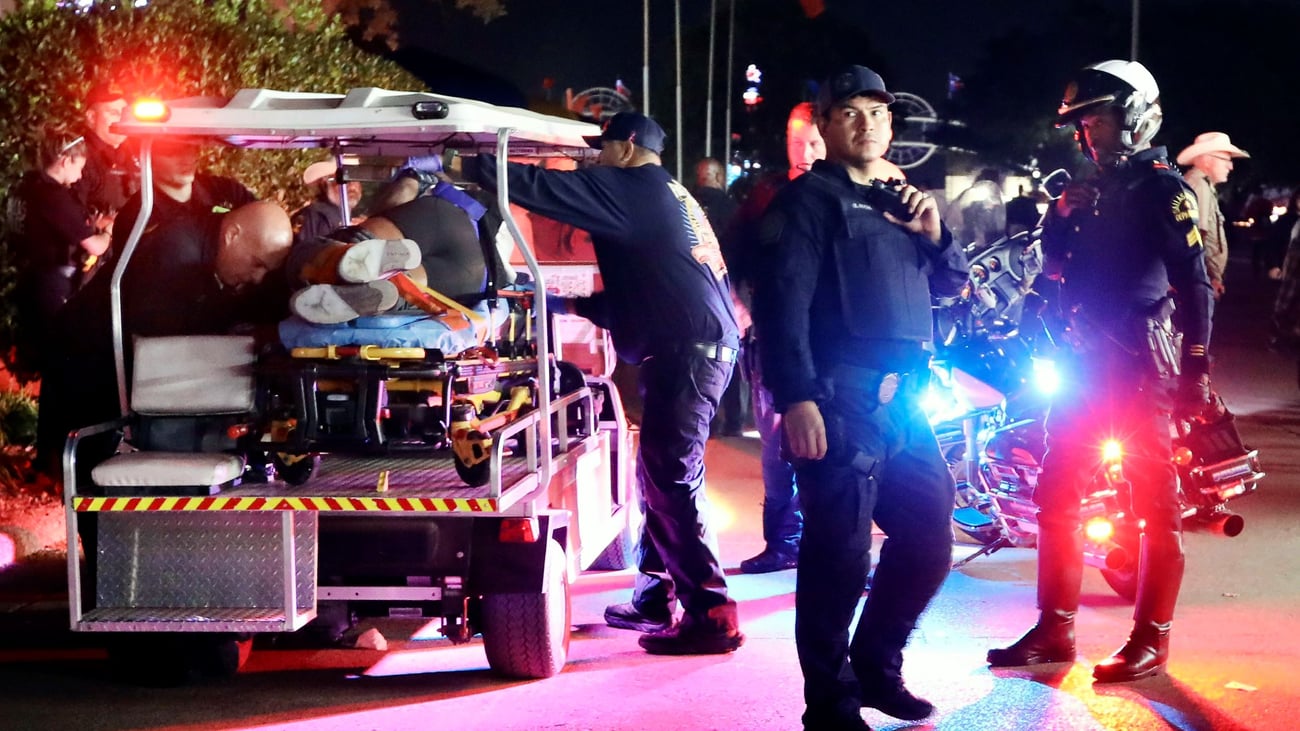
(CN) — Genevive Dawes and her husband were asleep in a parked car in January 2017 when six Dallas police officers surrounded them.
As the 21-year-old Dawes slowly backed out of the parking spot at roughly 3 mph, two officers fired 13 shots through the passenger window, striking her four times and killing her. Her husband, 23-year-old Virgilio Rosales, was injured but survived.
Officers said the situation turned dangerous in seconds. Responding to a call about a suspicious vehicle, they arrived and ran the plates to discover the car was reported stolen. After repeated commands went unheeded, Dawes maneuvered the car in the tight space. Two officers fired, believing they or their colleagues faced an imminent threat.
Dawes’ estate filed its civil rights lawsuit in 2017, but the case was delayed first while one of the officers was tried and acquitted of aggravated assault, and again after the plaintiffs appealed a lower court ruling that granted qualified immunity to the individual officers.
After the case was remanded to resolve the constitutional claims against the city, it returned to the Fifth Circuit for a second time on Tuesday. There, the plaintiffs argued the lower court erred in granting summary judgment to the city of Dallas on their failure-to-train claims. The central legal fight now revolves around the interplay between qualified immunity and municipal liability.
Attorney Shelby White, representing the Dawes estate and Rosales, urged the panel to reverse, arguing the Fifth Circuit’s prior ruling — affirming qualified immunity to the officers because the law was not “clearly established” — should not automatically doom the claims against the city.
Responding to a question from U.S. Circuit Judge Stuart Kyle Duncan, a Donald Trump appointee, White told the panel that Bustillos v. El Paso County Hospital District, heavily relied upon by the city and the district court, is distinguishable and not controlling.
“We are talking about training for officers using deadly weapons, using guns,” White said. “That is a very well-established precedent that officers need to be trained on.”
White pointed to other cases to argue that a pattern of unconstitutional conduct can establish deliberate indifference, regardless of whether the specific incident violated clearly established law.
U.S. Circuit Judge Stephen A. Higginson, an appointee of Barack Obama, pressed White repeatedly for her strongest authority. White initially cited the Fourth Circuit’s Atkinson v. Godfrey before landing on the Ninth Circuit’s Horton v. City of Santa Maria as the better example of a pattern case where municipal liability survived absent clearly established law for the specific incident.
City attorney Cheves Ligon countered that Bustillos remains “good law, and its holding was not cabin[ed] to a very narrow set of facts. Its holding was actually quite broad.”
Ligon argued that without clearly established law, the city could not have been deliberately indifferent as a matter of law. He emphasized that internal Dallas Police Department policies violated by the officers are not official “policy” and are irrelevant to the Fourth Amendment analysis.
The panel also probed the underlying constitutional question: whether the officers’ use of deadly force was objectively reasonable. White stressed the slow speed of the vehicle and the lack of immediate threat. The shooting was captured on police-worn body cameras, footage of which has since been released.
“When you look at the actual facts of this case, the actual risks, this car is going 3 mph, which is less than walking speed,” White said. “None of the officers are at risk.”
Ligon pushed back, urging the court to view the events through the officers’ eyes in the moment.
“The car had been moving, the car had struck several things after being told to stop … It does not take a half a second to accelerate faster. Had she done that, they would be dead.”
In rebuttal, White returned to Supreme Court precedent in Owen v. City of Independence, arguing that municipal liability serves a different purpose than qualified immunity.
“When the issue is fairness to the citizen versus fairness to the municipality, the citizen always wins,” she said.
The lower court case is assigned to U.S. District Judge Brantley Starr, a Trump appointee in the Northern District of Texas. Tuesday’s appellate panel also included Senior U.S. Circuit Judge Carolyn Dineen King, an appointee of Jimmy Carter. The court did not indicate when it would rule.
 Follow @gabetynes
Subscribe to our free newsletters
Our weekly newsletter Closing Arguments offers the latest about ongoing trials, major litigation and rulings in courthouses around the U.S. and the world, while the monthly Under the Lights dishes the legal dirt from Hollywood, sports, Big Tech and the arts.
Additional Reads

 Trans youth sue over DOJ demand for medical records June 2, 2026