Search Articles


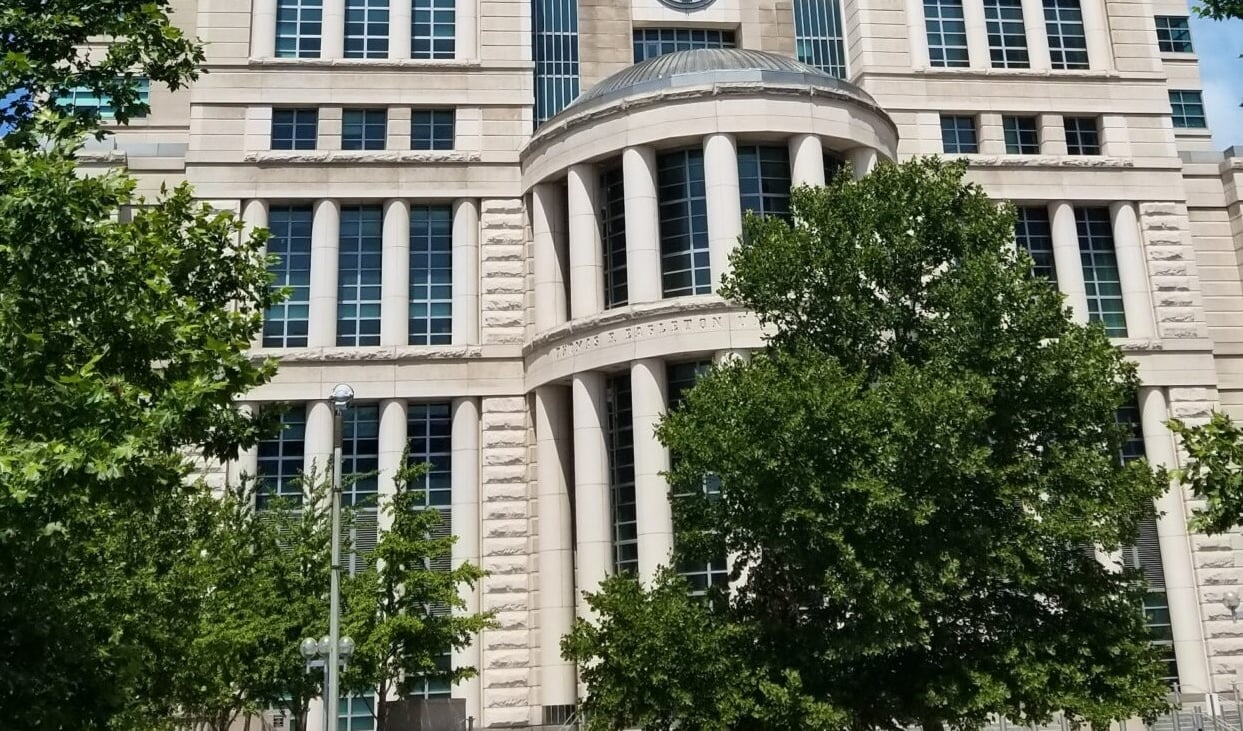
ST. LOUIS (CN) — A group of sex offenders and their family members told the Eighth Circuit on Tuesday Missouri’s public registry is broadly punitive and violates their constitutional rights.
Attorney Guy Hamilton-Smith argued before the panel of judges the sex offender registry creates “a permanent, inescapable badge of stigma" while attempting to revive his clients’ claims after they were dismissed by a federal judge.
The nine plaintiffs have homes listed on the registry due to a past conviction or that of a spouse or parent.
They originally sued in May 2021, arguing the registry — also known as SORA — was unfairly punitive because it serves no public safety function and hurts spouses and children. They also asked the court to consider stark differences in society, technology and the law itself in the more than two decades since the Supreme Court last considered the question.
“These factors call for, essentially, the court rolling up its sleeves, and wrestling with this evidence,” Hamilton-Smith, who is based in Washington, said during the 30-minute hearing.
The arguments centered on whether the list violates the Eighth Amendment regarding cruel and unusual punishment.
U.S. Circuit Judge Raymond W. Gruender, a George W. Bush appointee, asked if the level of punishment has to rise to the level of barbaric or grossly disproportionate to be considered a violation.
Clayton Weems of the Missouri Attorney General’s Office citied the Supreme Court’s landmark 1963 decision Kennedy v. Mendoza-Martinez, which set factors to test whether an act of Congress is penal or regulatory in character.
“The district court properly found that* Mendoza*-Martinez factors show that Missouri’s SORA in its necessary operation was not sufficiently punitive to override its nonpunitive intent,” Weems said.
Hamilton-Smith pointed to how technology has advanced since the registry was created in 2003, noting 40% of Americans didn’t use the Internet then.
He pointed to a study of half a million people over 25 years that he said showed tracking did not reduce recidivism or sexual violence.
“That risk is not a static variable — but that it declines as people remain in the community without any crime, such that most people, after 10 years, are no riskier than anyone else in the community, and after 20 years, no one is, and so lifetime registration obligation can serve no public safety benefit,” Hamilton-Smith said.
Weems pushed back on arguments about how SORA affects family members of convicted sex offenders.
“Mendoza-Martinezlooks at the direct legal consequences that a statute has on those who are subject to it, rather than the indirect social consequences of those around them,” Weems said. “Appellants’ request to this court to create a brand new factor for secondary effects on family members contravenes established Supreme Court jurisprudence and should be rejected by this court.”
The groups says in its brief that Missouri’s sex offender registry is the fourth largest in the nation, with nearly 20,000 people.
“As the record reflects here, SORA imposes significant consequences not only on anyone required to register, but on their family members as well,” the group wrote.
Missouri’s argues in its brief that the registry does not violate the Eighth Amendment.
“Without a doubt, SORA is not like historical punishments such as public shaming or probation,” the state wrote. “It does not impose significant disabilities or restraints or promote traditional punishment goals.”
U.S. Circuit Judge Duane Benton, a George W. Bush appointee, and U.S. Circuit Judge Ralph R. Erickson, a Donald Trump appointee, rounded out the panel, which took the case under advisement. There is no timetable for a decision.
This is not the only recent challenge the Eighth Circuit has heard regarding Missouri’s registry.
Last September, an attorney for Thomas Sanderson argued that being forced to put out a sign identifying him as a sex offender on Halloween violated his free speech. In January, the appeals court ruled in Sanderson’s favor.
None of the three judges who heard Tuesday’s arguments were on that panel.
 Follow @joeharris_stl
Subscribe to our free newsletters
Our weekly newsletter Closing Arguments offers the latest about ongoing trials, major litigation and rulings in courthouses around the U.S. and the world, while the monthly Under the Lights dishes the legal dirt from Hollywood, sports, Big Tech and the arts.
Additional Reads
 Called a ‘cancer’ at work April 14, 2026