
 Search Articles


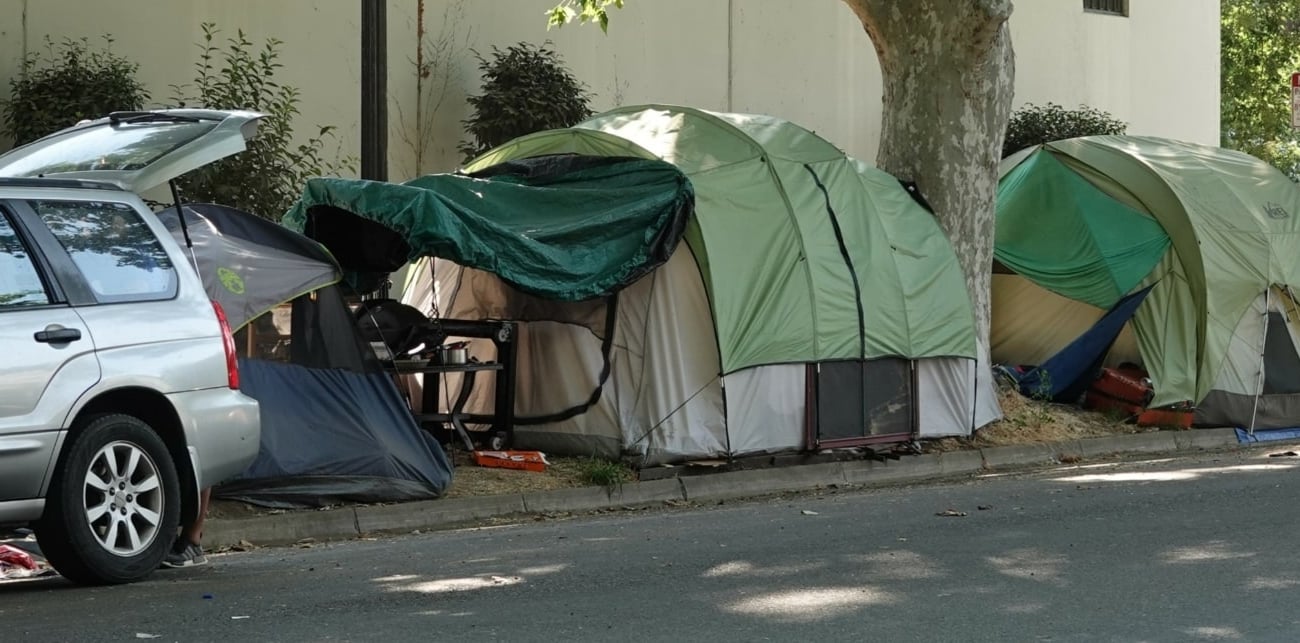
SAN FRANCISCO (CN) — Operators of homeless shelters in Berkeley, California, asked a federal judge Thursday to let them off the hook in a lawsuit against the city over its treatment of disabled homeless people.
“[The plaintiffs] have presented a number of examples where the class members have been subjected to discrimination as a result of the city’s policies. While the discriminatory conduct would occur at the shelters, the harm results from the city’s policies and refusal to accommodate this population,” said Eric Martinez, representing third-party defendant Insight Housing from Sims, Lawrence & Broghammer.
The plaintiffs — several homeless individuals and the homeless advocacy organization Where Do We Go Berkeley — claim in their third amended complaint that the city’s evictions and treatment of disabled homeless people violated the Americans with Disabilities Act, state law, the Fair Housing Amendments Act and placed them in a state-created danger.
However, in a third-party complaint against the nonprofit corporations that contract with the city to operate the shelter facilities and programs at issue, Berkeley claims it does not have sole responsibility in the suit and third-party operators should have to pay a portion of the city’s legal fees.
“The claims, in part, rest on the city’s alleged failure to exercise its supervisory authority, but how could it do so if contractually it can’t enforce the mechanisms in its agreements with the housing providers?” asked Rahi Azizi, representing the city from Atkinson Andelson.
In its complaint, the city claims the shelters are not owned or operated by the city, and the shelter providers are the ones responsible for daily operations, rule enforcement and individualized accommodation determinations.
Azizi said it’s the responsibility of the third-party providers to ensure compliance with applicable laws, including the ADA and the Fair Housing Act.
“These third-party providers are required to comply with the ADA, the FHA and all applicable laws, and to the extent the city’s liability is tied to their failure to comply with these laws, the city is entitled to contribution and indemnification,” he said.
Representing the plaintiffs, Brigitte Nicoletti of the East Bay Community Law Center told the judge they aren’t taking a position on the dismissal motion, though she confirmed they aren’t seeking for relief individual damages, but rather larger-scale changes to the city’s practices and policies that would benefit disabled homeless people.
Martinez emphasized that scale of relief, claiming third-party shelter operators should be dismissed from the complaint because the plaintiffs are not requesting relief from individual shelters.
“The allegations in the third amended complaint are explicit; they are challenging city policies and practices. It’s asking for injunctive relief to change those. The vendors just don’t have that authority … that relief can only come from the city of Berkeley,” he said.
Martinez additionally argued the city was trying to “contract away” its obligation to comply with the ADA, and the city cannot pass that requirement onto the shelter providers to escape liability.
“Those contracts only control what specific services we provide in exchange for money,” he said. “They can’t say ‘Comply with the ADA and you have to do all of these extra things because we have this contract and an indemnification clause.’”
Senior U.S. District Judge Edward Chen, a Barack Obama appointee, took the matter under submission and did not indicate when he would release a ruling.
Third-party defendants named in the complaint include nonprofit corporations Bay Area Community Services, Building Opportunities for Self-Sufficiency, Dorothy Day House and Insight Housing.
The city claims express contractual indemnity, equitable indemnity, contribution, breach of contract and declaratory relief, and asks the court to find the third-party defendants are contractually obligated to “defend, hold harmless and indemnify” the city from losses, costs, judgments and other liabilities that arise from third-party defendants’ failure to comply with the law.
Representatives for the parties did not immediately respond to a request for comment.
 Follow @mhattridge_
Subscribe to our free newsletters
Our weekly newsletter Closing Arguments offers the latest about ongoing trials, major litigation and rulings in courthouses around the U.S. and the world, while the monthly Under the Lights dishes the legal dirt from Hollywood, sports, Big Tech and the arts.
Additional Reads


 DOJ enjoined from receiving minors’ medical info July 2, 2026