
 Search Articles


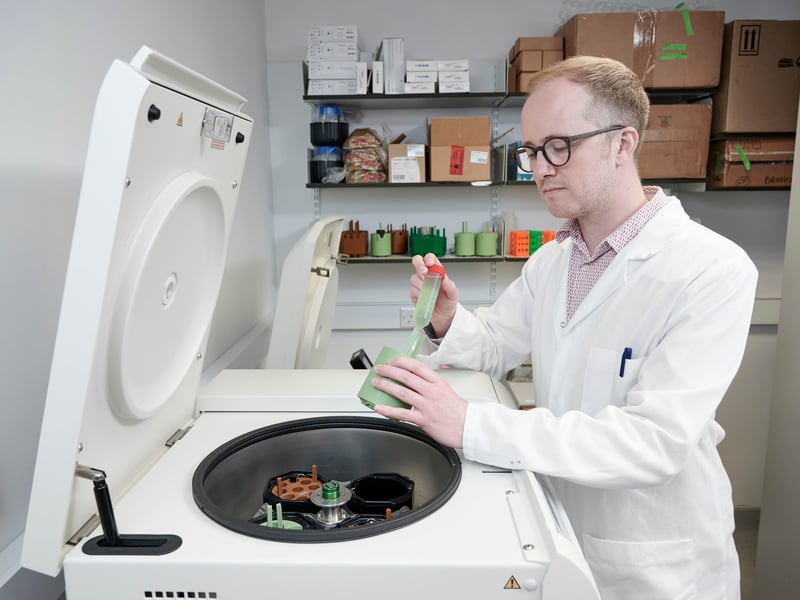
(CN) — One way to tackle the ever-growing problem of plastic waste? Turn it into a useful product.
That’s the upshot of a study published Monday in Nature Chemistry. In the study, a team of researchers say they’ve found a chemical reaction that can extract medicine from plastic waste with the help of Escherichia coli bacteria, better known as E. coli. That’s important because if scientists can use living microbes to carry out complex chemical reactions, it could pave the way for a greener and more sustainable form of industrial chemistry.
In an email, researcher Stephen Wallace explained that E. coli is quick to genetically engineer and modify. That made it a useful microbe for the study.
As for the chemistry itself, researchers relied on the so-called Lossen rearrangement — “a classic chemical reaction that’s been used in laboratories and industry for over a century,” Wallace explained in an email. “Until now, it had never been seen in nature.”
“In our study, we made an exciting discovery. This reaction can happen inside living bacteria," Wallace gushed. “Even more surprisingly, it doesn’t need any special lab catalysts. Natural phosphate ions already present in the cells are enough to trigger it.”
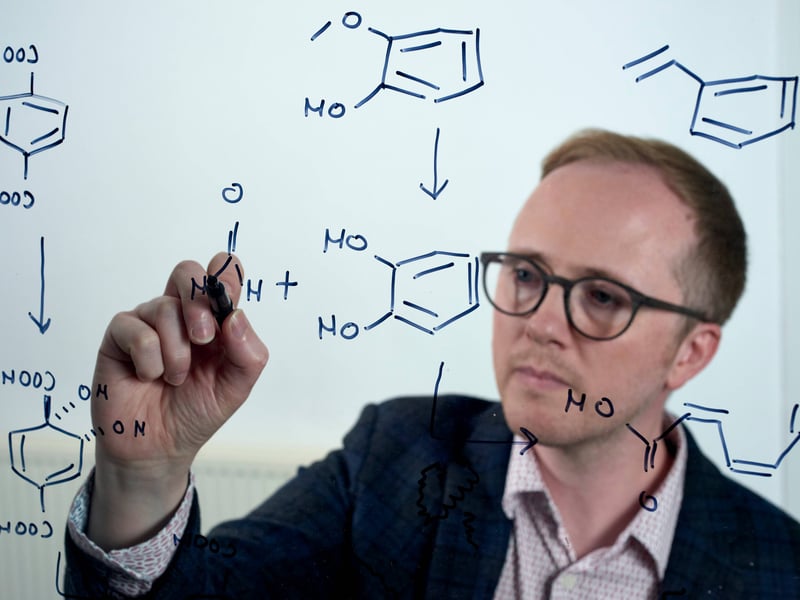
During their experiments, the team degraded a water bottle made from polyethylene terephthalate plastic until it produced the starting molecule for the Lossen rearrangement. That then created a plastic waste-derived substrate.
To the team’s excitement, they said that substrate allowed them to attain an 83% yield of paracetamol, a medication also known as acetaminophen that is used to treat pain and fevers.
“Once we’d discovered that the Lossen rearrangement could happen inside bacteria, it really sparked our imagination,” Wallace said in his email. “First, we realized that the starting material for this reaction could be made from discarded plastic bottles." Then, “by taking enzymes from soil bacteria and mushrooms, we engineered E. coli to link this reaction to the final steps needed to make paracetamol.”
“To our amazement, the modified bacteria started making the painkiller!” an excited Wallace added. “This was a proof of concept, but it shows the incredible potential of combining new chemistry with biology to turn waste into valuable medicines.”
The satisfied team says their research expands the available options for using metabolic chemistry to synthesize small molecule in native and engineered cells.
They look forward to pushing the technology further. “We’re very excited about where this could lead,” Wallace wrote. “Now that we’ve shown this new type of chemistry can work inside bacteria, we can start designing microbes to sustainably produce many other medicines and valuable products, especially ones that are currently made using polluting processes and fossil fuels." He noted the team was already working with industry partners to scale up their plastic-waste method for manufacturing paracetamol.
“Waste is just carbon, and microbes love carbon,” Wallace wrote. “Instead of burning it or burying it in landfills, which releases carbon into the atmosphere as greenhouse gases, we can use engineered microbes to turn that waste into something useful.”
“Making paracetamol from plastic is just the beginning,” he added. “This kind of technology could help us build a circular, climate-friendly economy. Just imagine what else we might be able to create.”
 Follow @kndrleon
Subscribe to our free newsletters
Our weekly newsletter Closing Arguments offers the latest about ongoing trials, major litigation and rulings in courthouses around the U.S. and the world, while the monthly Under the Lights dishes the legal dirt from Hollywood, sports, Big Tech and the arts.