Search Articles


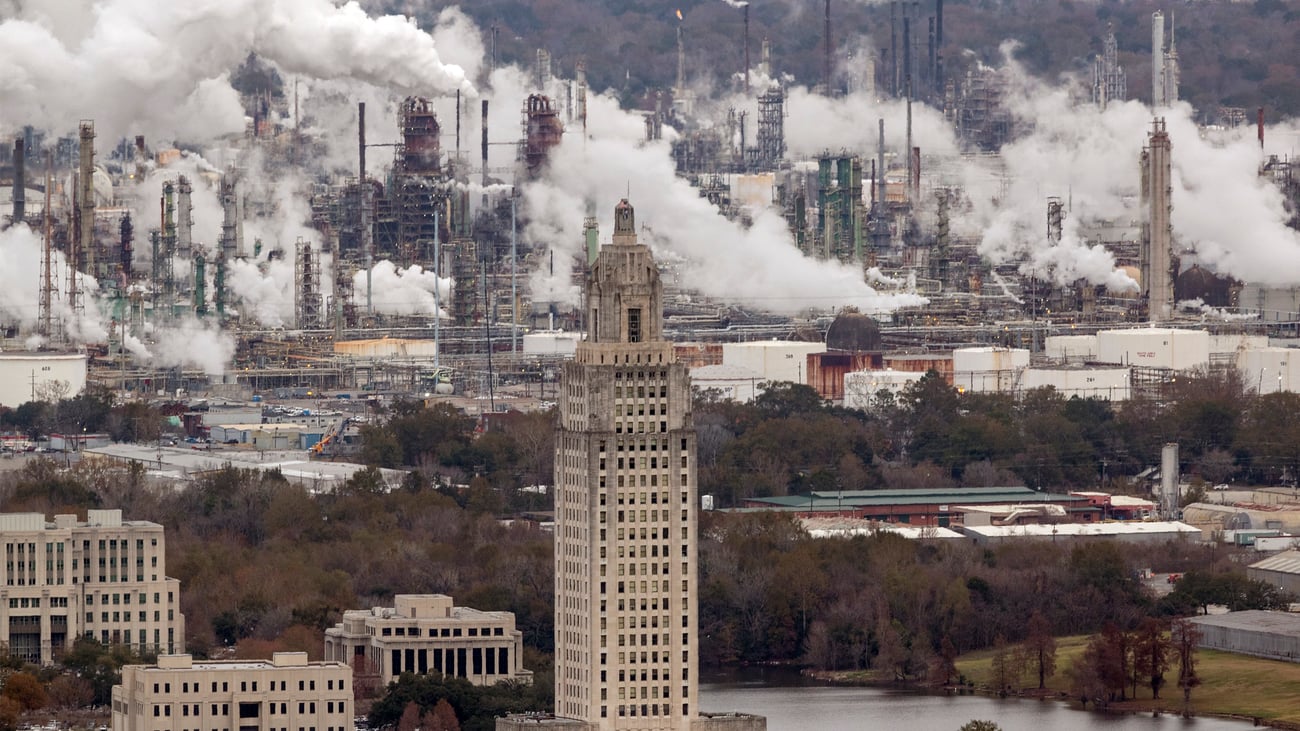
(CN) — Exxon Mobil Corp. can proceed with negligence claims against a slate of defendants implicated in delivering contaminated crude oil to its Baton Rouge refinery in 2025, which damaged equipment and ruined uncontaminated oil with which it was mixed.
U.S. District Judge Nannette Jolivette Brown issued seven separate orders Tuesday rejecting arguments that Exxon Mobil failed to state plausible claims against the operators of the Anchor Project, its contractors and the pipeline network that carried the oil. The Anchor Project, developed by Chevron and TotalEnergies, is a deepwater, high-pressure well approximately 140 miles off the coast of Louisiana that is projected to produce 75,000 barrels of oil per day for up to 30 years.
According to Exxon, some of the first oil produced by the project arrived at the Baton Rouge refinery in 2025 with abnormally low pH and elevated zinc levels. Zinc is not typically found in produced crude, and Exxon claimed samples of earlier batches retained from supplier pipelines showed fluctuating zinc levels, indicating impure substances such as zinc bromide.
The oil traveled from the Anchor Project through the Amberjack Pipeline System, Mars Pipeline System, LOOP Pipeline System and storage facility and LOCAP Pipeline System before reaching Exxon’s refinery. Those pipelines operate under Federal Energy Regulatory Commission and Louisiana Public Service Commission-approved tariffs that set quality specifications, including limits on impurities.
The contaminated oil mixed with Exxon’s clean crude, physically damaging it and triggering “upset conditions” at the refinery.
The defendants include producers Chevron and TotalEnergies, contractors Halliburton Energy Services Inc., OneSubsea LLC and Wood Group USA Inc. and pipeline entities Amberjack Pipeline Company LLC, Mars Oil Pipeline Company LLC, Shell Pipeline Company LP, LOOP LLC and LOCAP LLC.
Chevron and TotalEnergies failed to get the products liability and redhibition claims against them dismissed, with Brown ruling factual questions remain about whether the two companies count as manufacturers under Louisiana’s products liability law and that Exxon can still pursue negligence claims as an alternative theory. She also found the producers had a responsibility to ensure the crude oil entering the pipeline network met quality expectations.
“Industry standards are relevant to determining the existence of a duty,” she wrote.
Meanwhile, Brown rejected the contractors’ arguments that any harm to Exxon was too remote and unforeseeable, finding the claims sufficient to show an “ease of association” under Louisiana negligence law between the contractors’ work and the downstream contamination.
“These factual inquiries cannot be decided on a motion to dismiss,” she wrote in the Halliburton, OneSubsea and Wood orders. Industry standards and the sophisticated nature of the work made the risk of injury to downstream users foreseeable, the Barack Obama appointee said.
Against the pipeline operators, Brown held that industry custom and the applicable tariffs supplied a duty of reasonable care that included rejecting out-of-specification petroleum. For LOCAP, she specifically found a FERC regulation that required rejection of petroleum containing more than 2% impurities, while elevated zinc levels claimed by Exxon were sufficient at the pleading stage to state a breach. Similar reasoning applied to Mars, Amberjack, Shell and LOOP. An indemnity clause in certain tariffs, Brown noted, creates only a potential cross-claim among the parties and does not bar Exxon’s suit.
The case originated in U.S. District Court for the Eastern District of Louisiana, where Exxon seeks monetary damages to compensate for the physical harm to its previously clean crude oil, the resulting conditions at its refinery and related economic losses.
 Follow @gabetynes
Subscribe to our free newsletters
Our weekly newsletter Closing Arguments offers the latest about ongoing trials, major litigation and rulings in courthouses around the U.S. and the world, while the monthly Under the Lights dishes the legal dirt from Hollywood, sports, Big Tech and the arts.