
 Search Articles


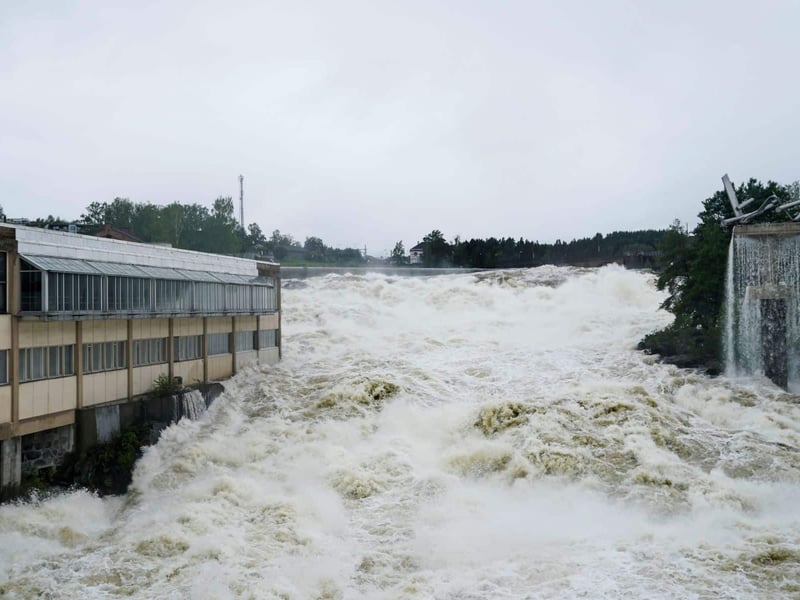
COPENHAGEN, Denmark (CN) — Unseasonable storms pounded Scandinavian countries over the past week, with Denmark recording hurricane-level winds on its northwestern shores, and Sweden and Norway experiencing massive amounts of rain and thunderstorms.
A river overflowed its banks near the Swedish town of Göteborg and sent a flood of water into the streets. At the ski area of Åre, rain poured down from the mountains, dragging bricks, rocks and soil with it into the center, where excavators were sent in to build dams and prevent the water from entering restaurants, public buildings and homes.
“It is a disaster. It was scary. What I saw last night and what I am seeing now is a disaster. Now we all have to help clean and restore everything to normal again,” said a resident and restaurant owner in Åre to Swedish broadcaster SVT on Tuesday.
In all three Scandinavian countries, storms have caused the closure of bridges, ferries and roads.
In Norway, landslides caused more than 1,700 people to evacuate their homes, and authorities battled flooding at the Braskereidfoss hydroelectric power plant. The widespread damage led Prime Minister Jonas Gohr Støre to promise citizens that the nation will increase its efforts to adapt to climate change and protect citizens, especially in the southeastern regions, against “wilder and wetter weather.”
So far, experts estimate that the flooding will cost Norway about $50 million.
Scientists say the turbulent weather is highly unusual, especially in summer. Some researchers warn that the weather conditions are a sign of global warming and the more extreme conditions Nordic countries can expect in the future.
Eigil Kaas, a professor in climate and geophysics and a researcher at the National Center for Climate Research at the Danish Meteorological Institute, told Courthouse News that the current low-pressure system that created the heavy rainfall is a natural phenomenon. However, the intensity of the rain, in particular, occurred because the atmosphere is gradually warming due to climate change.
”Very hot air traveled from the Mediterranean and northward via Eastern Europe, where it came close to cold air over Scandinavia," Kaas said. “These significant temperature differences created a strong low-pressure system where the warm air, while sliding upward over the cold, released massive amounts of rain.”
The professor noted that there have been similar storms in northern European countries in the summer, but usually only a few times a century.
“The climate has become warmer, and hot air contains a lot more water. So the excess rainfall and flooding we see in Scandinavia now are related to global warming,” Kaas said, adding that “alarm bells have been ringing the last ten years.”
He underlined that Europe should prepare for more changeable, drastic weather in the future.
“When a lot of water falls in one area, it becomes very dry in another. Hence, we are going to see more extreme summers with contrasting weather. It is going to be challenging, especially for the agricultural sector to adopt and secure well-growing crops,” Kaas said.
The situation in Norway remains severe. Rivers continue to flood, and people in some towns may lose access to electricity and water. Denmark and Sweden have seen a return to more typical summer weather patterns.
Subscribe to our free newsletters
Our weekly newsletter Closing Arguments offers the latest about ongoing trials, major litigation and rulings in courthouses around the U.S. and the world, while the monthly Under the Lights dishes the legal dirt from Hollywood, sports, Big Tech and the arts.