
 Search Articles


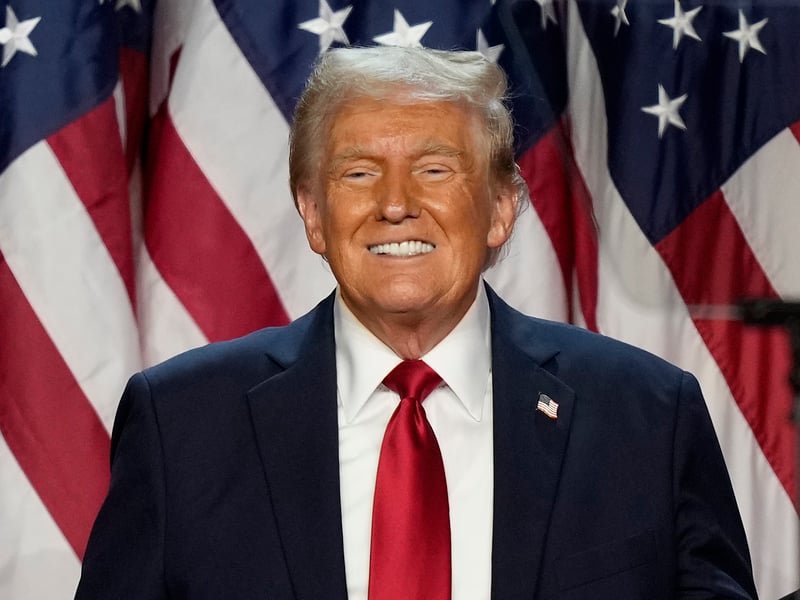
MANHATTAN (CN) — Sealing President-elect Donald Trump’s status as the first U.S. president with a criminal conviction on his record, a New York judge sentenced him to unconditional discharge on Friday — just 10 days before his inauguration.
The rare sentence certifies Trump’s guilty verdict on 34 counts for falsifying business records in name only, and protects the soon-to-be president from any tangible punishment, such as community service or a fine.
James Sample, a law professor at Hofstra University, says the sentence may indicate New York Supreme Court Justice Juan Merchan’s belief that “the stain of conviction is enough,” given the historical precedent it sets.
“The lasting legacy of the conviction, the statement that 12 independent jurors — none of whom knew each other before they ended up on that jury — came to the unanimous conclusion that he had committed these crimes, is enough,” Sample said.
Merchan said as much during the 30-minute sentencing Friday morning, asserting that Trump was able to evade firmer consequences only because of his position as both a former and incoming president.
“To be clear, the protections afforded to the office of the president are not a mitigating factor,” Merchan said. “They do not reduce the seriousness of the crime or justify its commission in any way. The protections are, however, a legal mandate.”
Sample added that on appeal, the conviction may be harder for Trump’s legal team to dispute because they can’t argue the sentence burdened the presidency.
“I think the idea is the only thing that Mr. Trump will be able to challenge on appeal is the convictions themselves,” Sample said.
The sentencing went ahead as planned despite Trump’s numerous attempts to delay the hearing, going so far as taking his arguments all the way up to the U.S. Supreme Court, to no avail.
Though scot-free, Trump reiterated his belief that the case was politically motivated and should not have been prosecuted, which he has repeated again and again since the case was brought in 2023.
“I am totally innocent, I did nothing wrong,” Trump said.
Trump will be able to evade most restrictions that typically apply to convicted felons, such as being able to vote or travel to countries that bar felons from entering.
Though Trump is a Florida resident, where convicted felons are unable to vote, the state honors the law of the state in which the individual was convicted. Since Trump was convicted in New York, which allows non-incarcerated felons to vote, he won’t face any restrictions on that front, either.
Florida Governor Ron DeSantis even voiced his support for Trump after his conviction last spring, and promised he’d ensure the now president-elect would be able to vote in his home state.
People with a felony conviction on their record are also typically barred from receiving government assistance such as public housing, and it can impact job and loan applications as well. But given Trump’s substantial wealth, those restrictions don’t affect him at all.
“It’s hard to see any consequences,” said Gregory Germain, a law professor at the University of Syracuse. “It’s not like he’s a young person who will have trouble getting a job with a criminal conviction on his record.”
But he may have to deal with some travel restrictions, since several countries bar convicted felons from entering. Countries including the United Kingdom, Australia and Canada have strict restrictions on traveling there as a convicted felon, and China bans all felons from entering its country.
“It is a very, very strange circumstance when, at least as a matter of formal legal rules, Mr. Trump is prohibited from entering Canada for example,” Sample said.
Even so, it’s possible the president-elect will be able to get special permission to enter those countries, and the travel restrictions are unlikely to have a substantial effect on him.
As CBS News notes, former President George W. Bush had to apply for a special waiver to enter Canada after he pleaded guilty decades earlier to a 1976 drunk driving charge. That, of course, was a misdemeanor and not a felony.
“I think that geopolitical interests will prove to be bigger than those rules,” Sample added. “In part because, rightly or wrongly, America is the elephant in the global room.”
Though it’s unlikely Trump will bear the brunt of any restrictions typical for a person with a felony conviction on their record, Sample added that it’s possible.
“If there is something out there that we would often refer to as a collateral consequence of his conviction, it’s hard to imagine it imposing a real or significant barrier in the case of this particular individual,” Sample said.
 Follow @NikaSchoonover
Subscribe to our free newsletters
Our weekly newsletter Closing Arguments offers the latest about ongoing trials, major litigation and rulings in courthouses around the U.S. and the world, while the monthly Under the Lights dishes the legal dirt from Hollywood, sports, Big Tech and the arts.