Search Articles


NEW YORK (CN) — While many Americans prepared to celebrate the country’s 250th birthday, and the freedoms represented thereby, New York state quietly released a lengthy report detailing harrowing abuse of state inmates and other circumstances behind two recent deaths in custody: insufficient training and accountability, an “us versus them” dynamic and a culture in which guards are condemned by their peers for showing prisoners kindness.
The 277-page report conducted by the law firm WilmerHale — dated June 29 but made public on July 3 — recommends greater oversight, updated training, more accountability measures and better mental health care. Experts in sociology and psychology agree, however, that meaningful change requires a more transformative approach. That may start with a closer look at human behavior.
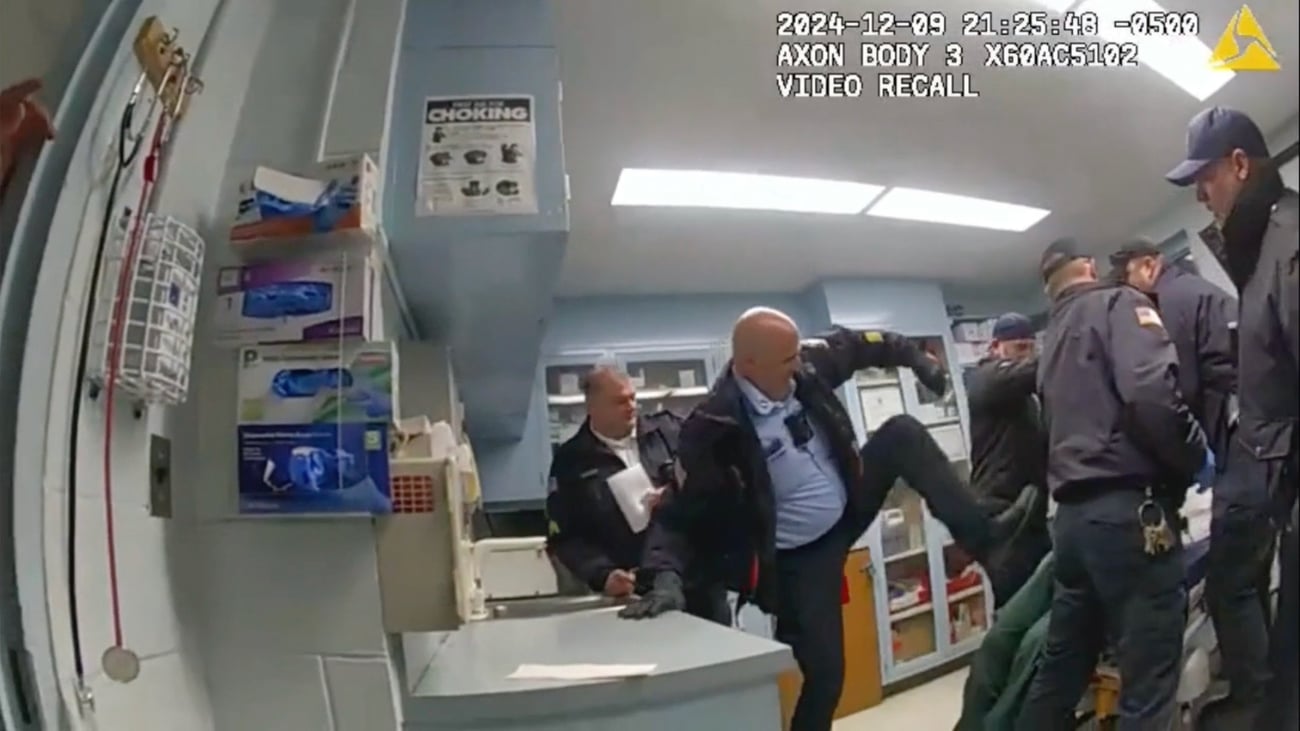
In December 2024, officers at Marcy Correctional Facility near Utica, New York, beat 43-year-old Robert Brooks to death in the facility’s infirmary. Brooks was handcuffed with his arms behind him on a medical examination table, body camera footage showed, and staff later filed false reports of their use of force. After an attorney general investigation jurors charged six officers with murder, three with manslaughter for failing to intervene and one with evidence tampering. He cleaned bloodstains from the scene.
Brooks was serving a 12-year sentence after pleading guilty to first-degree assault. His death sparked outrage and state officials retained WilmerHale to review Department of Corrections procedures and identify systemic problems.
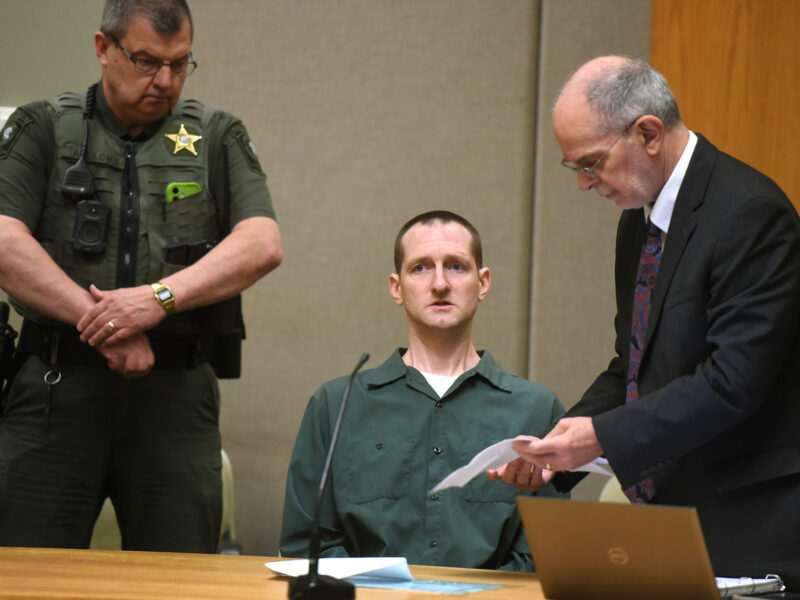
Of the 10 guards indicted in February 2025, seven have now pleaded guilty to manslaughter or lesser charges. One was convicted of murder, and two were acquitted in a fall trial. Three more guards agreed to plead guilty to reduced charges in return for cooperating with prosecutors. Several face lengthy prison terms.
Several months after Brooks’ death, in February 2025, correction officers began an illegal strike protesting unsafe conditions, excessive hours and new restrictions on solitary confinement.
on March 1, 2025, during the three-week strike, correction officers beat to death another incarcerated man, 22-year-old Messiah Nantwi, at Mid-State Correctional Facility — part of the same upstate prison “hub” that includes the Marcy facility.
Nantwi, who struggled with mental illness and had been taking a shower during a “count” by National Guardsman called in to fill staffing gaps, “begged the officers to stop and screamed incoherently until he eventually fell silent,” experts wrote in the WilmerHale report.
Then they beat him two more times, in a stairwell and in an infirmary holding cell, before leaving him unattended for several minutes. He died of traumatic brain injuries as a result of violent blows to his head, suffering at least 69 other serious blows to his body.
Ten officers were charged in the killing of Nantwi, who was serving a five-year sentence for second-degree criminal weapon possession.
On March 2, the day after Nantwi was killed, all 10 defendant officers met at a diner “to agree on a narrative to obstruct the investigation into the killing.” Officers planted a weapon in Nantwi’s cell to justify their force; lied about who was involved and the force used; and mopped up blood from Nantwi’s cell.
“The tragic killings of Mr. Brooks and Mr. Nantwi demonstrated systemic shortcomings in oversight, accountability, and culture within [Department of Corrections and Community Supervision] facilities,” the WilmerHale experts write. “Both incidents involved misuse of force and efforts to conceal misconduct, revealing deep cultural and procedural deficiencies at Marcy and Mid-State.”

The problematic culture includes an “us versus them” mentality between guards and prisoners: Former officers said a lot of their colleagues felt the incarcerated people “deserved more punishment” and would deem any officer who was “too kind” to detainees an “inmate lover.”
Corrections Department executives, former staff and detainees said “officers who took acts that would help an incarcerated individual — including steps to help with an investigation into officer misconduct — risk intimidation, retaliation, ostracization and abuse by their peers.”
Among officers, the “no snitching” culture and “brotherhood” among staff, broadly known as the “thin blue line” that divides order from chaos, feels like a means of protection in an environment riddled with danger, according to interviews cited in the report.
Racial bias was widespread, too, with the majority of those surveyed saying they observed “differences” in how often staff used force on people of different racial groups. Brooks and Nantwi were both Black. All of the officers who killed them, or stood by as it happened, are white.
A spokesperson said the state Department of Corrections “has made significant progress implementing change in a number of critical areas over the last year, many of which are also identified as priorities in the WilmerHale report and recommendations.”
So far the department says it has completed more than a dozen of the report’s 77 recommendations, and is working on implementing another 47 measures, including expanding body-worn camera use, expanding staff and enhancing training and the use-of-force review process.
Daniel F. Martuscello III, the department’s commissioner, thanked the report authors in a July 3 news release.
“These reports reflect both the important work already underway to strengthen safety, accountability, and professionalism across DOCCS, and the significant work that still lies ahead,” he said.
The department spokesperson also noted that some recommendations may involve legislation, budgetary or collective bargaining issues.
‘Moral injury’ on the job
In seeking to understand the vicious cycle of violence in prisons, researchers have looked at the social and biological mechanisms that underscore the group dynamics described in the WilmerHale report.
Lindsey Feldman is an assistant professor of practice at the University of Arizona’s W.A. Franke Honors College. She pointed to a concept in sociology often used in the context of military service, called “moral injury,” meaning damage to one’s conscience or moral compass when they do or witness something that violates a deeply held moral belief.
Last year, the American Psychiatric Association recognized moral injury as a mental health condition. It’s often applied to institutional situations, like law enforcement or the military, where agents are asked to do things that cause moral injury as part of their job.
“It can become extremely distressing and harmful for them,” Feldman said. “People who work in prisons often have to make a choice that they know they’re required to for their job, but that, for themselves, morally and ethically, they would not make.”
That kind of violence has a ripple effect outward, Feldman said.
“It’s is the nature of carceralism to create spaces of dehumanization: the need for guards to dehumanize, to separate themselves from what they’re asked to do for their job,” she said.
The cycle is furthered by officers’ assumption that they are in danger, experts explained.
Keramet Reiter is an attorney and professor of criminology, law and society at the University of California Irvine.
“When you set people up in these situations, there tends to be violence because there’s an assumption that people are being put in these kinds of places because they’re really dangerous, and so then that creates all kinds of tensions — whether there’s evidence of their dangerousness or not,” Reiter said.
Added restrictions like solitary confinement breed psychological problems, including anger management issues, she noted, reinforcing fear on the side of correction officers who are already tasked with an overwhelming burden.
“Prisons are like magnifying lenses for all of our social problems, and correctional staff are dealing with the deep end of that,” Reiter said. “They’re dealing with seriously mentally ill folks that can’t even necessarily exist in our forensic hospitals. They’re dealing with people with life sentences who feel like they have nothing to lose, right? So we create a system where we ask them to deal with our most severe social problems, and we often don’t give them the training they need to do that.”
While the division between incarcerated people and guards is stark, and at times deadly, Feldman has observed a much murkier distinction. In her work with fire crews in Arizona, incarcerated men and correction officers often come from the same socioeconomic background, the same rural areas, even the same high schools.
“The way the criminal legal system is set up in this country, to create a divide of us versus them — the real truth is that it is far more messy, and oftentimes way less dividable,” Feldman said.
Understanding the complexity of how humans divide ourselves requires looking even deeper, at our mammalian instincts.
‘You get the empathy for free’
Empathy is at the core of our human hard-wiring. We feel what others feel — yet the reluctance to step in when we see someone in need is part of our biology, too.
The “bystander effect,” which refers to an actor’s reluctance to step in unless others are also helping, even exists in rats, as first identified in work led by researcher Peggy Mason.
As Mason explained, “helping” depletes our resources, and so to survive mammals make choices about when, and to whom, to lend a hand.
“Evolutionarily, it does not serve well if you indiscriminately help all targets in all situations,” said Mason, a professor of neurobiology at the University of Chicago.
To further bolster survival, individuals are more likely to help “in-group” members than “out-group” members, given individuals are more likely to survive if the group is more cohesive.
While there’s nothing naturally “in-group” about correctional officers, police officers, or other groups like physicians, Mason said, in each case, self-protection is a must. In a medical context, that may mean a doctor training to endure the sight of a needle going into a patient’s skin, a moment where stopping someone from being jabbed won’t help anyone’s chances of survival.
In a prison environment, dehumanization is about rationalizing compassion, treating it as an intellectual experience, researchers say. It’s a way of conserving resources to get through the day.
While our biology may tell us to pick and choose, those choices aren’t hard-coded.
“The system is not at all unchangeable, it is incredibly malleable by environment, and that is one of the most hopeful things that we got out of our own research,” Mason said.
An albino rat, for instance, won’t help a black caped rat in distress if it’s never seen one before — it won’t register the other rat as one of its kind, a rodent’s version of dehumanization. But if an albino lives with a black cape rat for two weeks, it will help any black cape rat.

“There’s something about that exposure, that familiarity, that allows them now to make that rat a being,” Mason said.
The biological basis for communicating our emotions, she said, is missing from the public discussion about the dynamic among police and correction officers.
“You get the empathy for free. You inherited it. It just happens,” Mason said. “You don’t have to work to get it, but you do learn, as do other mammals, at some young age to start to preferentially exercise empathic concern toward individuals in the in-group. And then what’s very peculiarly human is to exercise it for these socially constructed groups, such as prison guards or police officers.”
Structural change
Experts agreed that making meaningful improvements will take measures beyond better training and increased staffing.
“I don’t think there’s any change beyond something significant and structural,” Feldman said. “I don’t think more training fixes this, because how do you train away structural violence?”
One step, she said, is reducing prison populations. “If there were less people in prison there would be less violence in prison, quite frankly,” she said.
Some facilities are looking abroad to prison systems, like those in Northern Europe, that are notoriously less problematic than those in the States. It starts with an eye to the ultimate goal of prisoners reentering the community — like Robert Brooks and Messiah Nantwi were supposed to do.
“Often in Northern European prisons, they’re smaller, the staff receive more training, but also there’s more of a culture of what people call normalization — of acknowledging that the vast majority of people in prison are going to come home,” Reiter said. “The more normal their interactions can be in prison, the easier that transition will be back into our communities.”
States like Washington and Pennsylvania are piloting programs examining what a “normal interaction” in prison can look like.
“It can mean having a conversation about the football game that happened last weekend, or having a cup of coffee, or playing a game together,” Reiter said.
Some facilities have cornhole, a basketball hoop or card games that “give people a chance to interact with each other as just two human beings who share a basic interest.”
“Preliminary evidence suggests that those simple moves can be really transformative for breaking down these stereotypes,” Reiter said.
The projects are still in the early stages, she said, documenting implementation with the hope of longer-term evaluation. “But they show promise.”
 Follow @NinaPullano
 Follow @ninapullano.bsky.social
Subscribe to our free newsletters
Our weekly newsletter Closing Arguments offers the latest about ongoing trials, major litigation and rulings in courthouses around the U.S. and the world, while the monthly Under the Lights dishes the legal dirt from Hollywood, sports, Big Tech and the arts.