
 Search Articles


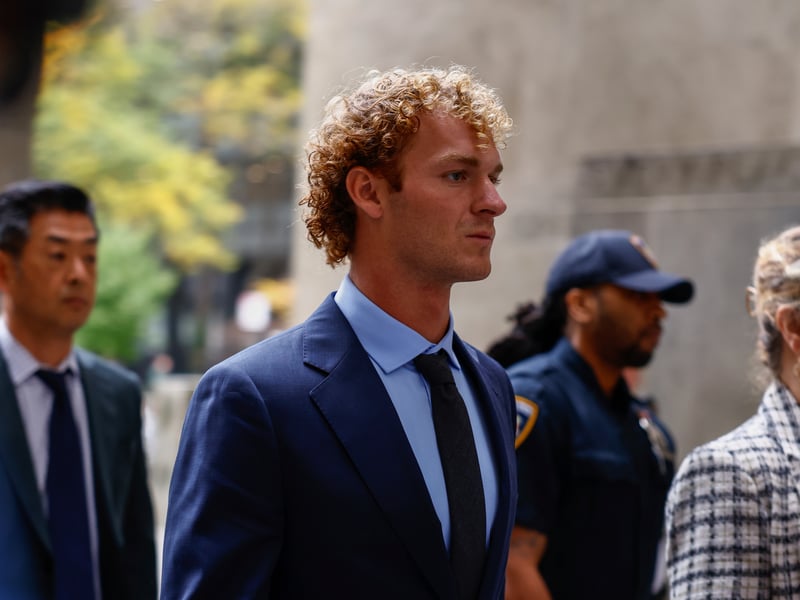
MANHATTAN (CN) — A Manhattan jury on Monday found 26-year-old Marine Corps veteran Daniel Penny not guilty at trial over the 2023 killing of a homeless man on a Manhattan subway.
The jury of 12 Manhattanites acquitted Penny on criminally negligent homicide, despite being deadlocked on the more serious charge of second-degree manslaughter on Friday. In a unique move, New York Supreme Court Justice Maxwell Wiley dismissed the manslaughter charge to free the deadlock and allow jurors to come to a unanimous agreement on criminally negligent homicide.
They did so quickly Monday morning on their fifth day of deliberations, coming to a decision just before 11:30 a.m.
Chaos erupted in the courtroom as the jury foreperson read out the verdict. Penny, who had been stone-faced throughout the trial, wore a wide smile and embraced his defense attorneys. Penny’s supporters, which included a man wearing a red Make America Great Again hat, applauded and cheered, prompting a reprimand from the court officers.
Jordan Neely’s father Andre Zachary stood up and started shouting at the applauding members of the gallery and was subsequently tossed from the courtroom.
“Out, out! You’re out,” the typically mild-mannered Wiley yelled and pointed at Zachary.
Officers escorted Zachary and members of Black Lives Matter Greater New York, who joined Neely’s family in the gallery, out of the courtroom. Some yelled in protest as they exited.
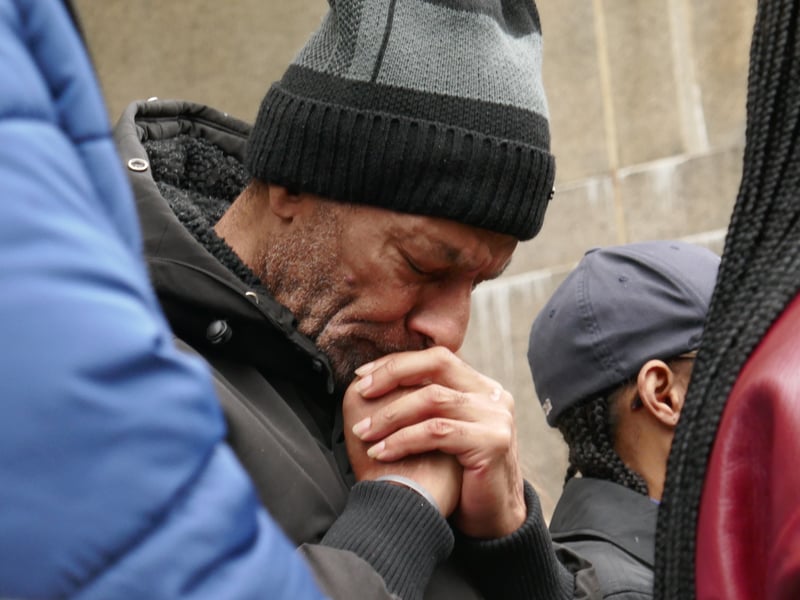
“I miss my son,” Zachary told reporters outside of the courthouse. “My son didn’t have to go through this. It hurts. Really, really hurts.”
Zachary was joined by Gwen Carr, the mother of Eric Garner — who was killed in 2014 after New York City police officers held him in a chokehold.
“We did not get justice once again,” Carr said. “I am truly saddened by this situation because it keeps on happening and no one is standing accountable for their actions.”
Manhattan District Attorney Alvin Bragg said in a statement Monday that he and his office “deeply respect the jury process and we respect their verdict.”
“The jury carefully deliberated for four days,” Bragg said. “They requested readbacks of testimony and asked for video footage to re-watch, as well as written definitions of the law. Their lengthy deliberation — and the totality of the facts and the evidence — underscored why this case was put in front of a jury of Mr. Penny’s peers.”
Bragg also decried that his prosecutors and their families were “besieged with hate and threats — on social media, by phone and over email” for their involvement with the case.
Penny’s legal team didn’t immediately respond for comment. They were spotted at a Lower Manhattan bar with their client shortly after the verdict was read.
The anonymous jurors were rushed out the side entrance of the Manhattan criminal courthouse as protesters chanted with bullhorns out front. They were ushered into unmarked vans and driven away.
Throughout a three-week trial in November, jurors heard evidence from experts, first responders and subway riders who encountered Jordan Neely on May 1, 2023 — the day of his death. Riders recalled being terrified of Neely when he boarded the subway that day at the Second Avenue station in lower Manhattan in an erratic state and lobbed threats to passengers.
“He stated how he was homeless, he didn’t have any money and he didn’t care about going back to jail,” Ivette Rosario, a soft-spoken teen who witnessed the outburst, told jurors at trial.
Rosario said she was “really, really nervous” and recalled Neely shouting “someone is going to die today” before Penny, who was seated across from Rosario on the train, came up from behind Neely and quickly dragged him to the ground with a chokehold.
That’s when Rosario and others started filming the scuffle, and social media videos of the incident ignited a national debate about homelessness, race and public safety. Neely, a 30-year-old Black man, was pronounced dead after Penny kept him in the choke for around six minutes.
Penny’s actions have proven polarizing. Some conservative circles have lauded him as a good Samaritan for his willingness to step in and protect his fellow subway riders from a schizophrenic Neely who was high on synthetic cannabinoids. But some progressives saw his intervention as an act of racist vigilantism.
The Manhattan district attorney’s office never cast doubt on Penny’s intentions, but said he went “way too far” in his efforts to restrain Neely.
“The defendant did not intend to kill,” Assistant District Attorney Dafna Yoran said in her opening argument on Nov. 1. “But under the law, deadly physical force such as a chokehold is permitted only when it is absolutely necessary and only for as long as it is absolutely necessary. And here, the defendant went way too far.”
But Penny’s lawyers, who referred to him as “Danny,” argued that their client was more than justified in his actions that day on the subway. Defense attorney Thomas Kenniff described Neely as “seething” and “psychotic” and put the brunt of the blame for Neely’s death in the hands of first responders, who took “longer than anyone expected” to arrive.
The defense team doubled down by claiming that Neely didn’t die from Penny’s chokehold at all, rather from complications of his sickle cell trait — a claim that a city medical examiner controverted in her government testimony.
Penny faced up to four years in prison if convicted on criminally negligent homicide.
 Follow @Uebey
 Follow @uebey.bsky.social
Subscribe to our free newsletters
Our weekly newsletter Closing Arguments offers the latest about ongoing trials, major litigation and rulings in courthouses around the U.S. and the world, while the monthly Under the Lights dishes the legal dirt from Hollywood, sports, Big Tech and the arts.