Search Articles


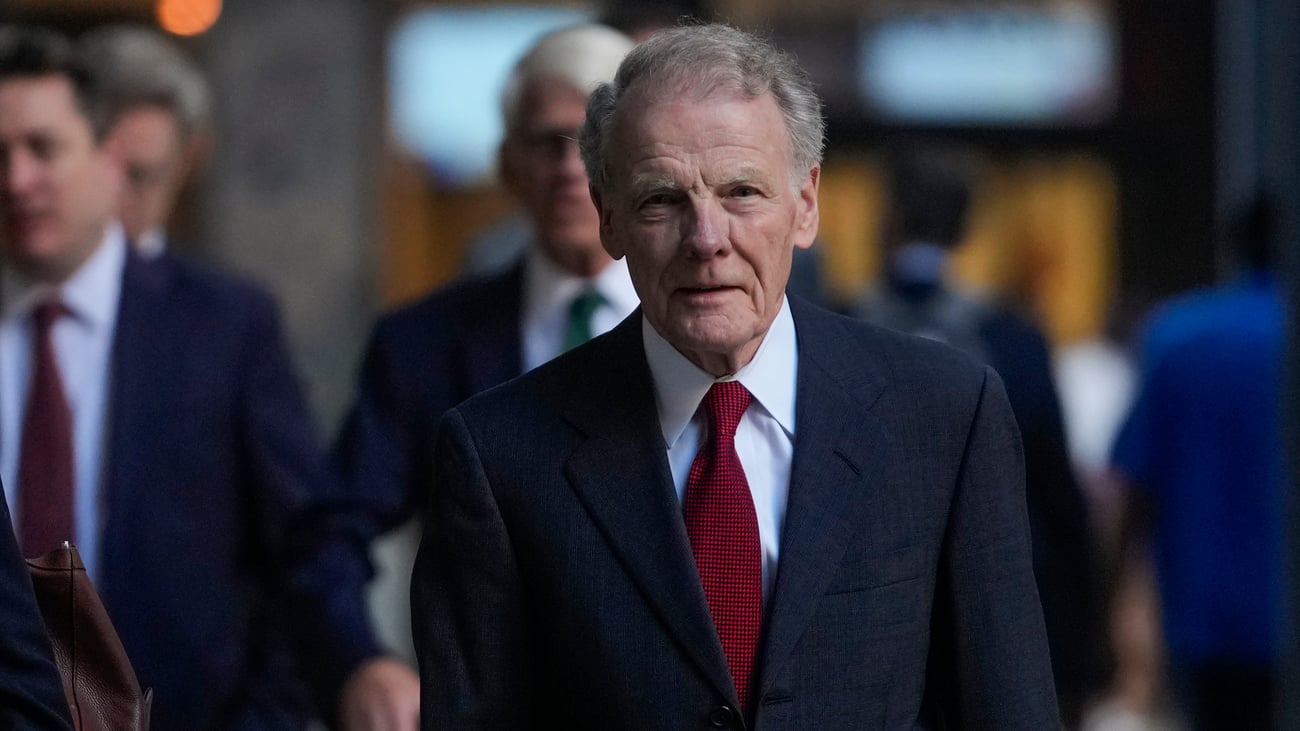
CHICAGO (CN) — An incredulous Seventh Circuit panel appeared unlikely Thursday to toss former Illinois House Speaker Mike Madigan’s corruption charges on claims of shoddy jury instructions and vague evidence.
Former Illinois House Speaker Mike Madigan was convicted on 10 corruption charges and sentenced to 7 1/2 years in prison in 2025. Throughout the 83-year-old’s monthslong trial, prosecutors maintained Madigan controlled the flow of bills in the House with an iron grip, and used his political power to divert jobs and benefits to his allies.
Madigan’s stronghold over Illinois politics remained evident given the packed courtroom in Dirksen Federal Courthouse on Thursday afternoon. Several of Madigan’s family members, including his wife and sister, also appeared in the crowded courtroom.
As one of the longest serving state legislators in U.S. history, Madigan was considered a political kingpin in Illinois. He served as a state representative for 50 years, and was House Speaker for 36 years, until his resignation in 2021.
Madigan was indicted in 2022 on 23 bribery, fraud, racketeering and conspiracy counts, and a jury found him guilty on 10 of those charges. The jury cleared him on seven other charges and deadlocked on the remaining six. Madigan shared those six charges with his longtime ally Mike McClain, a veteran lobbyist for utility company Commonwealth Edison.
ComEd was the focus of much of Madigan’s purported corrupt conduct, as a major portion of his indictment and subsequent trial centered around the company’s admitted yearslong bribery scheme in the Illinois Legislature. Prosecutors maintained Madigan was the core of the bribery scheme, which granted Madigan allies $1.3 million in no-show jobs for ComEd and AT&T in exchange for favorable legislation in the Illinois statehouse between 2011 and 2019.
Appealing his conviction before the Seventh Circuit on Thursday, Amy Saharia, one of Madigan’s attorneys, told the three-judge panel Thursday his conviction should be overturned because the jury instructions were vague and misleading, and the evidence was taken out of context.
U.S. Attorney Julia Schwartz, however, maintained any reasonably instructed jury would see an abundance of evidence for a bribery conviction, particularly considering the scheme spanned several years.
“It was an ongoing agreement to have both the quids and the pro quos,” she said.
But Saharia argued the government failed to prove Madigan engaged in a quid pro quo, particularly because prosecutors didn’t outline any specific actions or pieces of legislation in jury instructions.
“The requirement than an official promise to act on something specific is critical in bribery cases, because that is what distinguishes ingratiation, lawful ingratiation, from unlawful bribery,” Saharia said.
“It is what distinguishes lawful gratuities in the wake of the Supreme Court’s decision in Snyder, from unlawful bribery, and this case in particular illustrates why it is so important,” she continued.
James Snyder, the former mayor of Portage, Indiana, was charged and convicted on federal bribery charges in 2021, but he appealed his conviction and argued that the federal bribery statute doesn’t include after-the-fact gratuities. The Supreme Court agreed in Snyder v. United States (2024), and found the dividing line between the federal bribery and gratuities statues is that “bribery requires an official to have a corrupt state of mind and to accept (or agree to accept) a payment intending to be influenced in an official act.”
Saharia reiterated that there was no definitive act pointed out in the jury instructions, a requirement following the 2016 Supreme Court case McDonell v. United States, which narrowed the federal bribery statute. In a unanimous decision, the high court found the jury instructions, which resulted in former Virginia Governor Bob McDonell’s conviction, were vague and erroneous.
U.S. Circuit Court Judge Michael Scudder Jr., a Donald Trump appointee, asked Saharia point-blank what the instructional error was.
She said the trial judge put a thumb on the scale in favor of the government’s argument with a specific line in the jury instructions about a supposed “stream of benefits” Madigan received.
U.S. Circuit Court Judge Nancy Maldonado didn’t seem wholly convinced.
“Well counsel, we’re supposed to look at instructions on the whole,” the Joe Biden appointee said. “So what do you say to the argument that adding in ‘any expectations of some future benefit are not sufficient by themselves to make a payment a bribe,’ why isn’t that enough to have cleared things up to the jury as to what was required?”
Saharaia responded that the sentence fails to convey that Madigan agreed to act on a specific question or matter. She argued that legislation, writ large, doesn’t fall under that category.
“He was speaker of the house, of course he acted on legislation of interest to ComEd,” she said. “The alleged benefits in this case are far outside the typical mine-run bribery cases. Speaker Madigan did not take cash from ComEd he did not take Rolex watches, trips to Vegas, all the things you typically see in bribery cases.
“The alleged benefit is that political allies of his were hired by ComEd, and making those kinds of job recommendations are things that politicians do every day,” Saharia continued.
“But these weren’t just job recommendations,” Maldonado said. “You do acknowledge that, correct?”
Saharia agreed but maintained that government’s arguments don’t turn on the nature of the jobs at all. “It’s not even clear exactly what the government even thinks he agreed to in 2011, they don’t claim that he alleged that he would vote in favor of ComEd on every piece of legislation, that’s not their argument, and in fact he didn’t vote in ComEd’s favor,” she said.
“But it’s not just votes right?” Maldonado asked. “It’s the ability to move legislation forward, he was the speaker.”
Saharia said yes but again reiterated that the prosecutors failed to show any specific or concrete promise from Madigan.
U.S. Circuit Judge Frank Easterbrook, a Ronald Reagan appointee, rounded out the panel, which did not indicate when it would rule.
 Follow @RosenCaitlyn
Subscribe to our free newsletters
Our weekly newsletter Closing Arguments offers the latest about ongoing trials, major litigation and rulings in courthouses around the U.S. and the world, while the monthly Under the Lights dishes the legal dirt from Hollywood, sports, Big Tech and the arts.