
 Search Articles


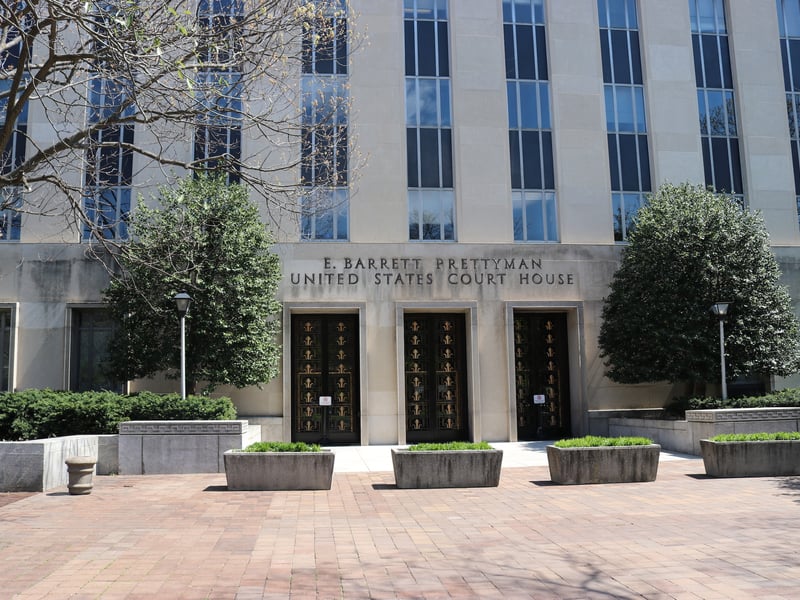
WASHINGTON (CN) — The founder and former CEO of sustainable aviation fuel company Alder Renewables was sentenced on Tuesday to 36 months in prison for embezzling company funds to fund his lavish lifestyle.
According to Justice Department prosecutors, Bryan Sherbacow abused his position atop the company for two years between January 2021 and December 2022, embezzling over $5.9 million and defrauding four investors out of over $16 million.
Sherbacow was the sole individual in the company with access to its bank account and made over 150 transfers to his personal bank account.
With the funds, he purchased a waterfront South Carolina condo, a vintage Mercedes-Benz sports car, a Range Rover, personal tax liens and made payments for credit cards, rent, a beach club, auctioned for art and more.
In order to cover up his activities, he sent fabricated bank statements and other falsified financial records to a third-party accounting firm and members of the company’s board. He defrauded investors to raise additional funds by sending them false and misleading financial information.
U.S. District Judge Carl Nichols, a Donald Trump appointee, did not impose the Justice Department’s recommended sentence of 78 to 97 months, but decided on the 3-year sentence due to significant issues with Sherbacow’s family situation revealed only in sealed testimony.
However, Nichols emphasized how serious Sherbacow’s conduct was, that he stole from his company, abused his position of trust as president and CEO and defrauded investors, all to fund a lavish and “ridiculous” lifestyle.
He ordered Sherbacow to forfeit the Charleston waterfront condo and the Mercedes-Benz and prohibited him from making any new credit charges or opening a new line of credit.
“The amount of embezzlement and the steps Sherbacow took to cover his acts were exceptionally serious and brazen,” Nichols said before passing down the sentence.
Sherbacow spoke before the court, apologizing to his co-founders, his colleagues, the investors and his family and expressed remorse for his actions.
“I should have changed my lifestyle, but I was afraid of adding gasoline to an already unstable environment,” Sherbacow said, in an apparent reference to his family situation.
Sherbacow pleaded guilty to one count of wire fraud on Feb. 8, in order to avoid two remaining charges of wire fraud and engaging in monetary transactions in property from unlawful activity.
Nichols accepted his apparent contrition and acknowledged the difficult circumstances that made a longer period of incarceration potentially more harmful to those around him. He added, however, that those circumstances should have factored more in Sherbacow’s decision making beforehand.
Justice Department prosecutor Kyle Crawford emphasized the seriousness of Sherbacow’s conduct, describing it as “using the company as his personal piggybank.”
“This case is fundamentally about lies, fraud and greed,” Crawford said, urging Nichols to impose a sentence that would send a message to other corporate executives that such brazen conduct will be punished.
Crawford added that while preparing for sentencing, he could not find another recent embezzlement case in Washington that compared to the nearly $6 million stolen in this case.
William Coffield, Sherbacow’s defense attorney of Washington firm Berliner Corcoran, took a different view, describing the case as a tragedy. He requested Nichols impose a sentence of home confinement and community service rather than imprisonment.
He noted that after the crimes were exposed in December 2022, Sherbacow returned his shares in the company — about 31.6% of the company’s total shares. While the shares were worthless at the time, the company has since rebounded from the controversy and the shares were worth over $46 million as of May 2024.
Nichols rejected the argument that the current value of the shares could count as collateral toward any restitution he may impose, citing precedents set in the Third, Fourth and Eighth Circuits.
He deferred deciding on an amount of restitution to the four investors specifically because the shares were worthless at the time the fraud was discovered, but had since rebounded considerably.
The investors — one of whom Nichols let slip included multinational conglomerate Honeywell — invested $16.9 million into the company for its “Alder Renewable Crude” that can be converted into sustainable aviation fuel, low-carbon marine and transport fuels and bio-based chemicals.
Nichols struggled with the possibility that any restitution would essentially be a windfall for the investors, who still hold the now-valuable stocks. He scheduled a June 25 deadline for the impacted companies and parties to submit briefing regarding any potential restitution.
 Follow @Ryan_Knappy
Subscribe to our free newsletters
Our weekly newsletter Closing Arguments offers the latest about ongoing trials, major litigation and rulings in courthouses around the U.S. and the world, while the monthly Under the Lights dishes the legal dirt from Hollywood, sports, Big Tech and the arts.