
 Search Articles


(CN) — A former Argentine naval officer found responsible for a 1972 massacre of political prisoners in his homeland fought against his sentencing before a 11th Circuit Court of Appeals panel in Miami on Tuesday.
Roberto Guillermo Bravo, 79, was ordered to pay $24 million in damages to relatives of four of the victims. In July 2022, a jury found him responsible for executing 16 unarmed political prisoners and seriously wounding three others at the Trelew military base in Patagonia during the military dictatorships in Argentina over 50 years ago.
He was the last former Argentine military officer accused of taking part in what is known as the Trelew Massacre to face justice. Three other officers were convicted in Argentina and given life sentences in 2012.
Bravo argued to the 11th Circuit panel that the trial court incorrectly extended the legal deadline for the plaintiffs’ claims, which were not brought until 2020.
“They had everything they needed to know by 2008,” said Bravo’s attorney, Steven Davis.
The civil trial was held under the Torture Victims Protection Act, a 1991 law that allows victims of torture and extrajudicial killings and their families to seek civil damages against the perpetrators. Claims brought under the act are subject to a ten-year statute of limitations, which the court can equitably toll only if “extraordinary circumstances” exist that create an impediment for plaintiff to timely file a civil action.
Representing the victims’ families, attorney Ajay Krishnan argued they were unable to discover crucial evidence in support of their claims until after October 2012, when the Argentine criminal prosecution of Bravo’s co-perpetrators concluded.
While the three-judge circuit panel seemed to agree that some equitable tolling is warranted due to fear of reprisal from the former Argentine military regime, they expressed concern over whether that extension was correctly applied past 2008.
Sitting in from the Northern District Court of Georgia, U.S. District Judge Sarah Geraghty, a Joe Biden appointee, questioned what kind of critical evidence the plaintiffs discovered from the prosecution and when they discovered it.
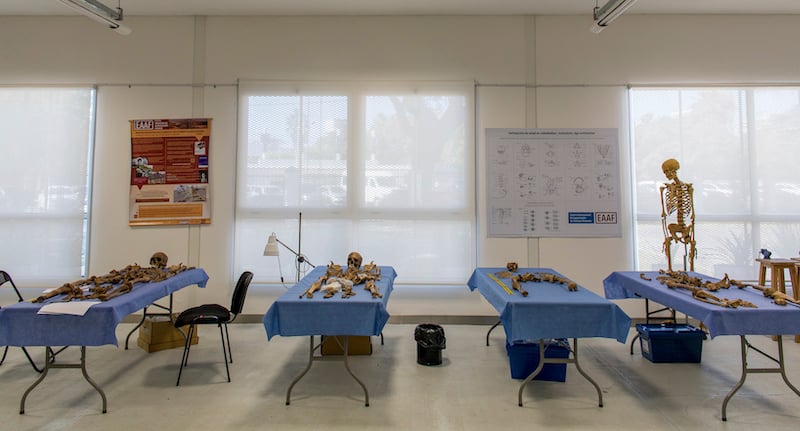
“The crucial evidence was the reconstruction of the massacre site,” said Krishnan. He said it was not until after the criminal proceedings were underway that internal investigation documents on the naval base and exhumed bodies were revealed.
“The criminal trial in Argentina was not against your client,” said U.S. Circuit Judge Andrew Brasher.
“I can’t see how that has anything to do with anything. If the district court has based tolling on absence of evidence, the date of the end of the trial in Argentina is not the same as the date evidence was made available,” the Donald Trump appointee added.
U.S. Circuit Judge Adalberto Jordan questioned why the abundant information on the massacre the plaintiffs already had — including knowing Bravo’s name and whereabouts by March 2008 — was not enough for them to file their suit within ten years.
“For equitable tolling purposes, do you need all of your best evidence or just enough evidence to get to a jury?” said Jordan, a Barack Obama appointee.
“Your client had information of the murder before the limitation period. There was a book published about what happened at the prison. That means that testimony was out in the public record. You had the information the government alleged in the extradition request. Why isn’t that enough for you to go forward and file a claim?” he added.
Bravo might not ever be tried in Argentina as the Southern District Court of Florida rejected a 2010 extradition request and another brought in 2023. He has resided in the United States and became a citizen after being sent by the Navy as military attaché to the Argentine embassy in 1973.
The official version of events claimed the political prisoners were killed during a shootout while trying to escape the prison, but after Argentina’s return to democracy in 1973, the three survivors recovered their freedom and told a different story of persistent threats and torture.
Those surviving victims were later kidnapped and either disappeared or were murdered by the military after a 1976 coup that ushered in Argentina’s last military dictatorship. Relatives of those killed and their lawyers faced extreme persecution to keep them quiet and prevent them from seeking accountability until permitted by the Supreme Court of Argentina in June 2005.
 Follow @Megwiththenews
Subscribe to our free newsletters
Our weekly newsletter Closing Arguments offers the latest about ongoing trials, major litigation and rulings in courthouses around the U.S. and the world, while the monthly Under the Lights dishes the legal dirt from Hollywood, sports, Big Tech and the arts.