
 Search Articles


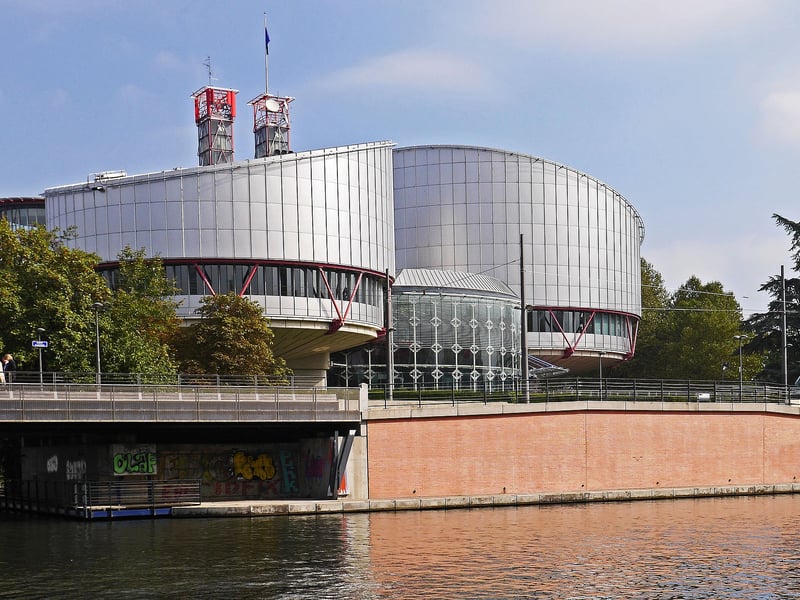
(CN) — Britain won a long-running fight over prisoner voting on Tuesday, when Europe’s human rights judges backed its decision to stop a convicted rapist from casting a ballot in the 2019 general election. The ruling could finally close the book on two decades of legal battles.
Michael Christopher Hora, born in 1966, has spent most of the past two decades in prison. First jailed in 2000 for rape, he served seven years before being convicted again in 2007 for two more rapes and a sexual assault.
This time, he received an indeterminate sentence for public protection, requiring at least four years in custody but allowing release only if the Parole Board deemed him no longer a danger to the public. That minimum term expired in 2011, yet more than a decade later, he remains in custody as the board repeatedly found him unsafe to release.
By the 2019 election, Hora was still at HMP Bure, a medium-security prison near Norwich, and barred from voting under Britain’s blanket ban preventing anyone serving a prison sentence from casting ballots.
Hora took his case to Strasbourg, claiming the voting ban violated his right to participate in elections. Since his minimum term had long expired, he argued his detention was about risk management, not punishment and stripping him of the vote on top of that was disproportionate. He also pointed out that the court had already condemned Britain’s policy in past cases.
In 2005, the European Court of Human Rights sided with John Hirst, another prisoner serving an indeterminate sentence. The judges stated that Britain’s blanket ban was “a blunt instrument,” that made no distinction, “irrespective of the length of their sentence and irrespective of the nature or gravity of their offence and their individual circumstances.”
That judgment pushed the issue into the spotlight, sparking political backlash. In 2011, Parliament overwhelmingly rejected easing the ban, and subsequent governments made only minimal changes, such as allowing a small number of prisoners released on temporary license to vote.
By 2018, European officials decided those tweaks were enough and closed their monitoring of the UK. But for prisoners like Hora, the voting ban never really went away.
Hora argued that little had changed since Hirst. The government’s tweaks, he said, only enfranchised a handful of prisoners on temporary release or home tagging, leaving most — himself included — still excluded. Because he refused to admit guilt, he could not take the rehabilitation courses required by the Parole Board, keeping him in custody well beyond his minimum term. Denying him the vote on top of that, he claimed, was especially unfair.
The government pushed back, calling him “a recidivist serious sex offender and rapist, imprisoned because of the risk he continued to pose to the public.” Excluding such offenders from the ballot, they argued, was both a proportionate sanction and a way to uphold respect for the law. They emphasized that the policy enjoys overwhelming support in Parliament and among the public.
The judges stated that they had no issue with Britain’s goals of preventing crime and promoting civic responsibility. The real question was whether taking away Hora’s vote struck the right balance given his history.
In their view, earlier cases, such as Hirst, had exposed a problem with a blanket ban that applied to all prisoners without distinction. But Hora’s case was different. He was not just caught up in the broad rule; his disenfranchisement was tied to the gravity of his crimes, his refusal to change and the ongoing risk he posed.
As the ruling put it, “it cannot be said that the disenfranchisement of the present applicant, on account of the seriousness of his offending, his conduct, the risk he was found to pose to the public and the resulting imposition of a harsh sentence of indeterminate detention, was disproportionate to the legitimate aims pursued by restrictions of the franchise applied to convicted prisoners.”
The judgment made clear that the court’s view has evolved. In Hirst, the problem was a blanket rule that treated a shoplifter the same as a murderer. That kind of one-size-fits-all approach, the judges said back then, was unacceptable.
Since then, the court has grown more tolerant of bans narrowly tied to serious crimes. Judges said Hora’s case fell into that category, and stressed that his voting rights are not permanently lost; they will be restored once he is released, as the restriction applies only during his imprisonment.
Helen Hardman, a lecturer in European integration at the University of Glasgow, said the ruling underscored the sensitivity of prisoner voting in Britain. Hora’s offense, she noted, shaped how the case was received: “Had the Court found a violation, the UK press would most likely have repeated their false narrative that the European Court was forcing the government to enfranchise ‘murderers and rapists.’”
Hardman added that the decision demonstrates how much more cautious the court has become. While many European countries have relaxed their bans, she said, Strasbourg observers have politely described the UK’s 2018 reforms as a “minimalist implementation,” as they did little to change the status quo.
However, a spokesperson for the UK government welcomed the outcome, saying, “Government policy is that convicted prisoners in custody must never be allowed to vote.”
Hora voiced his frustration after the ruling. “I am disappointed with today’s judgment,” he said, calling the voting ban “a form of civic death” that unfairly sets prisoners apart from society. He added that shutting inmates out of the polls makes rehabilitation harder and that “it would be to everyone’s benefit if prisoners remained as engaged with wider society as possible.”
His lawyer, Sean Humber of Leigh Day, said they are considering asking the Grand Chamber to take up the case for a final ruling.
For now, Britain’s ban on prisoner voting remains in place. A referral request could still be made, but such appeals rarely succeed. If this one is rejected, Tuesday’s judgment will stand as the final word.
Courthouse News reporter Eunseo Hong is based in the Netherlands.
Subscribe to our free newsletters
Our weekly newsletter Closing Arguments offers the latest about ongoing trials, major litigation and rulings in courthouses around the U.S. and the world, while the monthly Under the Lights dishes the legal dirt from Hollywood, sports, Big Tech and the arts.