
 Search Articles


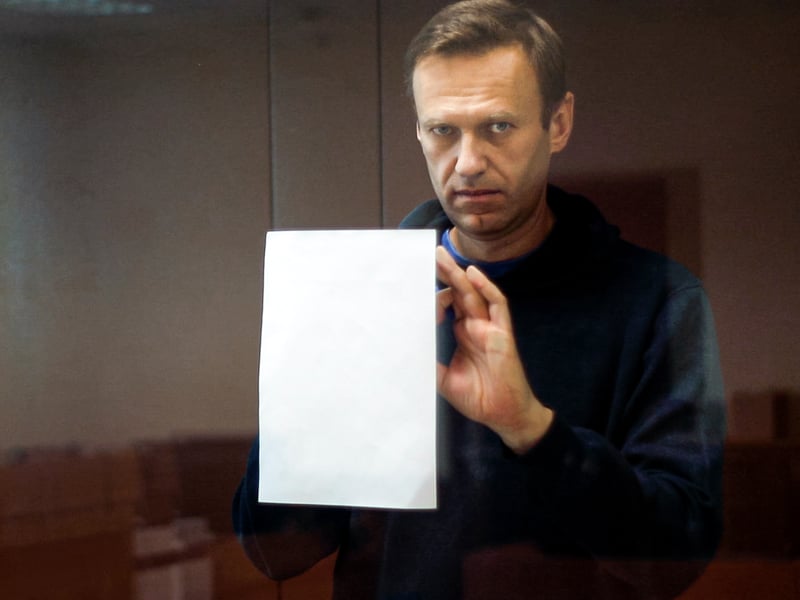
MOSCOW (AP) — Europe’s top human rights court has ordered Russia to release jailed opposition leader Alexei Navalny, a ruling that will be unlikely to soften the Kremlin’s determination to isolate its most prominent foe.
The ruling by the European Court of Human Rights that was posted on Navalny’s website on Wednesday demands that Russia set him free immediately and warns that failing to do so would mark a breach of the European human rights convention.
Navalny, 44, an anti-corruption investigator and President Vladimir Putin’s most prominent critic, was arrested last month upon returning from Germany, where he spent five months recovering from a nerve-agent poisoning that he blames on the Kremlin. Russian authorities have rejected the accusation.
Earlier this month, a Moscow court sentenced Navalny to two years and eight months in prison for violating terms of his probation while recuperating in Germany. The sentence stems from a 2014 embezzlement conviction that Navalny has rejected as fabricated and the European court has ruled to be unlawful.
In its Tuesday’s ruling, the ECHR pointed to Rule 39 of its regulations and obliged the Russian government to release Navalny, citing “the nature and extent of risk to the applicant’s life.”
“This measure shall apply with immediate effect,” the Strasbourg-based court said in a statement.
The court noted that Navalny has contested Russian authorities’ argument that they had taken sufficient measures to safeguard his life and well-being in custody following the nerve agent attack.
The Russian Justice Ministry warned in a statement carried by the Tass news agency that the ECHR’s demand referencing the rule would represent a “crude interference into the judicial system” of Russia and “cross the red line.”
It emphasized that “the ECHR can’t substitute a national court or cancel its verdict.”
In the past, Moscow has abided by the ECHR’s rulings awarding compensations to Russian citizens who have contested verdicts in Russian courts, but it never faced a demand by the European court to set a convict free.
In a reflection of its simmering irritation with the European court’s verdicts, Russia last year adopted a constitutional amendment declaring the priority of national legislation over international law. Russian authorities might now use that provision to reject the ECHR’s ruling.
Mikhail Yemelyanov, a deputy head of the legal affairs committee in the Kremlin-controlled lower house of parliament, pointed at the constitutional change, noting that it gives Russia the right to ignore the ECHR’s ruling, according to the Interfax news agency.
Navalny’s arrest and imprisonment fueled a wave of protests across Russia. Authorities responded with a sweeping crackdown, detaining about 11,000 people, many of whom were fined or given jail terms ranging from seven to 15 days.
Russia has rejected Western criticism of Navalny’s arrest and the crackdown on demonstrations as meddling in its internal affairs.
By VLADIMIR ISACHENKOV Associated Press
Subscribe to our free newsletters
Our weekly newsletter Closing Arguments offers the latest about ongoing trials, major litigation and rulings in courthouses around the U.S. and the world, while the monthly Under the Lights dishes the legal dirt from Hollywood, sports, Big Tech and the arts.