Search Articles


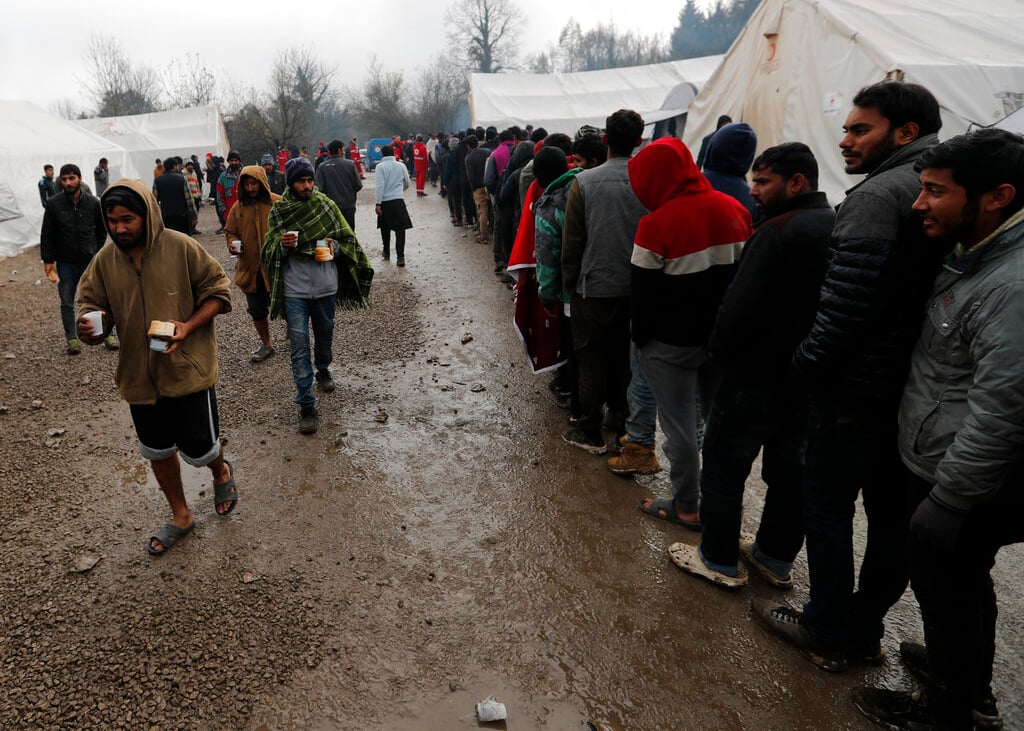
(CN) — The European Union’s tough new legal regime on migration went into effect on Friday, giving border authorities more powers to quickly expel migrants deemed ineligible for asylum.
The EU’s Pact on Migration and Asylum was passed in 2024 and sets up a high-tech screening system at borders where asylum-seekers are kept at migrant centers, or “hot spots,” to have their claims quickly processed — and most likely rejected. A majority of the roughly 800,000 asylum claims made each year in Europe are turned down.
Human rights advocates and migration experts warn the new rules institutionalize practices that treat migrants as, first of all, potential security risks and secondly as vulnerable humans in potential need of protection. Critics warn the rules will lead to even more unfair and harsh treatment of migrants.
The new pact marks a subtle but significant erosion of Europe’s legal framework around asylum which previously placed humanitarian considerations at the center, experts said.
The old framework grew out of the horrors of World War II and refugee waves caused by the outbreak of wars in Yugoslavia in the early 1990s. However, Europe’s welcoming approach to migrants caused huge strains in recent years, and many Europeans are vehement in their opposition to migration.
Europe has “now joined a group of geopolitical actors who target migrants as a threat to national security,” said Salvatore Nicolosi, a migration law expert at Utrecht University in the Netherlands. “The idea is to limit as much as possible the arrival of migrants to the European Union.”
In moving away from humanitarian priorities, he said the EU is designing an asylum system meant to keep people out — or what “some scholars define as ’the architecture of rejection.’”
“What we are seeing is a gradual shift toward a more controlled and restrictive migration system,” said Eda Gemi, an expert on migration law at the University of New York in Tirana, Albania.
In April 2024, the European Parliament’s mainstream centrist parties narrowly passed the migration pact, in part so they would be seen as doing something to tighten the bloc’s borders in the face of a rise in anti-immigrant parties on the far right.
Gemi said the pact was “very much a product of the broader political crisis surrounding migration and the rise of identity politics that has developed across Europe over the last decade.”
“Rising support for far-right and anti-immigration parties, public concerns over irregular migration, security, border control, and, in some cases, crime associated with migration have clearly shaped the political climate in which the pact was negotiated,” she said.
She added that the EU’s previous system for handling migrants was widely viewed as dysfunctional, particularly after 2015 when the bloc struggled to deal with a huge influx of people fleeing the civil war in Syria.
For Brussels and most European governments, the pact’s entry into force was hailed as a major success and a way to put to rest acrimonious debates over migration policy.
Ursula von der Leyen, the EU’s chief executive, said the asylum law was “effective, fair and firm.”
“This is what the Pact on Migration and Asylum delivers — more secure external borders, solidarity between member states and more efficient procedures for asylum and return,” she said in a statement.
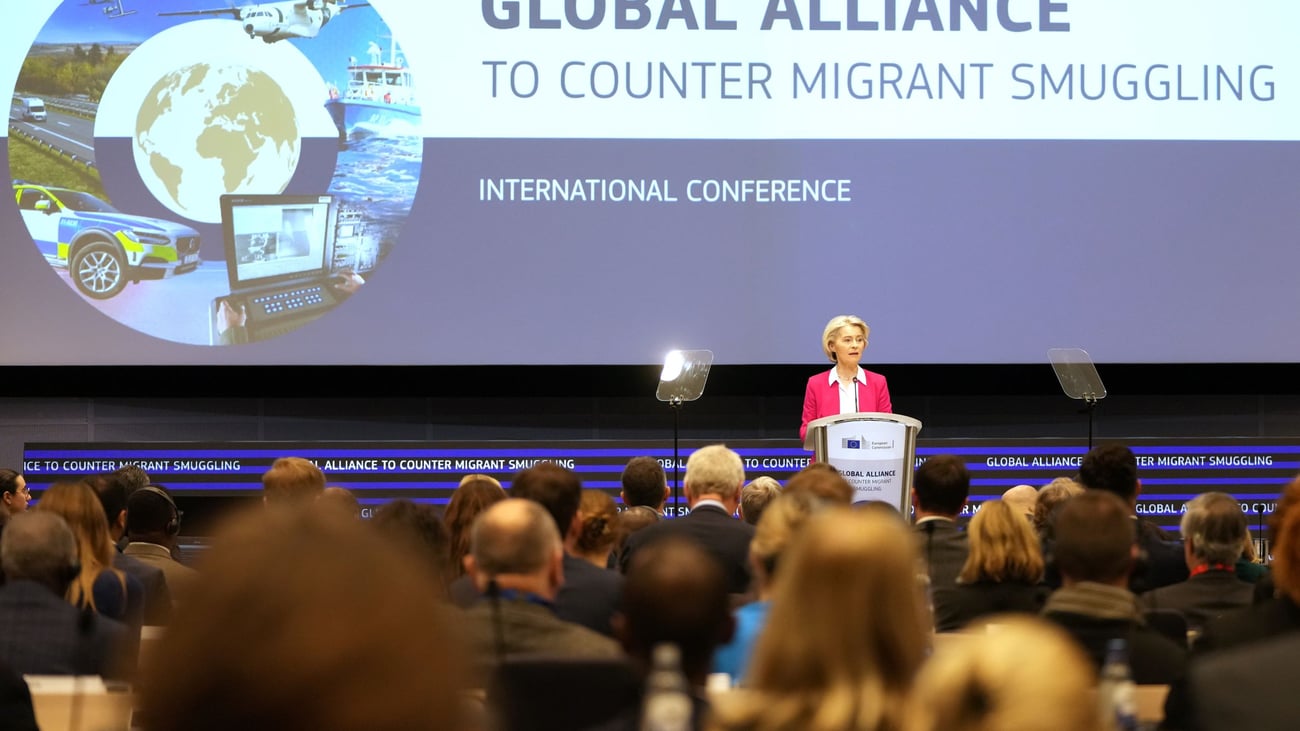
The EU said the pact’s aim was to reduce the number of people trying to enter the bloc without permission.
“The new approach is already showing strong results, with a 55% decrease in illegal border crossings compared to two years ago,” the EU said.
Initially, the pact was supposed to set up a system where housing and assessing asylum applications would become a shared responsibility among all the EU states based on quotas.
The idea was to lessen the burdens carried by front-line nations like Italy, Greece and Spain, the main points of entry for migrants, which at times can be overwhelmed by the number of arrivals.
But the pact’s “solidarity” provisions have been pared back following strong objections from some EU nations, especially those in Central and Eastern Europe, which see very few asylum-seekers from Africa and Asia.
“In principle, this was supposed to be the main novelty of the pact, but the issue of solidarity has always been a controversial one,” Nicolosi said. “The new pact introduces a model of mandatory solidarity, but this mandatory solidarity is also flexible.”
Instead of taking in asylum-seekers, countries will be required to contribute money, equipment and resources to front-line countries.
The new rules also tighten controls and place more obligations on asylum-seekers who’ve been allowed entry into the EU.
“In practice, this means that missing appointments, failing to cooperate with authorities, or not participating in integration measures may directly affect access to accommodation, financial support and other forms of assistance,” Gemi said.
The new rules endorse working with non-EU countries — such as Libya, Morocco, Tunisia and Turkey — to stop migrants from reaching EU territory. The pact is opening the way for the establishment of centers outside the bloc where migrants can be sent.
All this represents a “paradigm shift,” said Andreina De Leo, a researcher at Maastricht University specializing in EU and migration law.
“There is a growing emphasis on border control, the containment of migratory movements, and the externalization of responsibilities to third countries,” she said.
Although the pact formally upholds human rights principles, such as the right to asylum and protection from getting sent to an unsafe country, she said it may end up doing the opposite.
For example, under the new screening regime, she said “accelerated and superficial procedures” may leave a lot of people getting expelled before they’ve had a proper chance to make their case for asylum and have their claim examined by a judge.
“Borders will increasingly become the place where decisions are made about who can access European territory and who will be directed towards repatriation procedures or transfer to third countries,” De Leo said. “There is a risk that the pact could shift the system’s focus from reception and protection to a focus primarily on controlling and deterring migratory movements.”
This might be particularly true for migrants coming from countries the EU lists as safe, including Egypt, Morocco, Bangladesh and Turkey.
“This could compromise the right to an individual assessment of one’s situation and limit access to legal assistance and legal defense,” De Leo said. “The weakening of judicial protections is particularly worrying.”
Another concern is that many migrants might find themselves expelled to countries they may have no real connection to, De Leo said.
This could become common as the EU moves to set up “return hubs” in non-EU countries where it can send migrants. Such arrangements pose lots of legal issues.
Steve Peers, an expert on human rights and asylum law at Royal Holloway, University of London, said he expected the new laws to encourage countries to lower the bar on protecting human rights.
“The asylum pact laws have some general and specific human rights safeguards, but they also push so much in the direction of lowering standards that member states are likely to try to implement them in a way which breaches human rights,” he said.
Nicolosi expected the new rules to face numerous legal challenges in national courts and that eventually EU courts would weigh in.
“A lot has to be tested yet, but I suspect that legal challenges will start appearing in the coming months,” he said.
Courthouse News reporter Cain Burdeau is based in the European Union.
 Follow @cainburdeau
Subscribe to our free newsletters
Our weekly newsletter Closing Arguments offers the latest about ongoing trials, major litigation and rulings in courthouses around the U.S. and the world, while the monthly Under the Lights dishes the legal dirt from Hollywood, sports, Big Tech and the arts.