
 Search Articles


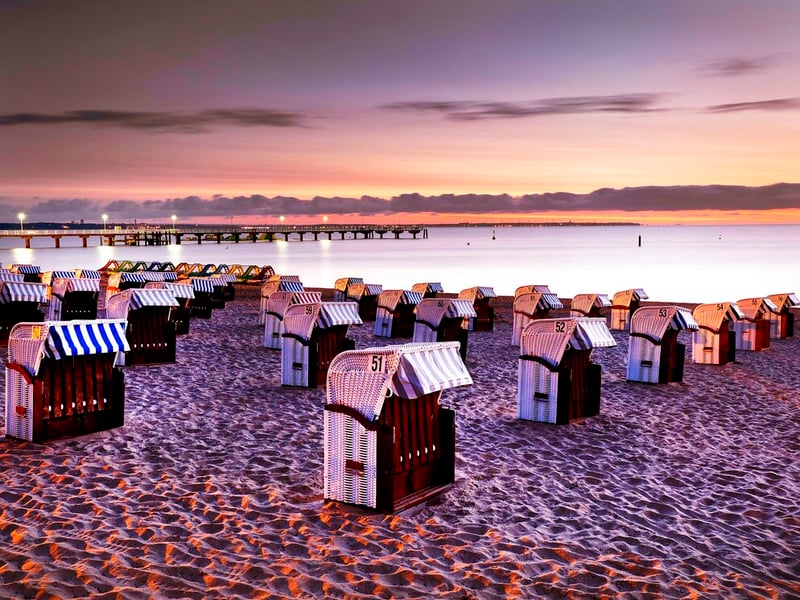
(CN) — While NATO debates shooting down Russian planes that keep buzzing into airspace over the Baltic Sea, a quieter crisis is unfolding beneath the waves: The sea itself is dying.
Europe’s top environment officials gathered in Stockholm on Tuesday pleading for attention to an environmental catastrophe overshadowed by the security emergency. The Baltic now has a dead zone bigger than Ireland, fish populations are collapsing and the water is increasingly polluted and warm.
The Baltic faces a perfect storm of problems. Farm runoff chokes the water with nutrients, creating massive oxygen-starved zones where nothing can live. Decades of overfishing have crashed major fish species. Climate change is making everything worse. The EU has programs to address each piece — fishing quotas, agricultural pollution limits, climate targets — but implementation has failed across the board.
Sweden’s environment minister, Romina Pourmokhtari, put it bluntly: “With recent lawless and reckless behavior by Russia, it is more urgent than ever that we have a resilient ecosystem, a resilient healthy sea and healthy fish for our food security.”
In September, Russian forces violated airspace across NATO’s eastern flank — jets over Estonia, drones over Poland and Romania, and mysterious drone sightings that forced Copenhagen’s main airport to close. Poland shot down multiple drones in NATO’s first direct engagement since the war began.
But while Europe’s eyes are fixed on the skies, the crisis below the surface deepens. Slightly smaller than California but only about 180 feet deep on average, the Baltic Sea is essentially a shallow bowl collecting runoff from eight EU countries — including Germany, Poland, Sweden and Finland — plus Russia. What flows in, stays in.
Moscow has been systematically overfishing shared stocks. Under a formal agreement with the EU, Russia should take 9.5% of central Baltic herring catches. But since Russia’s 2014 annexation of Crimea — and especially after the 2022 invasion of Ukraine — Moscow has systematically ignored those commitments, making environmental cooperation nearly impossible.
Instead, Russia has been taking up to 40% of the central Baltic herring stock, according to estimates — fishing about 25,000 tons annually regardless of quotas.
“The environmental, economical and security challenges facing the Baltic Sea are interconnected and we need to address them together,” said Jessika Roswall, the EU’s environment commissioner.
But the real culprit is closer to home: EU member states themselves have consistently failed to implement their own environmental policies and have chosen short-term economic gains over long-term sustainability.
The numbers tell a grim story. Total catches across EU waters dropped to 3.3 million tons in 2023, continuing a yearslong slide, according to Eurostat, Europe’s statistics agency.
Key fish stocks are at or near record lows. Eastern Baltic cod is in critical condition, with populations well below what scientists consider the minimum safe level. Western Baltic herring has dropped to just 52% of that threshold.
The ministers all emphasized the same point: Europe already has plans and agreements in place to fix this. The problem is actually doing it. “We have the tools to tackle the challenges and now we need to implement them,” Roswall said.
A 2016 EU regulation requires that fishing quotas keep the probability of stocks entering the “danger zone” below 5%. In late 2023, the Council of EU member states tried to delete that safety rule. The European Parliament blocked the attempt in early 2024, but member states continue setting quotas that scientists say carry 20% or higher risk of stock collapse.
EU member states are gambling — and with “much worse odds than Russian Roulette,” Berkow said.
In June, the EU’s General Court rejected an environmental group’s challenge to fishing quotas that exceeded scientific advice, ruling that the council has discretion to balance science with other considerations.
“They understand the scientific advice,” said Charles Berkow, policy analyst at Stockholm University Baltic Sea Center, in conversation with Courthouse News. “They’re willing to accept an existential risk to the fishers and the processing industry in the longer term, in order to avoid the shorter-term economic belt tightening.”
For years, the EU has allocated billions through its agricultural subsidy program that could have been used to reduce farm pollution flowing into the Baltic. Instead, governments chose to funnel that money to direct farmer payments. “It’s not a lack of funding, it’s a lack of political will to use the funding,” said Berkow.
In the Gulf of Bothnia — between Finland and Sweden — those northern waters represent what some officials call a “strategic food reserve” — fish stocks that should be especially protected given their geographic isolation from Russian waters. Even in military conflict scenarios, these stocks could provide food security.
“It’s like borrowing money on your credit card instead of living on the interest,” Berkow said of the current approach. “Each year the ministers prioritize the short term, and the conflicts get worse each year.”
An EU commission proposal last month marked a potential turning point. For the first time, three of seven managed stocks are now classified as being in crisis with biomass below critical limits, while two more are at risk. Brussels noted that even with zero fishing, some stocks have only a 30% chance of recovery by 2027.
The cuts in quotas will reduce total allowable fishing to approximately 325,000 tons, representing a 14% drop from 2025 levels, according to the proposal, affecting thousands of commercial fishermen across the Baltic rim nations.
Herring catches would drop by more than half in some areas, while cod fishing — once the region’s most valuable fishery — would be virtually eliminated after years of population collapse.
More than 96% of the Baltic now fails to meet good environmental standards, with 94% impacted by farm runoff and sewage, according to the Helsinki Commission, an international body also known as HELCOM that coordinates protection efforts.
If the sea could be restored to good health by 2040, it would be worth 5.6 billion euros ($6.6 billion) a year to the people living around it, the commission estimates. Fixing just the nutrient pollution problem alone would generate about 4 billion euros annually in economic benefits.
Scientists warn that without immediate action, the Baltic could face cascading ecosystem collapse within a decade, potentially making commercial fishing impossible and threatening drinking water supplies for coastal cities.
Climate change is making things worse. A scientific study published Tuesday found the Baltic has been warming steadily for 30 years, with deeper waters warming by roughly 3.6 degrees Fahrenheit since 1993.
HELCOM’s Baltic Sea Action Plan includes 199 specific actions to be completed by 2030, from banning harmful ship discharges to restoring coastal wetlands. But similar plans have been on the books since 2007, and ministers acknowledged most remain unimplemented.
Whether countries will actually hit their environmental targets while also funneling billions into defense spending remains an open question. For now, ministers are asking for the same thing fishermen are: attention to a crisis that won’t wait for the security situation to stabilize.
Courthouse News correspondent Yuval Molina is based in Brussels.
Subscribe to our free newsletters
Our weekly newsletter Closing Arguments offers the latest about ongoing trials, major litigation and rulings in courthouses around the U.S. and the world, while the monthly Under the Lights dishes the legal dirt from Hollywood, sports, Big Tech and the arts.