
 Search Articles


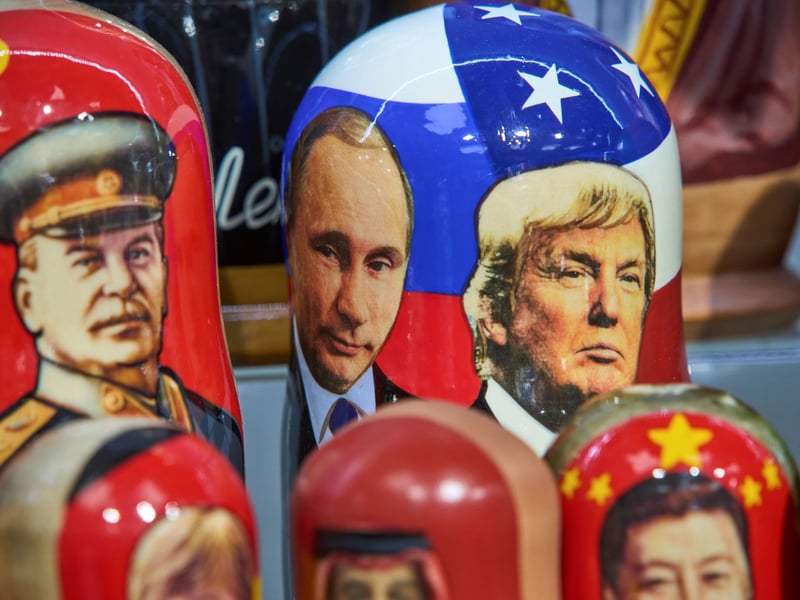
BRUSSELS (CN) — President Donald Trump pledged Wednesday to “bring peace to Europe once again” after European leaders extracted key commitments from him in coordinated calls ahead of Friday’s high-stakes Alaska summit with Vladimir Putin.
Speaking at the Kennedy Center in Washington, Trump said he “would rate” Wednesday’s calls with European leaders and Ukrainian President Volodymyr Zelenskyy “at 10, very, very friendly,” while outlining plans for a potential follow-up meeting with Putin and Zelenskyy “almost immediately” after the Alaska talks.
According to Vice President JD Vance, Trump vowed to “make it our mission as an administration to bring peace to Europe once again” during a quick debrief following the conference call, which included German Chancellor Friedrich Merz, French President Emmanuel Macron, British Prime Minister Keir Starmer and the prime ministers of Italy, Poland and Finland. Vance also participated, interrupting his vacation in England’s Cotswolds region to join the diplomatic push.
Trump outlined three key commitments during the calls — that “the U.S. aims to secure a ceasefire at the Alaska meeting,” that “territorial issues concerning Ukraine cannot and will not be negotiated by anyone other than the Ukrainian president,” and that any territorial concessions must be linked to security guarantees from “the United States and all willing allies” rather than NATO, said French President Emmanuel Macron.
Trump also outlined plans for a potential second meeting “almost immediately” after Friday’s Alaska summit that would include Putin, Zelenskyy and himself to finalize any deal, though he cautioned “there may be no second meeting” if he doesn’t get adequate answers from Putin.
The president warned of “very severe consequences” if Russia doesn’t move toward peace but declined to specify what retaliation would entail.
European leaders gushed about the results, calling them “excellent,” “very good,” “great” and “exceptional.” Trump responded positively on social media: “They are great people who want to see a deal done.”
The frantic European push came as European capitals feared Trump might agree to Russian territorial demands without consulting NATO partners — concerns that have intensified since the president suggested Ukraine may need to cede land to secure peace.
Ukrainian leaders worry that a poorly structured peace deal could prove more damaging to their country’s survival than continued fighting. Lawmaker Oleksandr Merezhko, who heads Ukraine’s foreign relations committee, said he expected no breakthrough from the Alaska summit and compared Trump’s diplomacy to “a spectacle for the media, like the meeting with [North Korean leader] Kim Jong Un.”
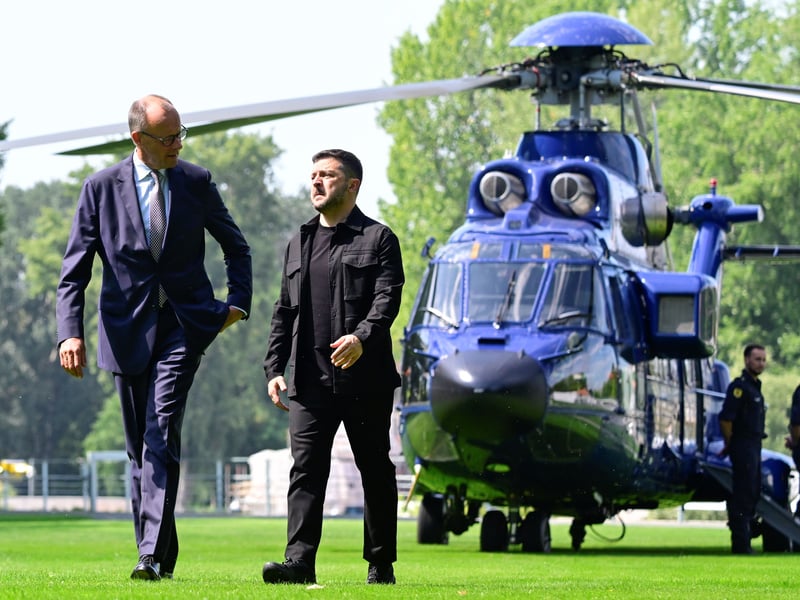
After Wednesday’s calls, German Chancellor Friedrich Merz said in Berlin that Trump largely supported European positions on territorial issues. Speaking alongside Zelenskyy in Berlin, Merz said Ukraine was willing to discuss territorial questions but only using current battle lines as the starting point, with no legal recognition of Russian occupation.
“The American president knows that if the United States works toward peace in Ukraine that safeguards European and Ukrainian interests, he can count on our full support,” Merz said.
The leaders established several principles for future negotiations: Ukraine requires strong security assurances, any peace talks must include both American and European participation and Kyiv must have a voice in all decisions. They also said Washington and Brussels should intensify sanctions if Putin fails to show meaningful compromise during Friday’s summit.
Europe flexes financial muscle
European boldness in pushing Trump stems from dramatic shifts that give Brussels significant leverage over Washington. Europe has overtaken the U.S. as Ukraine’s primary military backer, providing 72 billion euros ($78 billion) compared to America’s 65 billion euros, according to the Kiel Institute.
Germany announced Monday it would finance half a billion euros worth of military support for Ukraine under a new NATO scheme.
Europe also controls some 200 billion euros in frozen Russian assets essential to funding Ukraine’s reconstruction — giving European leaders effective veto power over any long-term peace settlement. On Monday, the EU announced it had seized an additional 1.6 billion euros in windfall profits from those frozen assets.
This financial muscle helps explain Wednesday’s diplomatic offensive. In a joint statement Tuesday, leaders from 26 of the EU’s 27 countries — all except Hungary — welcomed Trump’s peace efforts but insisted that “international borders must not be changed by force” and that “the path to peace in Ukraine cannot be decided without Ukraine.”
The European position has hardenedaround demands for what EU foreign policy chief Kaja Kallas called an “unconditional ceasefire” before any territorial discussions. Kallas promised Monday to prepare a new sanctions package against Russia.
Hungary’s no-show highlights the cracks in European unity, with Prime Minister Viktor Orban repeatedly blocking sanctions and opposing unified pressure on Moscow.
Despite these internal tensions, the broader European strategy appears to have succeeded in extracting concrete commitments from Trump — though European officials may be overestimating their ability to influence a president who prizes unpredictability — provided he sticks to the script during Friday’s meeting.
Competing visions for Ukraine’s future
Trump announced Friday he would meet Putin at Joint Base Elmendorf-Richardson in Anchorage on Aug. 15 — the first U.S.-Russia presidential summit since 2021. The meeting comes after Trump’s special envoy Steve Witkoff met with Putin in Moscow last week, returning with what U.S. Secretary of State Marco Rubio called the first “concrete” Russian proposals to end the war.
Trump described the summit as a “feel out” session to gauge Putin’s interest in peace. The president said any territorial arrangement would involve mutual concessions, with Moscow giving up some occupied areas while Ukraine cedes others.
Russian officials confirmed Wednesday that Moscow’s negotiating stance had not shifted since Putin outlined his terms in June 2024. Deputy Foreign Ministry spokesperson Alexei Fadeev said Russia’s position “remains unchanged” from Putin’s previous demands for Ukrainian territorial concessions.
Putin’s conditions include Ukrainian withdrawal from the entire Donbas region in eastern Ukraine, recognition of Russia’s 2014 annexation of Crimea and guarantees that Ukraine will never join NATO. Russia also demands Ukraine reduce its military and accept Moscow’s control over territories that make up roughly one-fifth of Ukraine’s pre-war area.
In sharp contrast, Zelenskyy has been emphatic about rejecting territorial concessions, particularly regarding the Donbas region. He warned that ceding the area would provide Russia with strategic high ground and fortified positions for future attacks on Zaporizhzhia, Dnipro and Kharkiv.
“Donbas for the Russians is a springboard for a future new offensive,” Zelenskyy said Tuesday, dismissing any territorial exchange as treating Ukraine like “private property” in a real estate transaction.
“Russia has occupied a big portion of Ukraine,” Trump said Monday. “They’ve occupied some very prime territory. We’re going to try and get some of that territory back for Ukraine.” But he emphasized that such exchanges would have benefits and costs for both sides.
Trump acknowledged on Wednesday past disappointments in dealing with Putin but said he believes the Russian leader genuinely wants to end the conflict. He promised to determine within minutes whether Putin is serious about a deal and said he would immediately contact European leaders and Zelenskyy after the talks.
“I’m going to go and see the parameters,” Trump said. “Now I may leave and say ‘good luck.’ And that will be the end.”
Beyond territorial disputes, European leaders also pressed for continued prisoner exchanges and the return of Ukrainian children taken by Russia during the conflict. The humanitarian push builds on one of Trump’s few clear diplomatic successes — facilitating the exchange of more than 2,000 prisoners of war since he began mediating between the warring sides.
Nearly 20,000 Ukrainian children remain in Russian custody, with only about 1,200 returned so far.
The staggering financial stakes help explain European urgency. Ukraine faces reconstruction costs estimated at $500 billion over the next decade, with massive ongoing financing needs even after peace.
With that much money on the line, any peace deal Trump cuts without European buy-in could prove economically unsustainable, regardless of its military or diplomatic terms.
The Alaska showdown is Trump’s biggest foreign policy gamble yet, with global implications for European security, NATO cohesion and the future of international law regarding territorial sovereignty.
Courthouse News correspondent Yuval Molina Obedman is based in Brussels, Belgium.
Subscribe to our free newsletters
Our weekly newsletter Closing Arguments offers the latest about ongoing trials, major litigation and rulings in courthouses around the U.S. and the world, while the monthly Under the Lights dishes the legal dirt from Hollywood, sports, Big Tech and the arts.