
 Search Articles


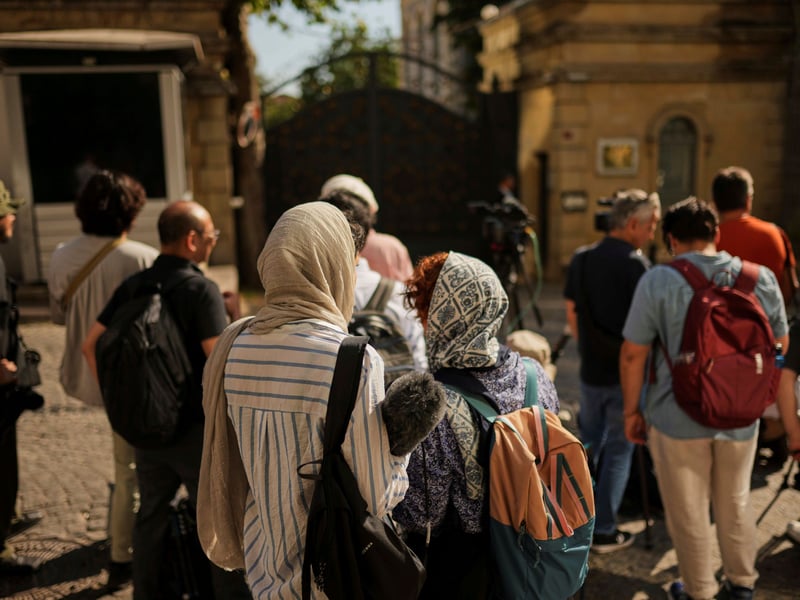
BRUSSELS (CN) — Britain, France and Germany met with Iran on Friday for their first nuclear talks since Israel’s devastating strikes in June, exactly a decade after European powers helped forge the landmark 2015 nuclear deal that the continent is now struggling to save.
Iranian Deputy Foreign Minister Kazem Gharibabadi and senior diplomat Majid Takht-Ravanchi represented Tehran at the deputy-level talks at Iran’s consulate in Turkey. After the meeting, Gharibabadi described the discussions as “serious, frank and detailed” on social media platform X.
“The latest developments regarding the issue of sanctions lifting and the nuclear issue were discussed and reviewed,” he said, while Iran “seriously criticized” European stances on “the recent war of aggression against our people.” Both sides brought “specific ideas” to examine and “it was agreed that consultations on this matter will continue,” though no further details or timeline were provided.
The talks were “a valuable opportunity” and “a test of realism” for the three European countries, Iranian Foreign Ministry spokesman Esmaeil Baqaei told Iran’s state news agency Friday.
The outcome signals that despite deep disagreements, both sides see value in continued dialogue rather than an immediate escalation to sanctions. None of the three European countries has issued public statements about the meeting so far.
Britain, France and Germany have threatened to trigger a “snapback mechanism” that would bring back tough United Nations sanctions on Iran by the end of August. The Europeans face an Oct. 18 deadline when the U.N. resolution that underpins the nuclear deal expires entirely, after which the snapback option disappears forever.
The move would automatically restore six previous Security Council resolutions from 2006-2010, including nuclear and missile sanctions, financial restrictions and banking and energy sanctions that Europe would be expected to reimpose.
Western demands center on restoring full nuclear oversight, bringing back experienced inspectors Iran blocked in 2023, reimplementing enhanced inspection rules and significantly cutting Iran’s stockpile of highly enriched uranium — which now exceeds 880 pounds, enough material for roughly nine nuclear weapons if further enriched, according to nuclear experts.
The Europeans have also suggested tougher inspections that could include Iran’s missile program, though Iranian officials have rejected negotiating their military capabilities and ruled out any return to zero uranium enrichment.
The timing carries special weight, coming exactly 10 years after the 2015 nuclear deal that European diplomats spent years crafting.
Britain, France and Germany, along with China and Russia, are the remaining parties to the 2015 nuclear deal from which the U.S. withdrew in 2018. President Trump, who originally pulled the U.S. out during his first term, has since expressed interest in negotiating a new nuclear deal with Iran.
Israel’s mid-June attack sparked a 12-day war that killed top Iranian commanders, nuclear scientists and hundreds of civilians, while also derailing separate U.S.-Iran nuclear negotiations that had been ongoing since April.
Brussels pushed for Friday’s talks as the October deadline approaches and growing pressure mounts to either restore sanctions or find a diplomatic alternative. The meeting represents the first formal E3-Iran nuclear discussions since talks in Geneva in May, which Iran later accused of being used as cover for the June attacks.
“We were supposed to meet with the Americans on 15 June to craft a very promising agreement,” Iran’s Foreign Minister Araghchi said after the attacks. “It was a betrayal of diplomacy.”
Europe’s diplomatic crossroads
The talks are a crucial point for European foreign policy: Failing to reach some agreement could force Europeans to follow through on snapback threats, possibly ending diplomatic relations for years. Success could open the way for broader negotiations and help prevent military escalation in the Middle East.
Tehran’s demands include respecting Iran’s rights under international law — including uranium enrichment “in accordance with Iran’s desired needs” — and lifting all sanctions.
Iran’s negotiators seized the opportunity to criticize the “biased, political and destructive performance” of the International Atomic Energy Agency — the U.N. nuclear watchdog — during the June attacks.
Earlier this week, Gharibabadi announced that Iran agreed to receive a technical team from the U.N. agency “in the coming weeks … to discuss the modality” of future relations — essentially the framework for how inspections and cooperation would work. IAEA Deputy Director General Rafael Rossi confirmed that Iran is “ready for technical discussions” during a public lecture in Singapore on Friday.
The move represents a potential opening, though limited in scope. Until the military strikes this year, the nuclear agency was conducting extensive oversight of Iran’s nuclear program — 493 inspections in 2024 alone, maintaining the same pace that had continued since the 2015 agreement.
The International Atomic Energy Agency says Iran is enriching uranium to 60% purity — far above the 3.67% cap under the 2015 deal, but well below the 90% needed for weapons-grade levels. Iran maintains its nuclear program is for civilian purposes only.
Iranian Foreign Minister Abbas Araghchi has noted that enrichment is currently “stopped” due to “serious and severe” damage to nuclear sites caused by U.S. and Israeli attacks. However, on the eve of the Istanbul talks, Araghchi emphasized that “our uranium enrichment will continue. We will not give up this right of the Iranian people.”
The extent of damage from the U.S. strikes remains unclear. Trump has claimed the sites were “completely destroyed,” but U.S. media reports have questioned the scale of destruction.
Iran’s position hardened further when Baqaei questioned whether European nations would continue to bow to Israeli pressure. “The question now is whether these three countries are willing to further sacrifice their credibility for the malicious ambitions of the Zionist regime,” he told Iran’s state news agency.
The Iranian spokesman argued that bringing back U.N. Security Council sanctions would lack “legal, ethical or logical justification” since Iran remains a party to the 2015 agreement. Nuclear policy experts warn that using the snapback mechanism now would send a dangerous signal that legal instruments are political weapons to be used selectively.
For the United States, Europe’s decision matters because it could either support or undermine Trump’s stated interest in negotiating a new nuclear deal with Iran. A European move to reimpose sanctions could complicate any future U.S.-Iran talks, while continued European diplomacy might provide a pathway for broader negotiations.
Without credible assurances against further military operations, Iran appears unlikely to allow full inspections to resume or participate seriously in any comprehensive diplomatic process. Yet unless inspections restart, the world won’t know the true status of Iran’s nuclear program — the baseline needed for any future agreement.
Subscribe to our free newsletters
Our weekly newsletter Closing Arguments offers the latest about ongoing trials, major litigation and rulings in courthouses around the U.S. and the world, while the monthly Under the Lights dishes the legal dirt from Hollywood, sports, Big Tech and the arts.