
 Search Articles


BRUSSELS (CN) — The European Union’s struggle to stay united against Russia came into sharp focus Tuesday as foreign ministers couldn’t agree on their toughest sanctions yet while being asked to fund a U.S. weapons plan pushed by President Donald Trump.
EU foreign policy chief Kaja Kallas didn’t hold back when asked about Europe buying American weapons for Ukraine while Trump gets the glory.
“If we pay for these weapons, it’s our support. So it’s European support,” Kallas said Tuesday after Slovakia killed the EU’s 18th round of sanctions against Russia. “If you promise to give the weapons but say that somebody else is going to pay for it, it’s not really given by you, is it?”
Her blunt remarks show just how fed up European leaders are getting with doing the heavy lifting while Trump takes the credit — especially afterhe slapped the EU with sweeping 30% tariffsSaturday, then asked Europeans to buy American weapons Monday.
Europe questions burden-sharing
Trump announced the arms deal during a White House meeting with NATO Secretary-General Mark Rutte, where he also threatened Russian President Vladimir Putin with 100% tariffs if he doesn’t make peace with Ukraine within 50 days.
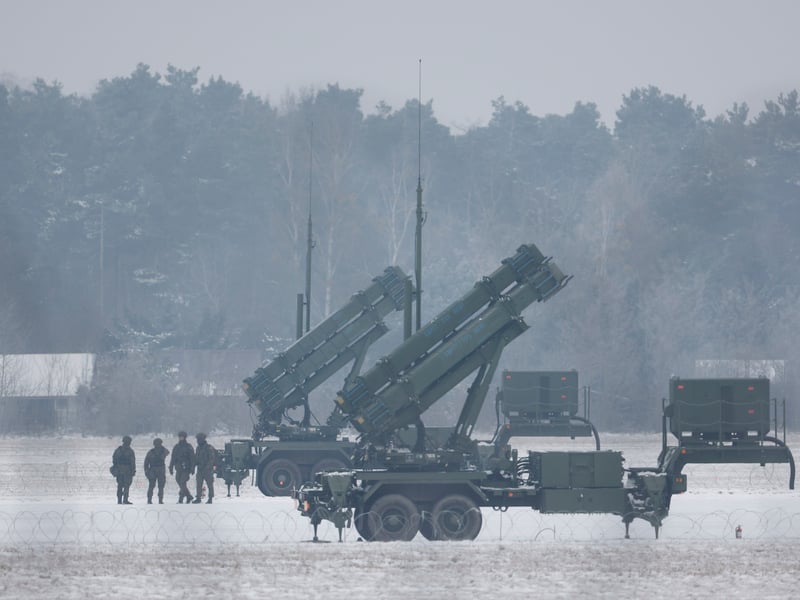
The plan works two ways: European countries can either buy new American weapons like Patriot missile systems and send them straight to Ukraine, or they can ship weapons from their own stockpiles to Ukraine and get U.S. replacements — but either way, Europe foots the bill.
Ukraine’s President Volodymyr Zelenskyy confirmed Thursday that Germany is ready to pay for two Patriot systems, while Norway said it would cover one. The Patriot systems, built by Raytheon Technologies, are among the most sophisticated air defense platforms in the U.S. military arsenal and are designed to intercept incoming missiles and aircraft.
“We’ve been very successful in settling wars” with trade, Trump claimed during the Oval Office announcement, following his announcement Saturday of sweeping 30% duties on the EU on top of existing tariffs, including 50% on steel and aluminum and 25% on cars.
Denmark and the Netherlands said Tuesday they want to join the armament scheme. “We are absolutely ready” to participate, Danish Foreign Minister Lars Løkke Rasmussen said, while his Dutch counterpart said the Netherlands was looking into joining “with a positive inclination.”
But Kallas made clear the EU expects the U.S. to share the burden, not just take the credit. “We really welcome the news that comes from the United States that they will provide weapons to Ukraine, so that they can defend themselves,” she said, though her follow-up comments showed plenty of skepticism about who’s really providing the support.
Europe’s frustration has real numbers behind it. According to the Kiel Institute for the World Economy, Europe for the first time since 2022 has surpassed the U.S. in total military aid to Ukraine, providing 72 billion euros ($78 billion) compared to 65 billion euros ($70 billion) from the U.S.
Last week’s Rome reconstruction conference also saw Britain and France announce plans for a 50,000-strong multinational peacekeeping force for Ukraine.
Slovakia: EU’s problem child?
The transatlantic tensions were compounded by Europe’s own struggles to maintain unity. Slovakia torpedoed the 18th sanctions round after two months of negotiations, demanding special treatment for its Russian gas imports.
“I’m really sad that we didn’t reach this agreement today” even though “we were really close” and the European Commission “has delivered what they asked for,” Kallas said after the failed vote.
Slovakia wants a special deal to keep buying Russian gas until its contract runs out in 2034, rather than going along with the EU’s plan to cut off Russian gas in 2028. Slovak Prime Minister Robert Fico slammed EU guarantees as “insufficient” on X, dismissing them as “nothing.”
The failed sanctions would have been the biggest yet since Russia invaded Ukraine in 2022, cutting Russia’s oil price cap from $60 to $45 per barrel and permanently banning any EU dealings with the Nord Stream pipelines.
The package also kicks 22 more Russian banks out of the global financial system and blacklists another 77 ships in Russia’s “shadow fleet” — vessels Moscow uses to secretly sell oil and dodge sanctions.
Slovakia’s pushback fits a growing worry in Brussels about where the country is headed. European lawmakers said Tuesday they’re concerned Slovakia is turning into the bloc’s next big headache, just like Hungary.
“Is Slovakia on a path to become the next Hungary? To be very honest, that remains to be seen, but some patterns are strikingly similar,” said Sophie Wilmés, a European Parliament vice president.
Slovakia’s resistance comes as the EU pursues a broader strategy to end Russian energy dependence completely. A separate EU proposal would ban all Russian gas imports by the end of 2027, with a complete phase-out by January 2028. The European Parliament voted 459-170 last week to support the plan.
Sanction talks continue
Despite progress since Russia’s invasion, the EU still imported 19% of its gas from Russia in 2024, worth 21.6 billion euros ($23.3 billion) — money that helps fund Putin’s war machine, according to European Parliament research.
Kallas acknowledged the challenge of reaching consensus among “27 different democracies with 27 different public opinions and oppositions” but said the urgency was clear.
“The bombing campaign has reached record levels and we see increasing use of banned chemical weapons by Russia in Ukraine,” she said, adding that “sanctions are necessary to starve Russia of the means to wage this war.”
In a separate move Tuesday, the EU sanctioned five Russian judges for persecuting activists who spoke out against the war in Ukraine, targeting officials who prosecuted Alexei Gorinov, a former Moscow municipal deputy sentenced to three years in prison for criticizing Russia’s invasion.
Kallas said technical discussions would continue Wednesday and she remained “optimistic and still hopeful that we will reach the decision tomorrow.”
EU officials say their sanctions are already hitting Russia hard. The bloc has frozen 210 billion euros ($231 billion) of Russian central bank money, and Moscow’s oil and gas revenues have dropped 80% since the war started.
“Even if the Americans are not on board, but the other G7 countries are on board, then we will move on with this,” Kallas said about the oil price cap, signaling the EU’s willingness to proceed without full U.S. cooperation.
“The message is very clear. Russia’s efforts are wasted. Europe is wholly committed to Ukraine,” Kallas said, pointing to last week’s Rome reconstruction conference, which pledged 10 billion euros ($10.8 billion) to help rebuild Ukraine.
The failure to approve the sanctions Tuesday means the EU will need to continue negotiations with Slovakia to break the deadlock. The package would bring the total number of sanctioned Russian individuals and companies to more than 800 if eventually approved.
Ukrainian Foreign Minister Andrii Sybiha joined Tuesday’s meeting by video to push for the measures, but ministers will need to return to the negotiating table.
The package also bans 2.5 billion euros worth of exports to Russia, including machinery, metals, plastics and chemicals that could help Moscow’s war machine.
Subscribe to our free newsletters
Our weekly newsletter Closing Arguments offers the latest about ongoing trials, major litigation and rulings in courthouses around the U.S. and the world, while the monthly Under the Lights dishes the legal dirt from Hollywood, sports, Big Tech and the arts.