
 Search Articles


(CN) — Inflation across the euro area cooled slightly to 2.1% in October to offer a modest respite for consumers grappling with rising living costs, according to the latest data from Eurostat. While lower than September’s 2.2%, the figure remains marginally higher than the 2.0% recorded a year ago.
The broader European Union’s inflation rate followed suit, slipping to 2.5% from 2.6% the previous month and edging up from 2.3% in October 2024. Services emerged as the dominant force behind the annual rate, contributing 1.54 percentage points, while energy provided a counterbalance with a 0.08-point drag downward.
Yet the picture remains patchwork across the 20-nation euro bloc. Southern powerhouses like France (0.8%) and Italy (1.3%) posted some of the lowest rates, reflecting robust domestic policies and subdued wage growth. Cyprus led the pack at a mere 0.2%. In contrast, Eastern European nations bore the brunt of higher inflation: Romania clocked in at 8.4% while Estonia recorded 4.5% and Latvia saw a 4.3% annual rate.
The data reveals a split trajectory: inflation fell in 15 member states month-over-month, held steady in three, and ticked up in nine others. Food, alcohol, and tobacco added 0.48 percentage points to the euro area total, with processed items leading the charge at 0.35 points. Stripping out energy, the underlying rate climbed to 2.4%.
Beyond the EU, Iceland saw its rate ease to 3.9% from 4.3%, while Switzerland hovered near zero at 0.1%. In the United States, the Bureau of Labor Statistics most recently reported a 3.0% inflation rate in September 2025.
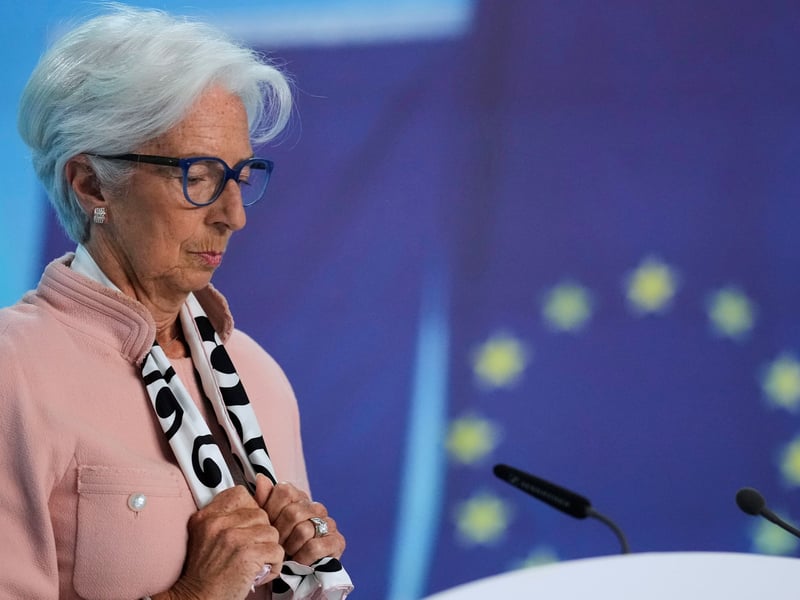
In a monetary policy statement on Oct. 30, European Central Bank President Christine Lagarde reported that inflation remains close to the bank’s 2% medium-term target and outlooks are largely unchanged.
“The economy has continued to grow despite the challenging global environment,” Lagarde said. “The robust labour market, solid private sector balance sheets and our past interest rate cuts remain important sources of resilience. However, the outlook is still uncertain, owing particularly to ongoing global trade disputes and geopolitical tensions.”
Speaking specifically about inflation, Lagarde said corporate profits were rebounding, labor costs were on course to ease further and leading indicators signaled that wage growth will decelerate through the rest of 2025 and into the first half of 2026. Meanwhile, she said the majority of longer-term inflation expectations remain well-anchored around 2%, reinforcing confidence that inflation will settle sustainably at the target.
“We stand ready to adjust all of our instruments within our mandate to ensure that inflation stabilizes sustainably at our medium-term target and to preserve the smooth functioning of monetary policy transmission,” Lagarde said.
The ECB’s next monetary policy meeting is scheduled Dec. 17-18.
 Follow @gabetynes
Subscribe to our free newsletters
Our weekly newsletter Closing Arguments offers the latest about ongoing trials, major litigation and rulings in courthouses around the U.S. and the world, while the monthly Under the Lights dishes the legal dirt from Hollywood, sports, Big Tech and the arts.