
 Search Articles


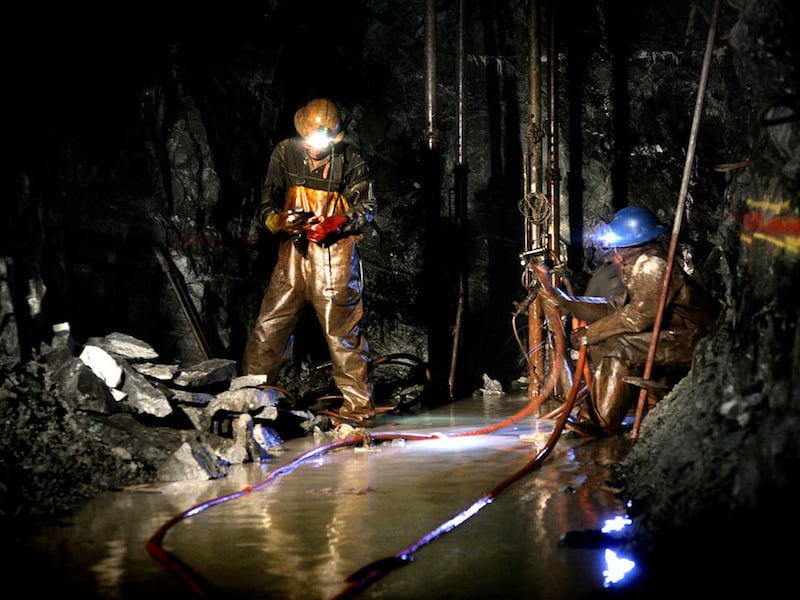
BRUSSELS (CN) — Brussels will push infrastructure investments to 400 billion euros ($440 billion) by 2027 as it battles China for influence in mineral-rich Africa, European Commission President Ursula von der Leyen told African leaders Thursday.
The pledge came hours after Beijing slapped sweeping restrictions on rare earth exports, highlighting the fierce competition for materialsessential to green energy and weapons systems.
Von der Leyen’s appearance at the Global Gateway Forum, one of her pet projects since launching it in 2021, came as she announced the EU beat its own fundraising deadline by two years and now expects to hit 400 billion euros by 2027. The message to capitals from Luanda to Jakarta: Europe’s offering an alternative to Beijing’s checkbook diplomacy.
But development experts and African leaders are asking pointed questions about whether this represents genuine partnership or just new packaging for old extraction models.
“It’s still very early in terms of being able to tell what those projects look like, how much financing is committed, how they’ve been designed in terms of what’s the actual benefit for local partners,” Dora Meredith, director of ODI Europe, a Brussels-based think tank, said in an interview.
The guest list at the two-day forum showed where the competition burns hottest. Five African heads of state showed up — from Angola, South Africa, the Democratic Republic of Congo, Togo and Ethiopia — along with ministers from Egypt, Nigeria, Mauritania and Ghana. Most European leaders stayed home, leaving the forum to commissioners and ministers.
Africa, with its massive reserves of cobalt, copper and rare earth minerals needed for electric vehicles and renewable energy, has become ground zero in the infrastructure wars between Europe, China and increasingly the United States.
Following the minerals
Europe’s showcase project captures the dynamic: the Lobito Corridor, a railway and road network cutting through Central Africa from Angola’s Atlantic coast to Zambia and the Democratic Republic of Congo. The route will slash transport times from 45 days to one week, opening access to some of the world’s richest deposits of cobalt and copper.
Those minerals are what both Washington and Brussels desperately need to cut their dependence on Chinese supply chains. That dependence became painfully clear Thursday when China announced new export restrictions on rare earths — expanding controls to technologies and even barring Chinese citizens from working on rare earth projects abroad without approval.
Beijing now requires licenses for products containing even trace amounts of Chinese-sourced rare earths and will scrutinize applications involving semiconductors or military uses case-by-case.
China controls roughly 85% of global rare earth processing, and the corridor happens to run through a region where Beijing’s already spent years building infrastructure and mining operations via its Belt and Road Initiative.
African leaders made clear they’ve heard development promises before and won’t settle for just faster extraction.
“These investments should not replace one dependency with another,” said South African President Cyril Ramaphosa, holding the G20 presidency.
He called for action against “predatory mining practices” and demanded value addition “at source, rather than continue with the practice of extracting, exporting rock, soil and dust to more developed economy countries.”
Von der Leyen announced a 618 million-euro renewable energy package for Africa at the forum, part of a clean energy campaign she co-launched with Ramaphosa last year.
Angolan President João Lourenço, speaking as African Union chair, reinforced the point: “We are no longer content with the idea of being just a platform for the production and export of raw materials.”
Beyond Africa, the forum drew leaders from other geopolitically touchy regions.
Colombian President Gustavo Petro and Guatemalan President Bernardo Arévalo represented Latin America, where Europe competes with both Chinese investment and the U.S. on-again, off-again engagement.
Prime ministers from the Caribbean islands of Barbados and Grenada came looking for infrastructure help as small nations getting hammered by climate change and vulnerable to predatory lending.
Armenia’s prime minister attended from the Caucasus, a region Moscow still considers its turf.
World Bank President Ajay Banga headlined alongside officials from European and Asian development banks — including, notably, China’s own Asian Infrastructure Investment Bank, a Beijing-led lender launched to compete with Western development finance.
The EU has mobilized more than 2 billion euros for transport corridors helping Ukraine export grain. Other initiatives include the India-Middle East-Europe corridor linking Mumbai to Marseille and undersea fiber optic cables connecting Europe to Africa.
In Latin America, projects focus on regional electricity hookups, digital cooperation and infrastructure tied to “sustainable mining” in Argentina — code for lithium, the mineral essential for batteries that Argentina has in abundance.
The strategic stakes became clearer Thursday when von der Leyen and Banga signed a cooperation agreement covering 18 projects across four continents in energy, transport and digital infrastructure.
The agreement tries to move projects “not only from pipeline to financing, but from financing to jobs, services, and results,” according to an EU statement — language that basically admits a common knock on development projects: funding pledges that don’t materialize, or infrastructure that doesn’t generate local benefits.
Banga said infrastructure investments are needed to create jobs for the 1.2 billion people reaching working age this decade in developing countries.
Von der Leyen emphasized that public money alone can’t meet global infrastructure needs, which is why over 150 corporate executives showed up. The EU launched a Global Gateway Investment Hub to help private companies access grants, loans and guarantees that make developing-country projects financially viable by spreading the risk around.
Questions remain
The model differs from China’s approach in structure: Belt and Road projects typically involve Chinese state banks lending to governments with Chinese firms doing construction, while the EU emphasizes private sector involvement and blended finance using grants, loans and guarantees.
But development experts say there’s not much evidence yet that the different structure actually works better for countries taking the money.
“This is really about creating the economy for the future,” Meredith said, adding that “partnerships between countries are changing” in an increasingly “geopolitical, competitive, transactional world.”
The EU and other countries are “more upfront about [their] own interests” now.
Kaja Kallas, the EU’s foreign policy chief, framed it as a basic choice facing developing nations. “We want to use [our resources] to build strong partnerships [that] share our vision for a more resilient and better future,” she said Thursday, adding that Brussels would “concentrate its efforts on those close to us, who believe in what we stand for.”
That statement hints Europe might be shifting from trying to compete everywhere China operates to focusing on countries more in line with European values — a tacit admission the EU can’t match Chinese spending dollar for dollar.
Whether that pitch works remains to be seen. China’s infrastructure spending dwarfs Europe’s, and Beijing delivers speed and scale that democratic bureaucracies struggle to match. The 306 billion-euro figure itself invites scrutiny — the EU says it’s “mobilized” rather than “spent” that amount, which in development finance often means counting pledges, loan guarantees and private investments that might not materialize.
The next EU budget is still being negotiated, and it’s unclear whether future funding will come as grants or shift more toward loans and guarantees — a change that could fundamentally alter the partnership model.
Europe showed up late to this competition. Whether it can catch up could shape the geopolitical map for decades. But the big question is whether developing nations will pick the EU’s partnerships over China’s faster approach — or just play both sides for maximum benefit while waiting to see if Europe’s promises actually materialize.
Courthouse News correspondent Yuval Molina is based in Brussels, Belgium.
Subscribe to our free newsletters
Our weekly newsletter Closing Arguments offers the latest about ongoing trials, major litigation and rulings in courthouses around the U.S. and the world, while the monthly Under the Lights dishes the legal dirt from Hollywood, sports, Big Tech and the arts.